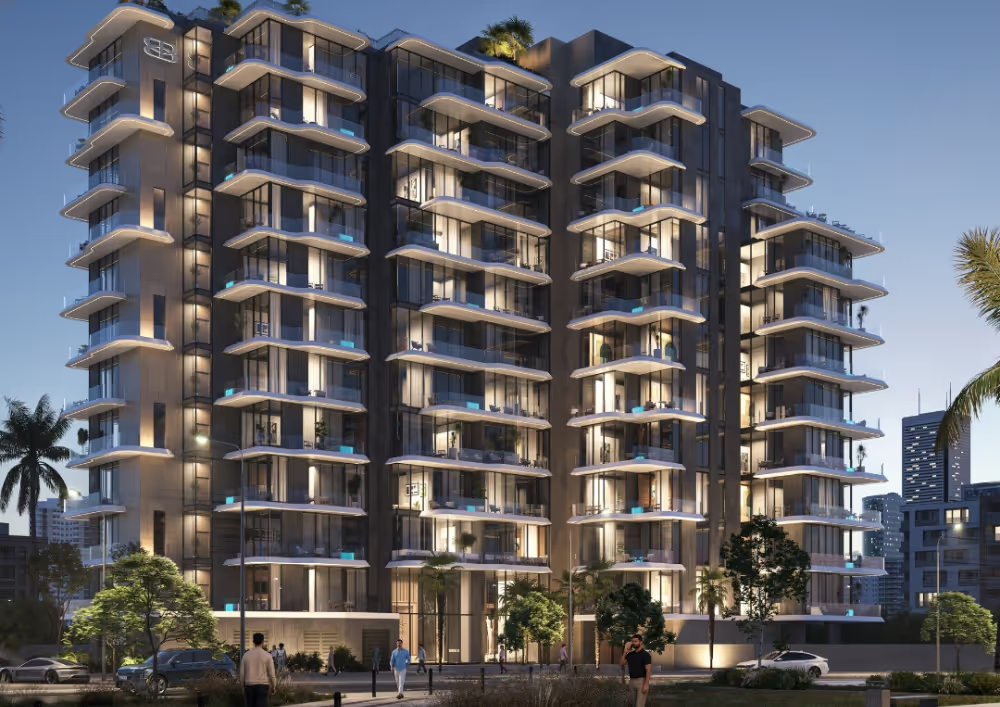
First-Time Buyer's Complete Roadmap: How to Buy Property in Dubai (2026)

You have made the decision to buy property in Dubai. Maybe it is the Golden Visa tie-in, or maybe you are simply tired of paying someone else's mortgage through rent. Whatever brought you here, the next question is always the same: where do I actually start?
The internet has thousands of articles about Dubai real estate. Some cover mortgages, others explain off-plan mechanics, a few focus on specific areas. The problem is rarely a lack of information. It is that the pieces are not put in the right order. This page maps the whole purchase as 12 sequential steps, from the moment you set a budget to the day you collect your keys. Each step includes a brief explanation of what is involved and a link to the detailed standalone guide where you can go deeper. Bookmark this page and come back to it as you move through each stage.
Key Takeaways
- Buying property in Dubai takes 12 steps, from budget planning to keys in hand.
- Foreigners can buy freehold property in designated areas, with no residency requirement (Regulation No. 3 of 2006). Property worth AED 2 million or more can qualify for a 10-year Golden Visa (Dubai Land Department).
- Budget for more than the price: the DLD registration fee is 4% of the sale value (2% seller and 2% buyer on DLD's schedule), and broker commission, mortgage fees and other costs come on top.
- Off-plan buyers follow the developer's payment plan. For a mortgage on ready property, the loan-to-value limits are set by the Central Bank (see our UAE mortgage guide).
- Every step in this roadmap links to a dedicated in-depth guide. Use this page as your table of contents for the whole purchase.
Step 1: Set Your Budget
Everything starts here. Your budget determines which areas, which property types, and which payment structures are available to you. In Dubai, the purchase price is only part of the equation. Add the Dubai Land Department (DLD) registration fee of 4% of the sale value, which DLD lists as 2% for the seller and 2% for the buyer (the contract sets who bears each share), broker commission if you use a broker (it is agreed in the brokerage contract, with no statutory rate), the Oqood or title deed admin fees, mortgage fees if you finance, and a professional snagging inspection at handover.
If you are financing with a mortgage, the Central Bank sets the maximum loan-to-value. For an expatriate's first home under AED 5 million on ready property the maximum is 80%, so the minimum deposit is 20% before fees, and loans on off-plan property are capped at 50% of the value (CBUAE rulebook, Article 3, as summarised in our UAE mortgage guide, as of October 2026). For off-plan, developer payment plans let you spread the cost over the construction period.
Your first job is to work out what you can comfortably commit without stretching yourself thin. That means understanding your savings timeline, your monthly capacity for instalments, and your total cash available for the initial outlay.
Read the full guide: "How to Save for a House in Dubai on a Monthly Salary"
Also read: "UAE Mortgage Guide: Smart Tips"
Quick Answer
Budget = property price + DLD registration fee (4%, both shares; confirm who pays in your contract) + broker commission (if any) + admin, mortgage and inspection costs. For a mortgage, check the loan-to-value limit that applies to your case before you commit to a price range.
Step 2: Decide (Investment or Personal Use?)
This decision shapes everything that follows. Investment buyers focus on rent, tenant demand and how easily they can sell later. Personal-use buyers care more about commute times, school proximity, community feel, and unit layout. Some buyers want both, but trying to optimize for everything usually means you optimize for nothing.
Yields differ by area, building and unit type, and different sources measure them differently, so check recent DLD transactions and listings for the specific building rather than relying on an area average. Yield alone does not make a good purchase. You also need to think about demand when you eventually sell.
Read the full guide: "Rental Yield Dubai 2026"
Also read: "Smart Investors: Dubai Property Developments"
Quick Answer
Investment buyers focus on rent and resale. Personal-use buyers prioritize lifestyle fit. Decide before area selection. It changes which communities make sense for you.
Step 3: Choose Your Area
Freehold ownership by foreigners is limited to designated areas set out in Regulation No. 3 of 2006 and later resolutions. The right area depends on your budget from Step 1 and your purpose from Step 2.
Many first-time buyers start by comparing Arjan, Dubailand Residence Complex (DLRC), JVC, JVT, Motor City and Business Bay. For each, compare price per square foot, rents, service charges and upcoming infrastructure. For example, the Metro Blue Line is scheduled to open on 9 September 2029 (Gulf News). Check service charges for a specific project in the DLD Service Charge Index.
The best approach: shortlist two or three areas, then visit them (or research them thoroughly online if you are buying remotely).
Read the full guide: "Arjan Dubai: Location & Connectivity Guide"
Also read: "DLRC Dubai: Complete Dubailand Residence Complex Guide 2026"
Also read: "Cost of Living: Arjan vs JVC vs Motor City"
Quick Answer
Shortlist two or three areas and compare price per sq ft, rents, service charges and infrastructure for the specific buildings you are considering.
Step 4: Off-Plan or Ready Property?
This is the fork in the road. Off-plan means buying before construction is complete, usually from the developer. Ready means buying a completed unit on the secondary market or from a developer that has finished the project. Each has a distinct set of trade-offs.
Off-plan gives you structured payment plans and a longer runway to pay. The trade-offs are that you wait until handover, earn no rental income during that period, and carry construction delay risk. Ready property gives you immediate possession, immediate rental income, and what-you-see-is-what-you-get certainty. The trade-offs are that you usually need full cash or mortgage approval, and there is no developer payment plan.
First-time buyers with limited upfront capital often look at off-plan because payment plans spread the cost. Buyers who want immediate income or who cannot tolerate construction uncertainty prefer ready. There is no universally correct answer. It depends on your cash position, timeline, and risk appetite.
Read the full guide: "Off-Plan vs Ready Properties in Dubai: What Should You Buy?"
Quick Answer
Off-plan: payment plans, a wait until handover, no income until then. Ready: immediate income, mortgage or full cash needed. Choose based on your cash position and timeline tolerance.
Step 5: Choose Your Developer
Not all developers are equal. Off-plan projects are registered with DLD, which opens an escrow account for off-plan sales (DLD project registration service), but registration alone does not guarantee quality, on-time delivery, or a good post-handover experience. You need to do your own due diligence.
Start by checking the developer's track record. How many projects have they completed? Were they delivered on time? What do residents in their existing communities say about build quality, maintenance, and communication? A developer with several completed projects delivered close to their promised dates is a different proposition from one selling a first project.
Confirm that the specific project is registered with DLD and has an escrow account, and ask about the project consultant who verifies construction milestones. These are the basics that separate regulated projects from risk.
Read the full guide: "How to Compare Property Developers in Dubai: What to Look For"
Also read: "Boutique vs Mega Projects Dubai 2026: Hessa Street and Blue Line"
Quick Answer
Check project registration, the escrow account, the developer's completion record and resident feedback. Verify on the DLD website.
Step 6: Understand the Legal Framework
Foreigners can buy freehold property in Dubai in designated areas, with no residency requirement. Law No. 7 of 2006 allows non-UAE nationals freehold rights only in areas designated by the Ruler, and Regulation No. 3 of 2006 and later resolutions set out those areas.
For off-plan, you sign a Sale and Purchase Agreement with the developer and the sale is registered through Oqood with DLD. For ready property, the transfer is completed at a DLD registration trustee centre and the title deed is issued in the buyer's name.
Property worth AED 2 million or more can qualify for the 10-year Golden Visa. The property must be wholly owned by the applicant, and off-plan units from approved developers and financed properties can qualify, subject to the conditions on the Dubai Land Department page. Check the current conditions before you rely on it.
Read the full guide: "Legal Steps to Buying Property in Dubai for Foreigners (2025 Guide)"
Also read: "Can Foreigners Buy Property in Dubai 2026: NRI & Expat Complete Guide"
Quick Answer
Foreigners can own freehold property in designated areas, with no residency requirement. Process: sign the SPA, register with DLD, receive Oqood (off-plan) or the title deed (ready). Property worth AED 2 million or more can qualify for a 10-year Golden Visa.
Step 7: Know Your Fees and Costs
The headline price of a property in Dubai is not what you will actually pay. Here is the breakdown of the main costs:
The DLD registration fee is 4% of the sale value. For an off-plan sale, the DLD initial sale service lists it as 2% for the purchaser and 2% for the seller, plus AED 10 knowledge and AED 10 innovation fees. Check your contract to see who pays which part. Broker commission is agreed in the brokerage contract, and there is no statutory rate. If you finance, the mortgage registration fee is 0.25% of the mortgage value (DLD mortgage registration service), and your bank will also charge its own fees, including for valuation.
After purchase, you have ongoing costs: annual service charges, DEWA connection deposits, and property management fees if you rent the unit out. Look up a project's approved service charge in the DLD Service Charge Index. First-year costs beyond the purchase are detailed in our post-handover guide.
Read the full guide: "DLD Fees Dubai 2026"
Also read: "Post-Handover Costs: First Year Dubai Property"
Quick Answer
Total costs: purchase price + DLD registration fee (4%, both shares; confirm who pays in your contract) + broker commission (if any) + mortgage and admin fees. After purchase: service charges (see the DLD Service Charge Index), DEWA deposit, and property management if renting out.
Step 8: Arrange Payment or Mortgage
How you pay differs between off-plan and ready purchases. For off-plan, you follow the developer's payment plan, and each developer sets its own, written as ratios such as 60/40 or 30/70. Some plans defer part of the price until after handover. Payments for off-plan purchases go into the project's escrow account, so confirm the account details in your SPA.
For ready property, most buyers either pay cash or arrange a mortgage. The Central Bank sets the maximum term at 25 years and caps debt payments at 50% of income, and it limits loans on off-plan property to 50% of the value (CBUAE rulebook, Article 3, as of October 2026). Loan-to-value limits for ready property depend on your residency status, the property value and whether it is your first home; see our UAE mortgage guide.
First-time buyers often underestimate the documentation required for mortgage approval: salary certificates, bank statements, credit history, and a property valuation all take time. Start the mortgage conversation early, ideally before you finalize which unit to buy.
Read the full guide: "UAE Mortgage Guide: Smart Tips"
Also read: "Arjan Dubai Property Prices 2026: Apartment Rates & Payment Plans"
Also read: "Dubai Property Payment Plans Explained: 60/40, 70/30, 80/20 & Post-Handover"
Quick Answer
Off-plan: follow the developer's payment plan and pay into the escrow account. Ready: mortgage limits are set by the Central Bank (25-year maximum term, 50% debt payment cap). Get mortgage pre-approval before committing to a unit.
Step 9: Register Your Purchase
Registration makes your ownership legally binding and public. In Dubai, the system differs for off-plan and ready purchases.
For off-plan purchases, the sale is registered through the Oqood system with the Dubai Land Department. Oqood is the interim registration that records your rights during the construction period. The DLD initial sale service lists a 2% fee for the purchaser and 2% for the seller, which make up the 4% DLD fee, plus AED 10 knowledge and AED 10 innovation fees. Resale of an off-plan unit is possible after obtaining a No Objection Certificate from the developer (DLD FAQ).
For ready property, you complete the transfer at a DLD registration trustee centre. Buyer and seller (or their authorized representatives) attend, and the title deed is issued in your name. Freehold ownership recorded on a title deed does not expire or require renewal.
Read the full guide: "Oqood System Dubai Guide"
Also read: "Oqood vs Title Deed: Dubai Off-Plan Property Registration Guide"
Quick Answer
Off-plan: Oqood interim registration (4% DLD fee, listed as 2% for each side, plus AED 20 in knowledge and innovation fees). Ready: title deed transfer at a DLD registration trustee centre. Both are recorded with DLD.
Step 10: Construction Period (Off-Plan Only)
If you bought off-plan, this is the waiting period until the handover date in your SPA. During this time, your role is relatively passive but not entirely hands-off.
You will receive payment notices as instalments fall due, whether tied to construction milestones or fixed dates. Track the developer's progress updates against the projected timeline in your SPA.
This period is also when you plan your exit strategy. Will you hold to handover and rent out? Sell before handover (assignment)? DLD says resale is possible after obtaining a No Objection Certificate from the developer (DLD FAQ), and developers set their own conditions and fees, which can include a minimum amount paid under the SPA. Read the assignment clause, and see our NOC guide.
Read the full guide: "Dubai Property: Booking to Handover Guide"
Also read: "Exit Strategy 2026: Sell Off-Plan Property Dubai (40% Rule)"
Quick Answer
Wait for the handover date in your SPA while paying instalments as they fall due. Plan your exit strategy: hold for rent, or sell during construction (assignment needs the developer's NOC, and the conditions and fee are set by the developer).
Step 11: Snagging Inspection and Handover

Before you accept the keys to your new property, inspect the finished unit for defects. This process is called snagging, and it is your chance to ask the developer to fix everything that does not match the agreed specification.
A professional snagging company will check items such as tile alignment, paint finish, plumbing pressure, electrical outlets, door mechanisms, window seals, air conditioning, kitchen fittings, and balcony drainage. They produce a detailed report with photographs, which you submit to the developer.
Snagging is not mandatory, but skipping it can mean living with defects you could have had fixed. Read what your SPA says about defects and handover acceptance before you sign anything, because signing the acceptance can weaken your position.
Read the full guide: "Property Snagging Dubai"
Quick Answer
Hire a snagging company to inspect before accepting keys and submit the report to the developer. Do not sign handover acceptance until you are satisfied.
Step 12: Move In or Rent Out
Keys in hand. Now what? If you are moving in, your immediate checklist includes DEWA connection (electricity and water; apply online, deposit required), internet installation, and any furniture or fit-out if the unit was delivered unfurnished.
If you are renting the unit out, the process involves: registering the tenancy contract in Ejari (the Dubai government portal says RERA made registration mandatory for all rental contracts), appointing a property management company if you are not handling tenant relations yourself (agree the fee and scope in writing), listing the property on portals like Property Finder and Bayut, and screening tenants.
Investors who are not Dubai-based often appoint a property manager to handle tenant sourcing, maintenance requests and rent collection.
Read the full guide: "Property Management Dubai: Investor Guide"
Also read: "DEWA Connection Dubai"
Also read: "Ejari Registration Dubai"
Quick Answer
Moving in: DEWA, internet, furnishing. Renting out: Ejari registration, property management, portal listings, tenant screening.
Bonus: Protect Your Investment (DIFC Wills)
If you own property in Dubai and have family who would be affected by your estate, consider a registered will. The DIFC Courts Wills Service lets eligible non-Muslims register a property will for real estate in the UAE. Its published fees are AED 7,500 for a single property will and AED 10,000 for mirror wills for a married couple, plus 5% VAT (as of October 2026). Eligibility rules apply, so check the current requirements on its website.
Quick Answer
Eligible non-Muslim owners can register a property will with the DIFC Courts Wills Service (AED 7,500 single, AED 10,000 mirror wills, plus VAT).
Where Pearlshire Fits In
Pearlshire is a boutique developer in Dubai, and its Dubai company was established in 2021. Its projects include Bond Enclave in Arjan and Bond Living in the Dubailand Residence Complex (DLRC).
Bond Enclave: Arjan
- 30/70 payment plan: 5% booking, 15% at +1 month, 5% at +6 months, 5% at +6 months, 70% on handover
- Expected handover: 30th November 2027
- Entry from AED 1,149,777 (1-bedroom)
You can explore Bond Enclave on its project page.
Frequently Asked Questions
What should I budget besides the property price?
Add the DLD registration fee (4% of the sale value, which DLD lists as 2% for the seller and 2% for the buyer; the contract sets who bears each share), broker commission if you use a broker (agreed by contract, with no statutory rate), mortgage registration (0.25% of the mortgage value) and bank fees if you finance, Oqood or title deed admin fees, and a snagging inspection at handover. The price itself depends on the area and unit type, so check current listings for the specific building.
How much cash do I need upfront to buy property in Dubai?
It depends on whether the property is ready or off-plan. For a mortgage on a ready first home under AED 5 million, the Central Bank caps an expatriate's loan at 80% of the value, so the deposit is at least 20%, plus the DLD registration fee (4% of the sale value, 2% each side on DLD's schedule) and other costs. Loans on off-plan property are capped at 50%. Off-plan buyers instead follow the developer's payment plan.
Can foreigners really buy property in Dubai?
Yes. Foreign nationals can purchase freehold property in the areas Dubai has designated for non-UAE nationals, with no residency requirement. Property worth AED 2 million or more can qualify for a 10-year Golden Visa, subject to the Dubai Land Department's conditions.
How do I pay for an off-plan purchase?
You follow the developer's payment plan, which is set out in the SPA and written as a ratio such as 60/40 or 30/70. Payments for off-plan purchases go into the project's escrow account, so confirm the account details in your SPA.
Is buying property in Dubai safe?
Off-plan projects are registered with the Dubai Land Department, which opens an escrow account for off-plan sales. The Oqood and title deed systems record ownership with DLD. No purchase is risk-free, so check the developer's record, the SPA and the payment schedule before you commit.
Do I need to visit Dubai to buy property?
What is needed to buy remotely depends on the developer and the type of transaction, so ask the developer or broker what documents and signatures are required. Visiting is still useful for a first purchase, because it lets you see the location and the community.
What should be my very first step?
Set your budget (Step 1). Determine how much capital you have available now, how much you can commit monthly, and what total property price that translates to. Everything else flows from this number.