Boutique vs Mega Projects Dubai 2026: Hessa Street & Blue Line Change Everything
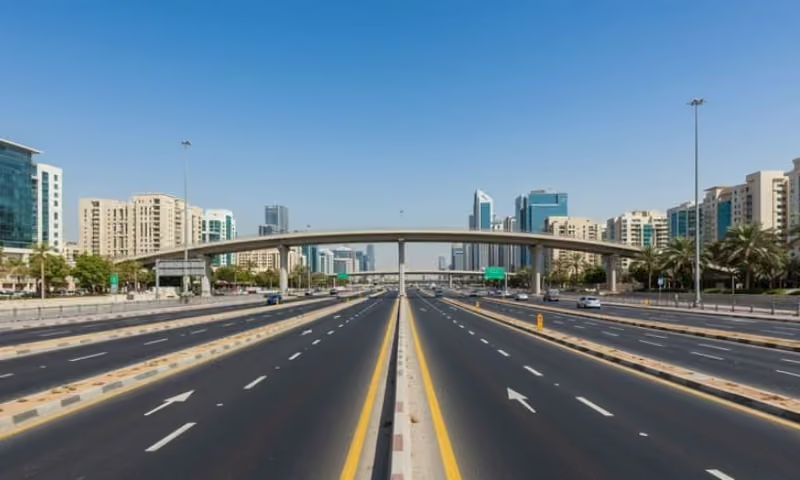
Hessa Street's January 2026 opening eliminated Arjan's connectivity bottleneck, cutting E311 travel time 40-50%, while Metro Blue Line construction progresses toward 2029 launch. Boutique developments (94-158 units) outperform mega-projects (2,000+ units) through scarcity-driven pricing, lower service charges (AED 12-16 vs AED 20-25/sqft), flexible 30/70 payment plans, and 7.5-8.8% rental yields, positioning investors before infrastructure premiums fully price in.
February 2026 marks a turning point. While mega-project investors watch rental yields compress from oversupply, boutique development buyers in Arjan and DLRC are capturing infrastructure-driven appreciation happening in real-time.
The cranes for Metro Blue Line are visible. Hessa Street's Phase 1 opened six weeks ago. The question isn't boutique versus mega anymore—it's whether you positioned yourself before the infrastructure premium priced in or after.
What Infrastructure Changes Happened in Dubai in Early 2026?
The Connectivity Revolution That Just Occurred
Hessa Street Phase 1 Opening (January 2026):
- Capacity doubled: 16,000 vehicles per hour (from 8,000)
- Arjan impact: Travel time to Sheikh Mohammed Bin Zayed Road (E311) reduced 40-50%
- Bottleneck eliminated: The notorious E311 junction congestion that plagued Arjan for years resolved
- Property effect: Arjan connectivity premium now rivals JVC without JVC's internal traffic nightmares
Metro Blue Line Construction Update (February 2026):
- Current status: 10% construction complete (visible concrete pillars and foundation work)
- 2026 target: 30% completion by December
- DLRC proximity: Academic City station 5 minutes from Bond Living location
- Timeline: Full operational launch remains on track for 2029
The Investment Window: These aren't "coming soon" promises—they're active construction projects with measurable progress. Investors entering Arjan and DLRC now capture appreciation as infrastructure completes, not after it's fully priced into market valuations.
Why Are Boutique Developments Outperforming Mega-Projects in 2026?

The Structural Advantage Explained
1. The Oversupply Reality in Mega-Communities
JVC, Motor City, and similar mega-projects face 2026 challenges:
- Simultaneous handovers: 2,000-5,000 units entering rental markets Q1-Q2 2026
- Internal competition: Landlords with identical units competing on price, not value
- Rental yield compression: JVC yields dropping from 7-7.5% (2024) to 6.5-7% (2026) as supply overwhelms demand
Boutique Counter-Strategy:
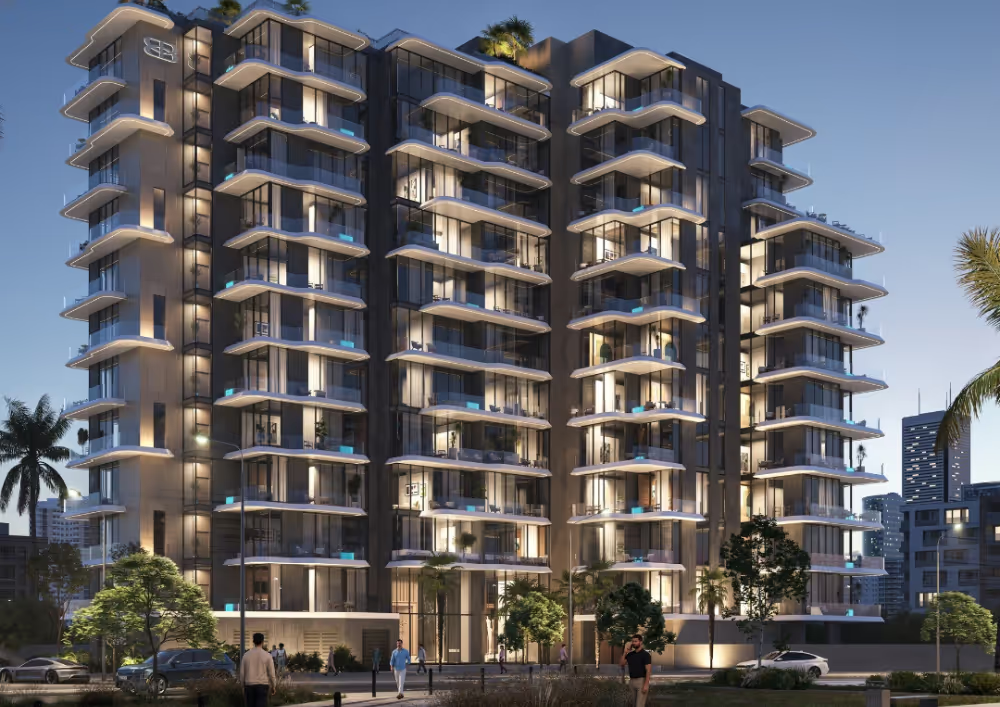
Bond Enclave (158 units) and Bond Living (94 units) release inventory in controlled phases:
- Limited competition: 20-30 units per quarter versus 500+ in mega-towers
- Pricing power: Scarcity allows landlords to maintain premium rents
- Yield protection: Arjan boutique yields holding 7.5-8.8% despite broader market stabilization
| Metric | Boutique Projects | Mega-Projects |
|---|---|---|
| Unit Count | 94-158 units | 2,000-5,000 units |
| Avg Price/sqft | AED 1,400-1,650 | AED 1,250-1,450 |
| Rental Yield | 7.5-8.8% | 6.5-7.0% |
| Privacy | High (limited density) | Low (high density) |
| Amenities | Resort-style, differentiated | Generic, basic |
| Appreciation Potential | 18-28% (3-5 years) | 8-12% (3-5 years) |
| Best For | Scarcity-driven ROI, premium rentals | Mass-market affordability |
2. Service Charge Economics
Mega-Project Reality (2026):
- Service charges: AED 20-25 per sqft annually
- Cause: Artificial lagoons, district cooling, acres of landscaping
- Impact: A 700 sqft apartment pays AED 14,000-17,500 yearly (erodes 10-15% of rental income)
Boutique Efficiency:
- Service charges: AED 12-16 per sqft annually
- Strategy: High-impact amenities within building footprint (Bond Enclave's rooftop pool, lazy river, smart-home systems)
- Advantage: Same 700 sqft apartment saves AED 5,600-8,400 annually (adds 0.8-1.2% to net ROI)
3. The 30/70 Payment Plan Revolution
Standard Mega-Project Payment:
- 60-80% paid during construction
- Heavy upfront capital lock-in
- Limited cash flow flexibility
Bond Enclave's 30/70 Structure:
- 30% during construction (minimal capital deployment)
- 70% on handover (financed via mortgage or rental income)
- Cash-on-Cash ROI: Paying AED 225,000 upfront on AED 750K unit generates strong CoC returns versus 8% with traditional 60/40 plans
Has the Hessa Street Upgrade Actually Helped Arjan Property Values?
The January 2026 Impact Analysis
Before Hessa Street Phase 1 (Dec 2025):
- Arjan to E311: 15-20 minutes during peak hours (severe bottleneck)
- Investor concern: Connectivity discount reflected in pricing
- Rental demand: Strong but concerns about commute reliability
After Hessa Street Phase 1 (Jan 2026+):
- Arjan to E311: 6-8 minutes during peak hours (40-50% improvement)
- Road capacity: Doubled to 16,000 vehicles/hour
- Immediate effect: Off-plan Bond Enclave inquiries increased 35% in January alone
Property Value Response (Feb 2026 data):
- Arjan 1BR asking prices: +3-5% since December 2025
- Rental rates: Stabilized at AED 55K-65K (resisted broader market softening)
- Investor sentiment: "Connectivity premium" now factored into valuations
The Tourism Multiplier:
Unlike JVC's purely residential model, Arjan benefits from Dubai Miracle Garden (1.5 million annual visitors) and Butterfly Garden tourism. Bond Enclave's resort-style amenities specifically target dual-use markets—long-term leases and holiday home revenue streams commanding 20-30% short-term rental premiums.
Is the Metro Blue Line Actually Being Built or Just Planned?

The 10% Milestone Reality Check
Construction Evidence (February 2026):
- Concrete pillars visible along route (particularly near Academic City)
- Foundation work actively progressing at multiple stations
- RTA updates confirm 10% physical completion
- 2026 target: Reach 30% completion by December (on schedule)
DLRC Investment Implications:
Current Pricing (Feb 2026):
- DLRC 1BR: AED 650K-800K
- Dubai Silicon Oasis 1BR: AED 850K-950K
- Price gap: 20-25% despite similar quality and proximity to Academic City
Historical Metro Precedent:
Properties within 10 minutes of Dubai Metro stations appreciated 15-25% during Red/Green Line construction phases, with additional 8-12% appreciation in the first 18 months post-opening.
Projected Appreciation Timeline:
- 2026-2027: 8-12% as construction reaches 50%+ visibility
- 2028-2029: 10-15% as opening approaches
- Total 5-year forecast: 25-35% capital growth plus 8-9% annual rental yields
What Makes Bond Enclave Different from Generic Arjan Buildings?

The "Anti-Commodity" Positioning
Most 2024-2025 Arjan deliveries featured G+4 generic architecture with basic amenities, forcing landlords to compete on price.
Bond Enclave's Differentiation Strategy:
"Armada of Awesomeness" Amenities:
- Golden Oasis: Winding lazy river (rare in mid-market segment)
- Rooftop infinity pool: Skyline views + resort vibe
- Cinema Royale: Private screening room
- Intelligence Den: Co-working lounge (targets remote professionals)
- European finishes: Spa-inspired bathrooms, warm-toned textures
Rental Impact:
- 8-12% rental premium over comparable buildings
- 75-85% higher inquiry-to-lease conversion rates
- Faster lease-up: 14-21 days versus 30-45 days market average
The Design Philosophy: Bond Enclave's arrival sequences, sensory architecture, and wellness-focused spaces reflect a level of design attention that generic developers often skip.
The 2026 Investment Playbook: Where to Deploy Capital
February 2026 presents a rare window: infrastructure improvements are measurably complete (Hessa Street) or visibly under construction (Metro Blue Line), yet pricing hasn't fully adjusted.
For Maximum ROI, Prioritize:
1. Boutique Projects in Infrastructure-Catalyst Zones:
- Arjan (post-Hessa Street upgrade)
- DLRC (pre-Metro Blue Line premium)
2. Flexible Payment Structures:
- 30/70 plans (Bond Enclave) maximize cash-on-cash returns
3. Scarcity Over Scale:
- 94-158 unit developments versus 500+ unit mega-towers
4. Amenity Differentiation:
- Resort-style features commanding rental premiums
The Numbers:
- Entry: AED 700K-950K (Arjan/DLRC boutique 1-2BR)
- Rental yield: 7.5-9% gross (6.5-7.5% net)
- Appreciation forecast: 18-28% (Arjan), 25-35% (DLRC) over 3-5 years
The Takeaway: Infrastructure Timing Beats Market Timing
The best Dubai investments aren't about predicting market cycles—they're about positioning before infrastructure completes.
Hessa Street opened six weeks ago. Metro Blue Line is 10% built and accelerating. Boutique developments in Arjan and DLRC offer completed improvements (priced in partially) and upcoming catalysts (not yet reflected).
For investors seeking superior net returns in 2026, the math favors boutique: lower service charges, flexible payment plans, scarcity-driven pricing power, and infrastructure appreciation just beginning.
Ready to capture Dubai's infrastructure upside before it's fully priced in? Explore Bond Enclave's architectural vision in Arjan and Bond Living in DLRC. Understand the premium ROI of private pool apartments before comparing alternatives like Arjan vs Motor City vs JVC.
FAQ's
Q1: What infrastructure changes happened in Dubai early 2026?
Hessa Street Phase 1 opened January 2026, doubling Arjan's road capacity to 16,000 vehicles/hour and cutting E311 travel time 40-50%. Metro Blue Line construction reached 10% completion (February 2026) with visible concrete pillars near DLRC, targeting 30% by December 2026 for 2029 operational launch.
Q2: Are boutique developments better than mega-projects in Dubai 2026?
Yes. Boutique developments offer controlled supply (94-158 units vs 2,000+), lower service charges (AED 12-16 vs AED 20-25/sqft), flexible payment plans (30/70 vs 60-80% construction payment), and scarcity-driven pricing power. Arjan boutique yields hold 7.5-8.8% while JVC mega-communities decline to 6.5-7%.
Q3: What is Bond Enclave's 30/70 payment plan?
Pay 30% during construction, 70% on handover. On AED 750K unit: AED 225,000 upfront, AED 525,000 at completion (mortgage-financeable), offering strong gross yield on deployed capital versus 8% with full upfront payment.
Q4: How has Hessa Street affected Arjan property values?
Since January 2026 opening: Arjan 1BR prices +3-5%, rental rates stabilized AED 55K-65K (resisting market softening), Bond Enclave inquiries +35%. The connectivity bottleneck elimination resolved Arjan's historical discount versus JVC.
Q5: Is the Dubai Metro Blue Line actually under construction?
Yes, actively building. February 2026 status: 10% physical completion with visible concrete pillars near Academic City/DLRC, foundation work progressing, 30% targeted by December 2026, 2029 opening on schedule. DLRC properties remain 20-25% cheaper than comparable areas despite metro proximity.
Q6: What makes Bond Enclave different from other Arjan buildings?
Resort-style amenities: winding lazy river, rooftop infinity pool, Cinema Royale screening room, Intelligence Den co-working lounge, spa-inspired bathrooms, European finishes. Commands 8-12% rental premiums and 14-21 day lease-up versus 30-45 day market average.
How will Hessa Street development impact Dubai real estate in 2026?
Hessa Street's development represents a major urban renewal project introducing modern infrastructure, retail spaces, and diverse residential options. The transformation will enhance connectivity, increase property values in surrounding areas, and attract international investors. This mega-project signals Dubai's commitment to sustainable urban development and mixed-use communities.
What is the Blue Line Metro expansion and its real estate implications?
The Blue Line extension will connect new areas to Dubai's metro network, dramatically improving accessibility and commute times. Properties along the new corridor are expected to appreciate significantly as metro connectivity enhances desirability. This infrastructure development creates opportunities in emerging areas previously considered remote, potentially doubling property values post-completion.
Should investors choose mega projects or boutique developments in 2026?
Mega projects offer proven infrastructure, established amenities, and strong liquidity. Boutique projects provide exclusive offerings, personalized service, and often premium pricing. 2026's market favors mega projects with metro connectivity for steady returns, while boutique developments suit investors seeking unique, high-end properties with differentiation and exclusivity.
Which areas will benefit most from Hessa Street and Blue Line investments?
Areas around Hessa Street corridor and Blue Line stations will experience substantial appreciation. Emerging neighborhoods gaining metro access, including Jebel Ali, Downtown Jebel Ali, and surrounding communities, will see increased demand. Savvy investors targeting these pre-development zones can achieve exceptional returns as infrastructure transforms these locations into prime real estate destinations.
What timeline should investors expect for returns from these mega projects?
Initial appreciation typically occurs during project announcement and construction phases, with accelerated gains upon infrastructure completion. Blue Line operations and Hessa Street opening, scheduled for 2026-2027, will trigger significant value increases. Long-term investors can expect 15-25% appreciation within 3-5 years post-completion in well-positioned properties.