The Real ROI Behind Buying Luxury Property in Dubai
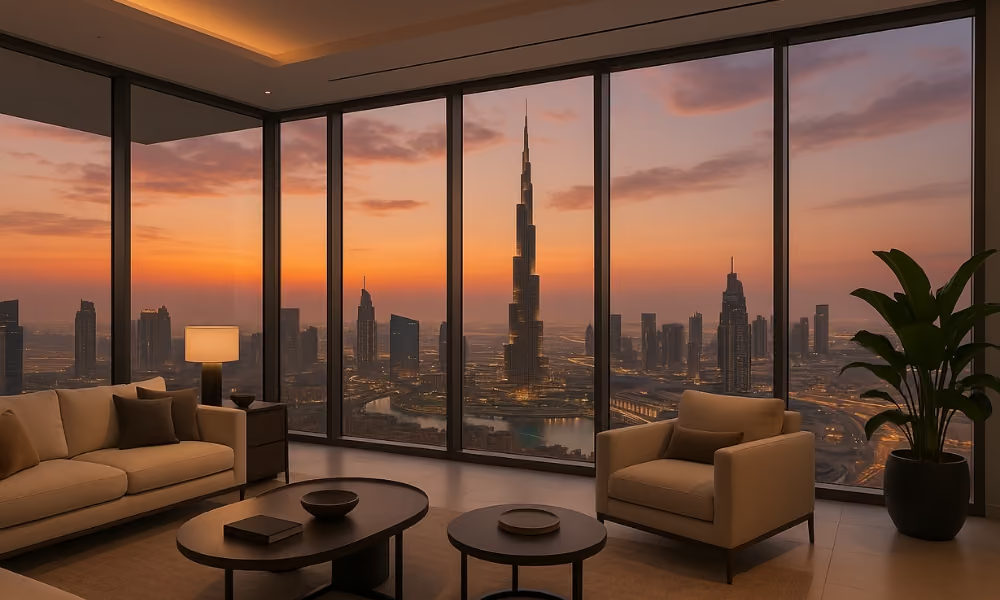
Dubai is known for skyscrapers, beachfront villas, and a lifestyle of indulgence — but luxury real estate in Dubai isn't just about glamour. It's about returns, resilience, and real estate strategy.
Dubai's luxury property market delivers real wealth-building potential: gross rental yields of 5–7%, capital appreciation of 15–30% over 3 years, and zero property or capital gains tax. When compared to London, New York, and Singapore luxury markets, Dubai investors keep significantly more of their earnings, making it a superior choice for high-net-worth buyers seeking tax-efficient wealth accumulation with strong appreciation upside.
If you're thinking about investing in high-end property, this article will help you understand the ROI potential behind luxury real estate — and why the right investment can be far more rewarding than it looks.
Why Investors Are Choosing Dubai for Luxury Property
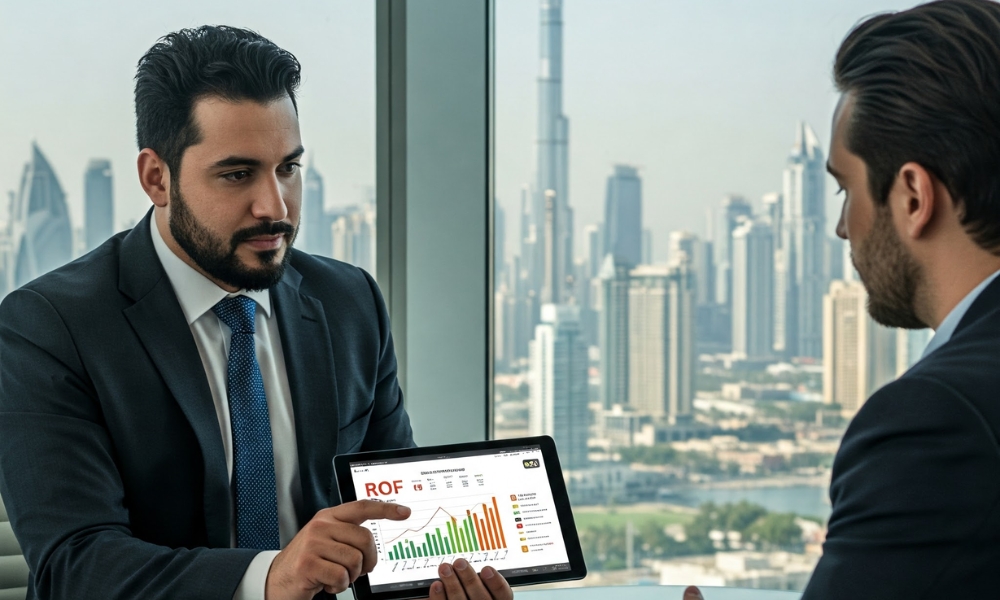
1. No Property Tax or Capital Gains Tax
Let's start with the most obvious edge: Dubai doesn't tax your property annually or apply capital gains tax. This alone maximizes net returns, especially when compared to cities like London, New York, or Paris.
In Dubai, what you earn — you keep.
2. Rental Yields That Outperform Global Luxury Markets
While luxury properties in cities like London or Singapore offer yields of 2–3%, Dubai's luxury segment provides gross yields of 5%–7%, depending on:
- Location (Downtown, Dubai Hills, Palm Jumeirah)
- Furnishing level
- Short-term vs long-term rentals
Short-term rentals in areas like Downtown Dubai or Business Bay can fetch daily rates of AED 800–1500 for a 1-bedroom apartment.
3. Capital Appreciation in Key Luxury Zones
Over the past 3 years, luxury units in:
- Dubai Creek Harbour
- Arjan (high-end segment)
- Palm Jumeirah villas
…have appreciated by 15–30%, driven by limited inventory, high demand, and global interest from Europe, Asia, and the Middle East.
With Expo City development and Dubai's 2040 Urban Plan in motion, appreciation trends are likely to continue.
What Defines "Luxury Property" in Dubai?
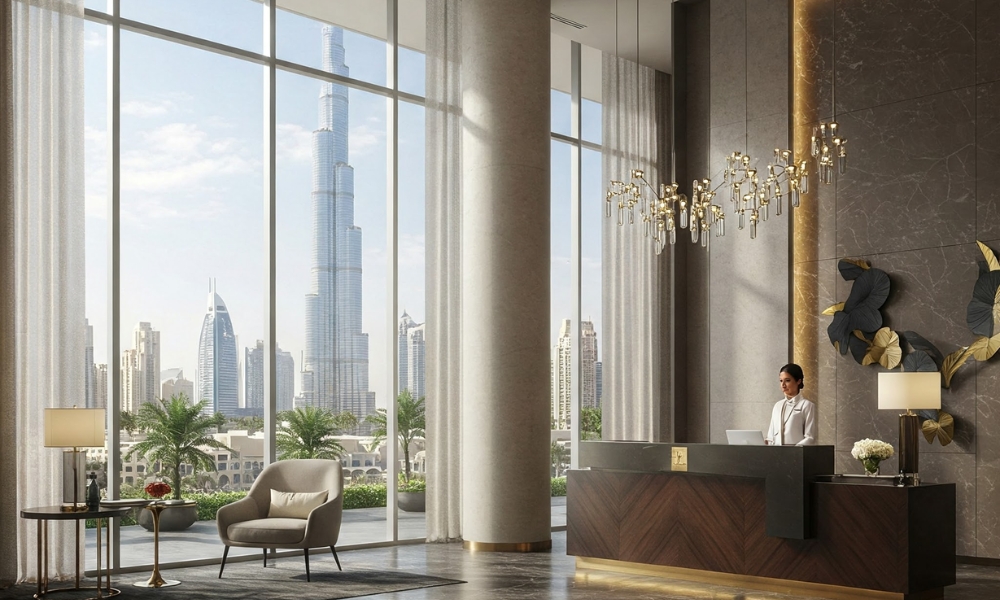
Not all high-priced homes are truly luxury. Here's what real luxury buyers seek:
- Prime location near beach, golf course, or skyline
- Branded residences (like Armani, Fendi, etc.)
- Concierge services and private access amenities
- Smart tech integrations
- High-end finishing (marble, hardwood, European fittings)
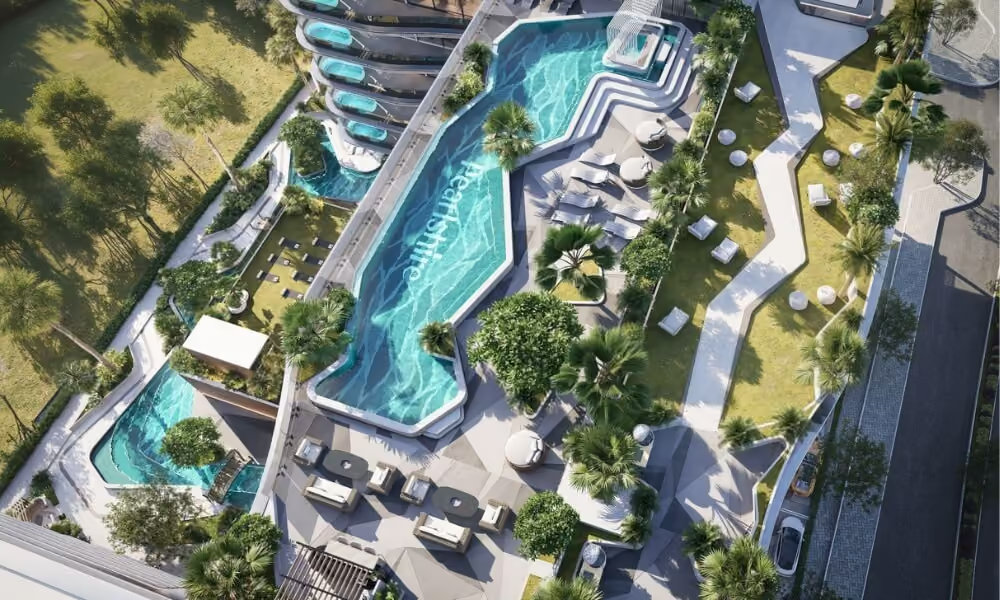
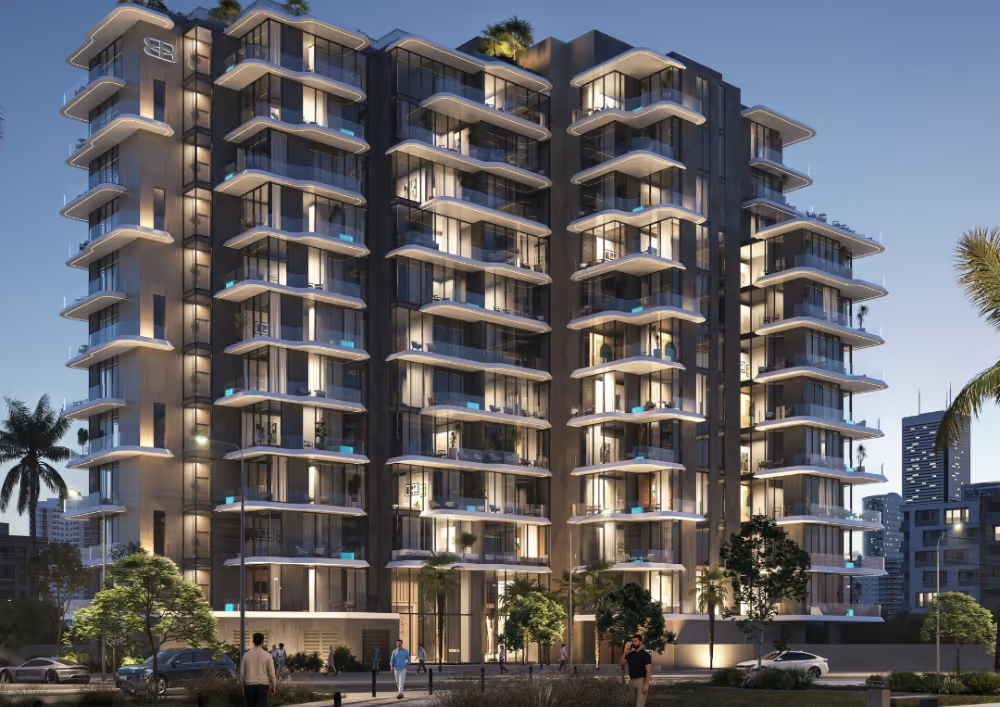
Projects like Pearlshire's Bond Enclave are redefining luxury with boutique-scale elegance in emerging upscale zones like Arjan.
ROI Breakdown: Example of a Luxury 2 BHK in Arjan
| Investment Element | Est. Value |
|---|---|
| Purchase Price | AED 1.3M |
| Annual Rent (Long-Term) | AED 75K–90K |
| Yield (Gross) | 6.5–7% |
| 3-Year Appreciation Potential | 20–25% |
Add to that the zero property tax, and your effective ROI often beats what you'd earn in mature markets — with less hassle.
Dubai Luxury Property ROI by Area 2026
Here's a detailed breakdown of how ROI varies across Dubai's top luxury investment zones. Each location offers distinct yield and appreciation profiles to match different investor profiles and risk appetites. Understanding these regional differences is critical for selecting the right property that aligns with your wealth-building objectives.
Market Context for 2026: Dubai's luxury segment continues to benefit from sustained global demand, limited new supply in premium locations, and capital appreciation momentum driven by economic resilience, visa policy enhancements, and infrastructure development. Investors who position themselves in high-yield zones like Arjan Premium capture the best of both worlds — attractive rental income plus significant appreciation potential — while established areas like Downtown Dubai and Palm Jumeirah offer lower-risk, premium stability for conservative portfolios.
| Location | Avg Price 2BR (AED) | Gross Yield | 3-Year Appreciation | Risk Level |
|---|---|---|---|---|
| Palm Jumeirah | 4.5M | 4–5% | 20–25% | Low |
| Downtown Dubai | 3.2M | 5–6% | 15–20% | Low |
| Dubai Hills Estate | 2.8M | 5.5–6.5% | 18–25% | Low–Medium |
| Arjan Premium | 1.3M | 6.5–7.5% | 20–30% | Medium |
| Business Bay | 2.5M | 5–6% | 12–18% | Low |
This data shows why Arjan Premium has emerged as a favored choice for investors seeking higher yields with moderate risk — particularly through projects like Pearlshire's Bond Enclave, which combines luxury finishes with strong income-generating potential.
Location Selection Strategy: Conservative investors prioritizing capital preservation typically gravitate toward Palm Jumeirah, Downtown Dubai, and Business Bay, where established demand from ultra-high-net-worth individuals ensures stable rental pools and minimal vacancy risk. Growth-focused investors willing to accept moderate volatility often prefer Dubai Hills Estate or Arjan Premium, where emerging infrastructure investments and lifestyle improvements create both yield and appreciation opportunities. The key is matching your investment timeline and risk tolerance to the right micromarket.
Tax-Free Wealth Accumulation: Dubai vs Global Luxury Markets
One of the most compelling reasons to invest in Dubai luxury property is the tax advantage. While rental income, capital gains, and property ownership are taxed in most developed markets, Dubai offers a zero-tax environment. To illustrate the real-world impact, consider a luxury property generating AED 150,000 in annual rental income.
In Dubai, the investor keeps the full AED 150,000 net. Compare this to other global luxury markets: In London, the same AED 150,000 in rental income is subject to 40% income tax, leaving the investor with just AED 90,000 net. In New York, combined federal and state income taxes average 42–50%, reducing AED 150,000 to roughly AED 75,000–85,000 net. Singapore, though offering 5–20% tax on investment income, still results in AED 120,000–142,500 net.
Over a 10-year hold period on a luxury property generating consistent rental income, the Dubai tax advantage compounds significantly. An investor in Dubai accumulates AED 1.5 million in pre-tax income, while the same investor in London only nets AED 900,000 after taxes. That's a AED 600,000 difference — enough to purchase an additional luxury unit or substantially increase your overall portfolio value.
Beyond rental income, Dubai's lack of capital gains tax amplifies wealth accumulation during exit. A luxury property purchased for AED 2 million that appreciates 25% to AED 2.5 million generates AED 500,000 in profit that is entirely tax-free. In London, the same transaction would incur 20% stamp duty on purchase (AED 400,000) plus capital gains tax on the profit, reducing net proceeds. This structural advantage makes Dubai not just an investment, but a wealth-building engine for high-net-worth individuals globally.
Strategic Tax Planning: High-net-worth investors from developed economies can leverage Dubai's tax framework to achieve family wealth consolidation goals. When multiple properties are held, the cumulative tax savings over a decade can exceed AED 2–3 million, providing capital for portfolio diversification, education endowments, or legacy planning. Additionally, Dubai's regulatory clarity on tax residency means investors can structure their holdings without complex international tax compliance, unlike jurisdictions with substance requirements or beneficial ownership disclosures.
Buying Off-Plan vs Ready Luxury Units

Off-Plan Pros:
- Lower price per sq.ft
- Customization available
- Developer incentives (e.g. waived DLD fees, post-handover plans)
Ready Unit Pros:
- Immediate rental income
- Real-world view of finishing & amenities
- Faster capital return timeline
Tip: In emerging luxury districts like Arjan, off-plan gives early investors room to grow as the location develops.
Interested in exploring how a Golden Visa through luxury property investment can enhance your long-term strategy? Or learn more about maximizing luxury real estate ROI in Dubai. Investors often ask why they should consider Dubai when other luxury markets are available — find the answer in our detailed comparison: why investors choose Dubai over London.
Global Interest Is Driving Luxury Demand in Dubai
Foreign buyers from Russia, China, the UK, and India are purchasing luxury homes in Dubai not just for yield — but as lifestyle assets, retirement homes, or hedge investments. This international capital influx creates a robust rental demand pool, keeping occupancy rates high and supporting property appreciation across premium zones.
The Golden Visa program (AED 2M+ property value) adds another layer of appeal, making luxury homes a passport to long-term residency. This residency benefit increases buyer motivation and market liquidity, meaning you have multiple exit strategies when the time comes to sell or refinance.
Investor Demographics and Market Resilience: The diversity of foreign buyer nationalities insulates Dubai's luxury market from regional or sector-specific downturns. Russian investors seek safe-haven capital preservation; Chinese buyers view luxury property as portfolio diversification outside of domestic real estate constraints; UK and European investors capitalize on the tax differential versus their home countries; and Middle Eastern family offices use Dubai as a hub for international property portfolios. This mosaic of motivations creates structural demand stability rarely seen in single-source markets.
Pearlshire's Luxury Living Approach
At Pearlshire, luxury isn't just about look — it's about lasting value. Our upcoming developments blend:
- Signature architecture designed by internationally acclaimed firms
- Premium interior materials sourced from European suppliers
- Smart living technologies including AI-powered climate control and security
- Limited-unit buildings with privacy in mind and exclusive amenities
Whether you're buying for self-use or rental, our luxury apartments are built for performance, appreciation, and prestige. Each Pearlshire project is strategically positioned in emerging or established luxury zones with proven track records of capital appreciation. Our commitment to quality finishes, architectural distinction, and community amenities ensures your investment remains in demand across market cycles.
The Bond Enclave Advantage: Located in the upscale Arjan Premium segment, Pearlshire's Bond Enclave exemplifies how architectural prestige combined with rental yield potential creates a dual-benefit investment. With gross yields of 6.5–7.5% and 3-year appreciation potential of 20–30%, Bond Enclave residents enjoy both immediate income and long-term wealth growth. The project's boutique scale (limited units) ensures exclusivity while maintaining strong rental demand from the broader Arjan corporate and international expat communities.
Financing Options That Enhance Your Luxury Investment ROI
Many high-net-worth investors assume they must pay cash for luxury properties, but strategic leverage can actually amplify your ROI. Dubai's major banks offer financing on luxury properties at competitive rates, typically 3.5–4.5% on fixed terms. For a AED 2 million luxury property, financing 50% through a bank loan while investing AED 1 million in capital creates powerful leverage.
Example: The Power of Leverage in Wealth Building: Consider a AED 2 million luxury property in Downtown Dubai with 5.5% gross yield. Paying all-cash generates AED 110,000 annually (5.5% return on AED 2M invested capital). However, financing AED 1 million at 4% interest while investing AED 1 million in equity means you're generating AED 110,000 gross rental income minus AED 40,000 in financing costs, netting AED 70,000 on AED 1 million invested capital — a 7% net return. Simultaneously, the AED 1 million you didn't deploy in this property can be invested elsewhere (additional properties, equities, business ventures) to generate parallel returns. If the property appreciates 20% over 3 years (AED 400,000 gain), your return on your AED 1 million equity is 40%, far outpacing the 20% appreciation rate.
Developer payment plans also offer structured financing benefits. Many Pearlshire projects feature flexible payment schedules that align with construction milestones, meaning you can preserve liquidity during the development phase and direct capital to other wealth-building opportunities. This strategy has proven particularly valuable for investors managing diversified portfolios across multiple asset classes.
Mitigating Risk: Diversification and Market Selection
While Dubai's luxury market has demonstrated resilience and strong fundamentals, prudent investors employ diversification strategies to protect and grow wealth. Spreading investments across multiple locations (Palm Jumeirah for prestige, Arjan for yield, Downtown Dubai for stability) creates a balanced portfolio that captures upside across different market segments while limiting exposure to any single micromarket.
Additionally, partnering with experienced developers like Pearlshire reduces execution risk. Projects with established completion track records, transparent timelines, and quality-forward construction management ensure your investment reaches maturity as planned. Due diligence on developer reputation, financial stability, and previous project success metrics should be non-negotiable components of any luxury property investment decision.
Currency Diversification Benefits: For international investors, holding property in Dubai's AED-denominated market provides indirect exposure to assets not correlated with traditional currency holdings. While your home country's currency may fluctuate, the underlying real estate asset retains intrinsic value, and rental income in AED provides currency diversification benefits that strengthen overall portfolio resilience.
Ready to Invest in High-ROI Luxury?
Let Pearlshire's team help you select the right project, price point, and payment plan for your investment goals.
What constitutes "real ROI" in Dubai luxury property investment?
True ROI extends beyond appreciation, including rental income, tax advantages, lifestyle benefits, and capital preservation. Calculate net returns by subtracting holding costs, maintenance, and vacancy periods from rental income and appreciation gains. Luxury properties often appreciate 4-8% annually in prime locations while generating 3-5% rental yields, totaling 7-13% comprehensive returns. Consider currency fluctuations and UAE tax benefits for international investors.
How does luxury property perform compared to standard residential?
Luxury properties in prime Dubai locations (Palm Jumeirah, Downtown Dubai, Emirates Hills) show stronger appreciation but lower rental yields. Standard properties generate higher percentage yields but slower appreciation. Luxury investments suit long-term capital appreciation strategies, while standard properties maximize income. Market conditions, location desirability, and individual financial goals determine which category delivers better overall ROI for specific investor profiles.
What hidden costs impact luxury property ROI?
Maintenance costs for luxury amenities and finishes significantly exceed standard properties—premium buildings charge 15-25% higher service fees. Property management for luxury rentals costs more due to higher service expectations. Vacancy periods in luxury segments may be longer, reducing consistent income streams. Furnishing and updating luxury interiors requires substantial capital investment. Tax implications and currency considerations also impact net returns for international investors.
Which Dubai luxury locations offer the best ROI potential?
Downtown Dubai and Business Bay offer strong appreciation and consistent rental demand. Palm Jumeirah provides lifestyle appeal with moderate appreciation. Emirates Hills attracts wealthy buyers, supporting value retention. Jumeirah Beach Residence balances accessibility with luxury positioning. Location selection matters more than property type—choose established areas with infrastructure, amenities, and strong tenant demand rather than emerging developments with uncertain appreciation trajectories.
How long should I hold luxury property for optimal returns?
Minimum five-year holding periods allow appreciation realization and rental income accumulation to justify transaction costs. Seven-to-ten-year holdings optimize comprehensive ROI while providing exit flexibility. Luxury properties appreciate gradually but steadily—patience rewards long-term holders. Market timing matters less than consistent income generation during ownership. Consider your financial timeline, currency exposure, and personal needs when determining optimal holding duration.