Dubai Rental Yields by Community 2026: Where Landlords Earn the Highest Returns

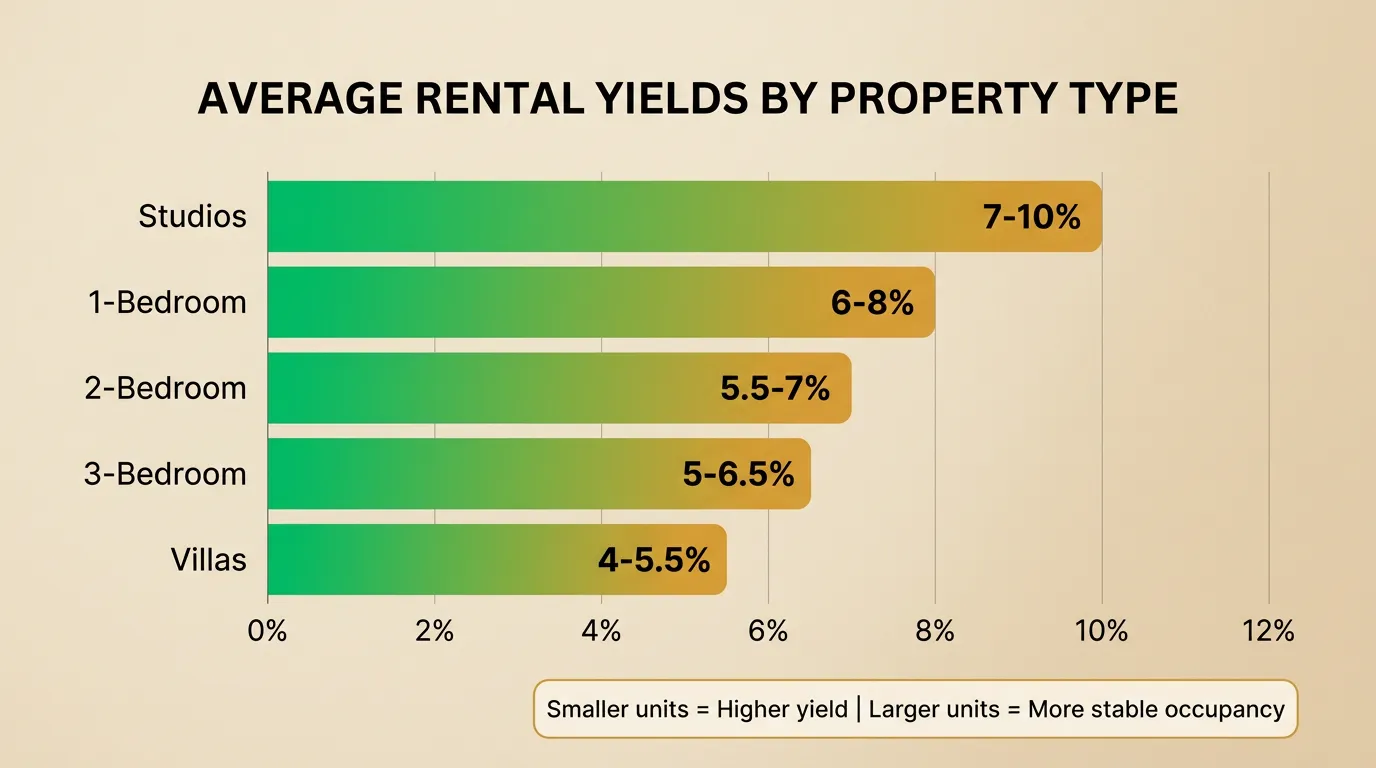
Dubai average gross rental yield is 7.07% in 2026. Net yields range from 2.5% in Palm Jumeirah to 6.8% in JVC. Arjan delivers 6.5-7% net yield with entry prices 30-40% below established communities and service charges of AED 12-16 per sqft. Studios yield highest at 8-10% gross while villas return 4-5.5%.
Dubai's rental market delivered average gross yields of 7.07% on new contracts in 2025. That's 2-3x what London, New York, or Singapore offer. But the citywide average hides massive variation. Pick the wrong community, and you're looking at 4%. Pick the right one, and you're clearing 8-9%.
The difference between a mediocre investment and a cash-flowing asset often comes down to one decision: community selection. This guide digs into Dubai's 2026 rental yield data across 25+ neighborhoods, highlighting where your capital works hardest.
Dubai Rental Yields Snapshot 2026
| Community | Gross Yield | Net Yield | Avg Annual Rent (AED) | Property Type |
|---|---|---|---|---|
| JVC | 7.8% | 6.8% | 45,000–55,000 | 1-2 Bed Apt |
| Arjan | 7.5% | 6.5–7% | 38,000–48,000 | 1-2 Bed Apt |
| International City | 7.2% | 6% | 32,000–40,000 | 1-2 Bed Apt |
| Deira | 6.9% | 5.9% | 35,000–42,000 | 1-2 Bed Apt |
| Downtown Dubai | 6.4% | 5.2% | 55,000–75,000 | 1-2 Bed Apt |
| Dubai Marina | 6% | 4.8% | 65,000–85,000 | 1-2 Bed Apt |
| Palm Jumeirah | 3.5% | 2.5% | 180,000–250,000 | Villa |
Key observations:
- Rental yield inversely correlates with property price appreciation. High-growth areas deliver lower current yields.
- Studio apartments yield 8–10% gross, offering higher rental income relative to purchase price.
- Villas typically return 4–5.5% gross yield due to higher purchase prices and lower rental demand per property.
- Service charges of AED 12–16/sqft in mid-market communities (Arjan, JVC) vs. AED 20–30/sqft in premium areas.
- Annual occupancy rates: 85–95% across premium communities, 92–98% in mid-market areas.
Why Arjan Stands Out for Yield-Focused Investors
Arjan's appeal lies in the convergence of three factors:
- Affordable entry prices: 1-bedroom apartments range from AED 320,000–420,000, 30–40% below Marina or Downtown.
- Strong rental demand: Proximity to industrial zones, Al Maktoum International Airport, and business parks attracts tenants with stable, predictable income.
- Lower holding costs: Service charges of AED 12–16/sqft keep net yields competitive. Municipality fees and registration costs are proportionally lower on lower-priced units.
For a AED 350,000 investment, typical annual rent is AED 42,000 (6.8% gross), with net yield of 5.5–6.2% after service charges and holding costs.
Gross vs. Net Yield: What Landlords Must Understand
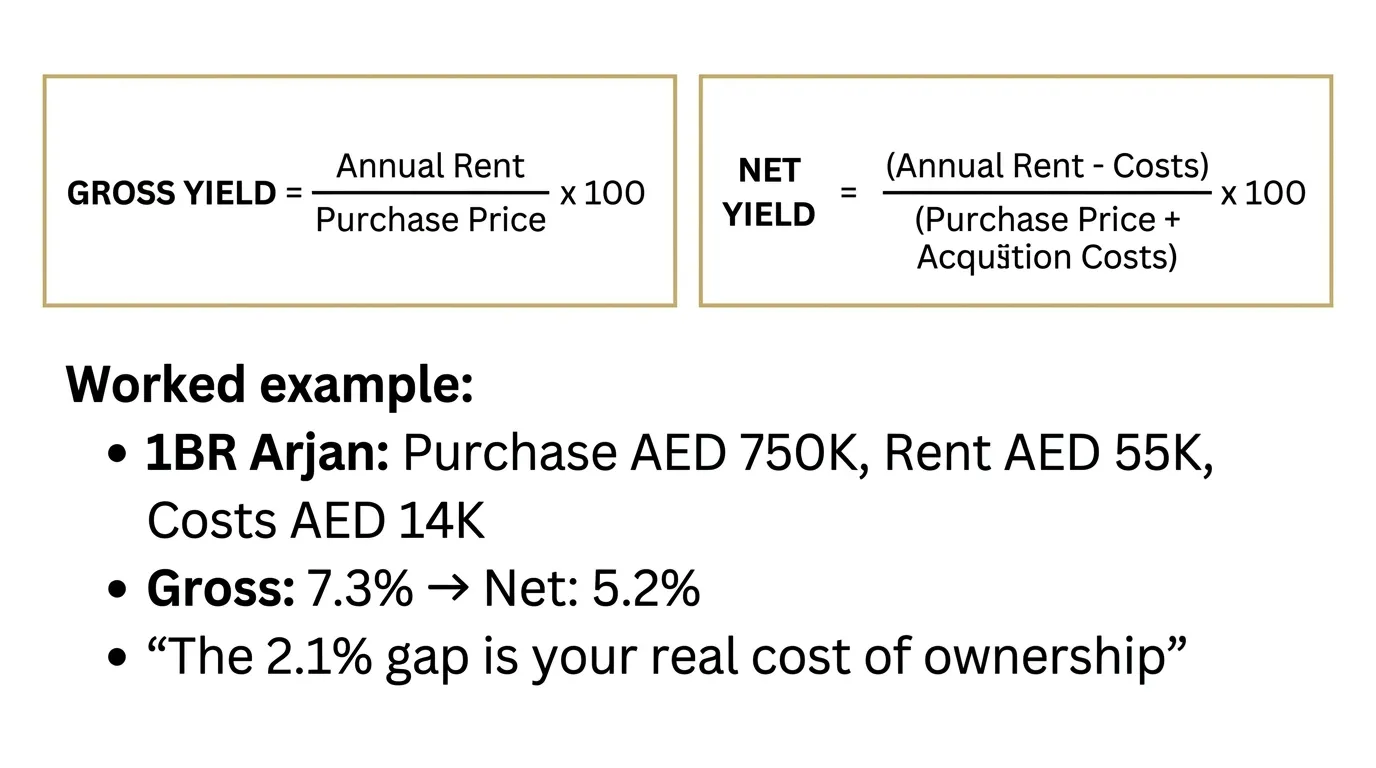
Gross yield divides annual rental income by purchase price. It ignores all costs.
Net yield accounts for operating expenses: service charges, mortgage interest (if applicable), vacancy allowances, maintenance, and registration fees. Real wealth-building happens at net yield—the metric that determines your actual profit.
Example: A AED 500,000 apartment generating AED 35,000 annual rent yields 7% gross. But after AED 8,000 in annual costs, net yield drops to 5.4%. That 1.6% swing directly impacts long-term returns.
Investment Strategy: Yield vs. Appreciation
Dubai's rental yield market presents two investment philosophies:
Yield-first approach: Target 6–8% net yields in mid-market communities. Accept slower property appreciation (3–5% annually) in exchange for consistent cash flow. Ideal for investors prioritizing income over long-term capital gains.
Appreciation-first approach: Invest in emerging or master-planned areas with lower current yields (4–5%) but expect 10–15% annual appreciation. Returns compound through capital gains rather than rental income.
Arjan blends both: 6.5–7% net yield today with emerging infrastructure driving 7–10% annual appreciation potential.
Community-by-Community Yield Analysis
High-Yield Communities (6–7.8% Net Yield)
JVC (Jumeirah Village Circle)
- Gross yield: 7.8% | Net yield: 6.8%
- 1-bed apartments: AED 350,000–450,000
- Annual rent range: AED 45,000–55,000
- Why investors favor it: Mature community infrastructure, consistent tenant quality, low vacancy rates (3–5%).
Arjan
- Gross yield: 7.5% | Net yield: 6.5–7%
- 1-bed apartments: AED 320,000–420,000
- Annual rent range: AED 38,000–48,000
- Why investors favor it: Entry prices 30–40% below Marina/Downtown, strong industrial tenant base, infrastructure expansion.
International City
- Gross yield: 7.2% | Net yield: 6%
- 1-bed apartments: AED 280,000–360,000
- Annual rent range: AED 32,000–40,000
- Why investors favor it: Lowest entry prices, steady expatriate tenant base, proximity to Expo 2020 site (future development catalyst).
Moderate-Yield Communities (5–6% Net Yield)
Downtown Dubai
- Gross yield: 6.4% | Net yield: 5.2%
- 1-bed apartments: AED 700,000–900,000
- Annual rent range: AED 55,000–75,000
- Why investors favor it: Premium location, tourism-driven rental demand, strong capital appreciation potential.
Deira
- Gross yield: 6.9% | Net yield: 5.9%
- 1-bed apartments: AED 400,000–500,000
- Annual rent range: AED 35,000–42,000
- Why investors favor it: Historic commercial hub, evolving retail scene, stable expatriate tenant pool.
Dubai Marina
- Gross yield: 6% | Net yield: 4.8%
- 1-bed apartments: AED 750,000–950,000
- Annual rent range: AED 65,000–85,000
- Why investors favor it: Premium brand recognition, international tenant base, strong capital appreciation expected (5–8% annually).
Ultra-Premium Communities (Under 3% Net Yield)
Palm Jumeirah
- Gross yield: 3.5% | Net yield: 2.5%
- Villa prices: AED 3M–5M+
- Annual rent range: AED 180,000–250,000
- Why investors favor it: Capital appreciation (8–12% annually), global luxury brand appeal, limited supply.
Ultra-premium properties prioritize appreciation over yield. A AED 4M villa appreciation of 10% annually (AED 400,000 gain) far exceeds rental income, making yield a secondary consideration.
Rental Yield Trends for 2026–2027
Upward pressure on rental income: Shortage of mid-market inventory and population growth (targeting 5M residents by 2030) support continued rent increases of 5–8% annually.
Service charge inflation: Expect AED 14–18/sqft annually by end of 2026. Choose communities with controlled developer management to minimize creep.
Mortgage availability: Banks currently offer 80% LTV on investment properties. Higher mortgage rates (now 3.5–4.2%) reduce yield advantage on leveraged purchases, tilting returns toward higher-yield communities.
Regulation tightening: Short-term rental restrictions in select areas (Downtown, Marina) push long-term rental supply and support yield stability.
Investment Checklist for Yield-Focused Buyers
Before committing capital, evaluate:
- Net yield calculation: Request 3-year rent collection history and verify expense estimates. Don't accept developer projections.
- Tenant stability: Mid-market communities (Arjan, JVC) serve stable office workers. Ultra-premium areas (Marina) attract transient expats.
- Service charge trajectory: Ask for 5-year service charge history. Avoid communities with steep, unexplained increases.
- Exit flexibility: Properties in established communities (JVC, Downtown) resell faster. Emerging areas (Arjan) may require 2–3 months longer to find buyers.
- Currency exposure: Rental income in AED, but property appreciates against global capital. Consider if AED strength aligns with your investment thesis.
Final Thoughts: Yield as Part of a Broader Strategy
Dubai's 2026 rental yield landscape rewards precision. High-yield communities like Arjan, JVC, and International City deliver consistent cash flow and align with Dubai's infrastructure expansion plans. Moderate-yield premium areas (Downtown, Marina) offer yield plus capital appreciation potential.
The most successful yield-focused investors prioritize net yield over gross, account for rising service charges, and choose communities aligned with Dubai's long-term growth trajectory. Arjan's combination of 6.5–7% net yield, affordable entry, and infrastructure catalysts makes it a standout 2026 investment for landlords seeking balanced returns.
For 2026 and beyond, Dubai's rental yield story remains compelling—but success depends on disciplined analysis and realistic cost assumptions. Choose wisely, and returns follow.