Dubai Metro Blue Line: The Complete Guide to Stations, Route and What It Means for Property
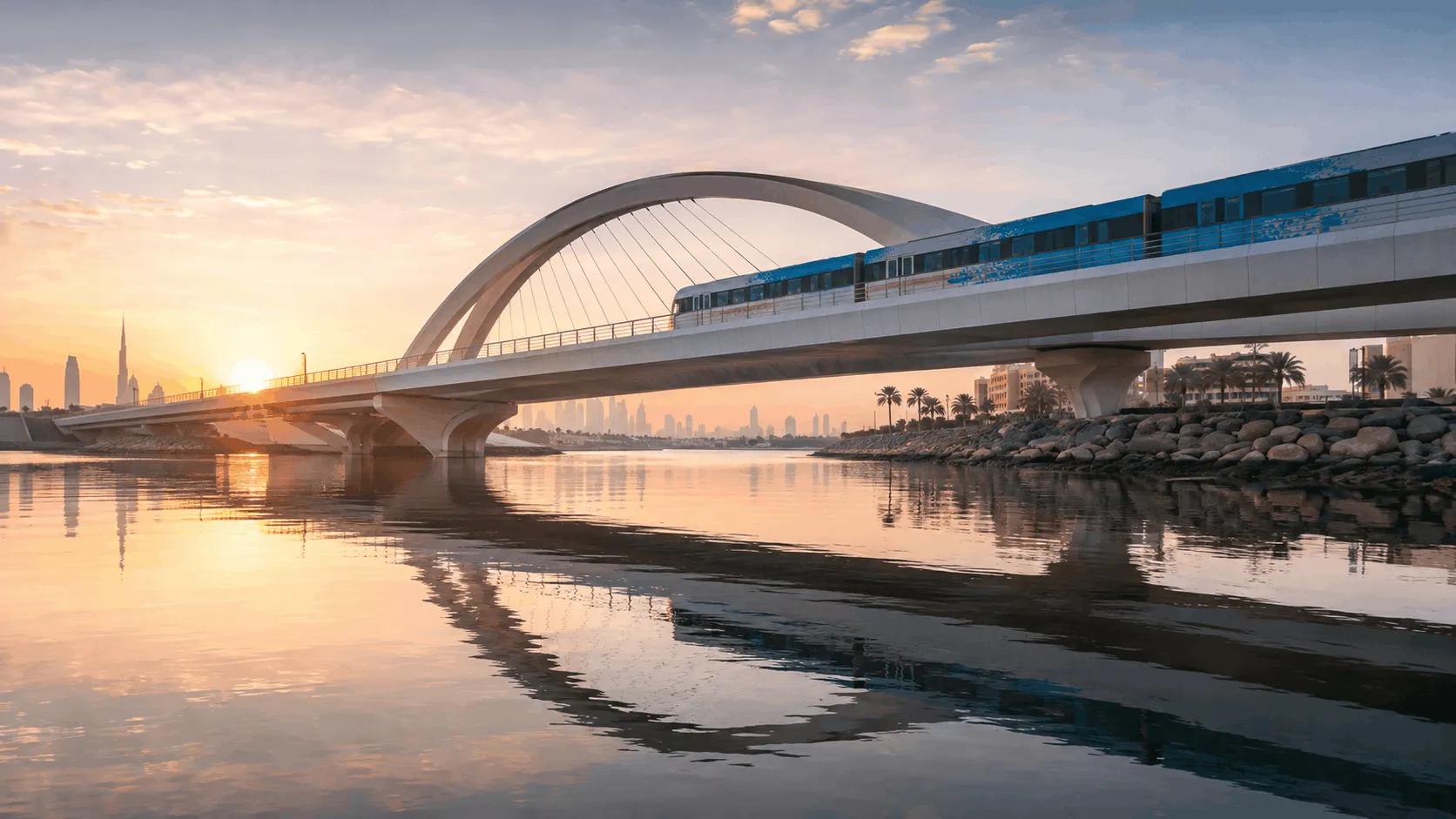
The Dubai Metro Blue Line is a 30 km line with 14 stations connecting Al Jaddaf and Al Rashidiya to International City, Dubai Silicon Oasis and Academic City. Approved at AED 20.5 billion, it opens on September 9, 2029, twenty years to the day after the first Metro journey, and it is already changing where Dubai buyers look.
Every few years Dubai builds something that quietly redraws the property map. The Red Line did it in 2009, when communities nobody shortlisted became commuter favourites within five years. The Blue Line is the next redraw, and this time the corridor runs east, through the districts where Dubai's population growth is actually happening. Here is everything confirmed so far, sourced from the RTA rather than sales brochures, and an honest read on which communities stand to gain.
The Blue Line route: two branches, one spine
The line is shaped like a Y. One branch starts at Creek Interchange Station on the Green Line in Al Jaddaf, crosses Dubai Creek on the Metro's first-ever creek bridge, and runs through Dubai Festival City, Dubai Creek Harbour and Ras Al Khor to International City 1. The second branch starts at Centrepoint Station on the Red Line in Al Rashidiya and reaches the same junction through Mirdif and Al Warqa. From International City 1, billed as the largest underground interchange on the network, a single spine continues through International City 2 and 3, Dubai Silicon Oasis and on to its terminus at Academic City.
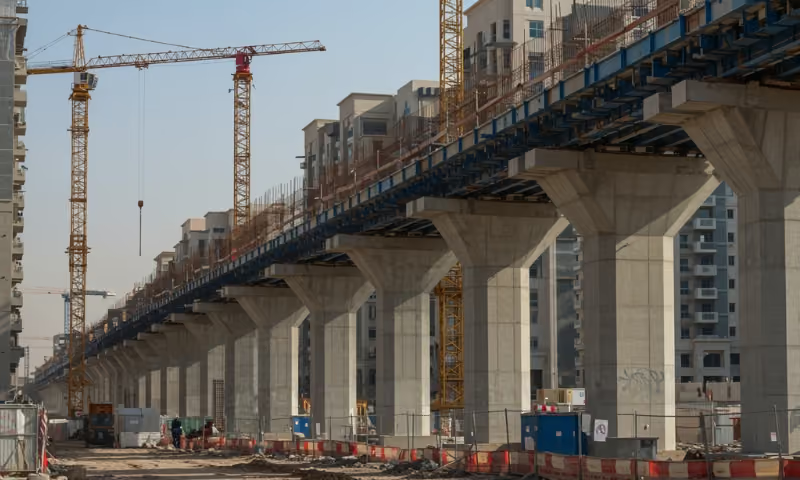
Of the 30 km, 15.5 km runs underground through five subterranean stations, with tunnels reaching depths of around 70 metres. The remaining 14.5 km is elevated across nine stations. Three interchanges tie the Blue Line into the existing network: Creek (Green Line), Centrepoint (Red Line) and the International City 1 junction between its own branches.
All 14 Blue Line stations
- Creek Interchange (Al Jaddaf): connects to the Green Line
- Dubai Festival City (Festival City): elevated
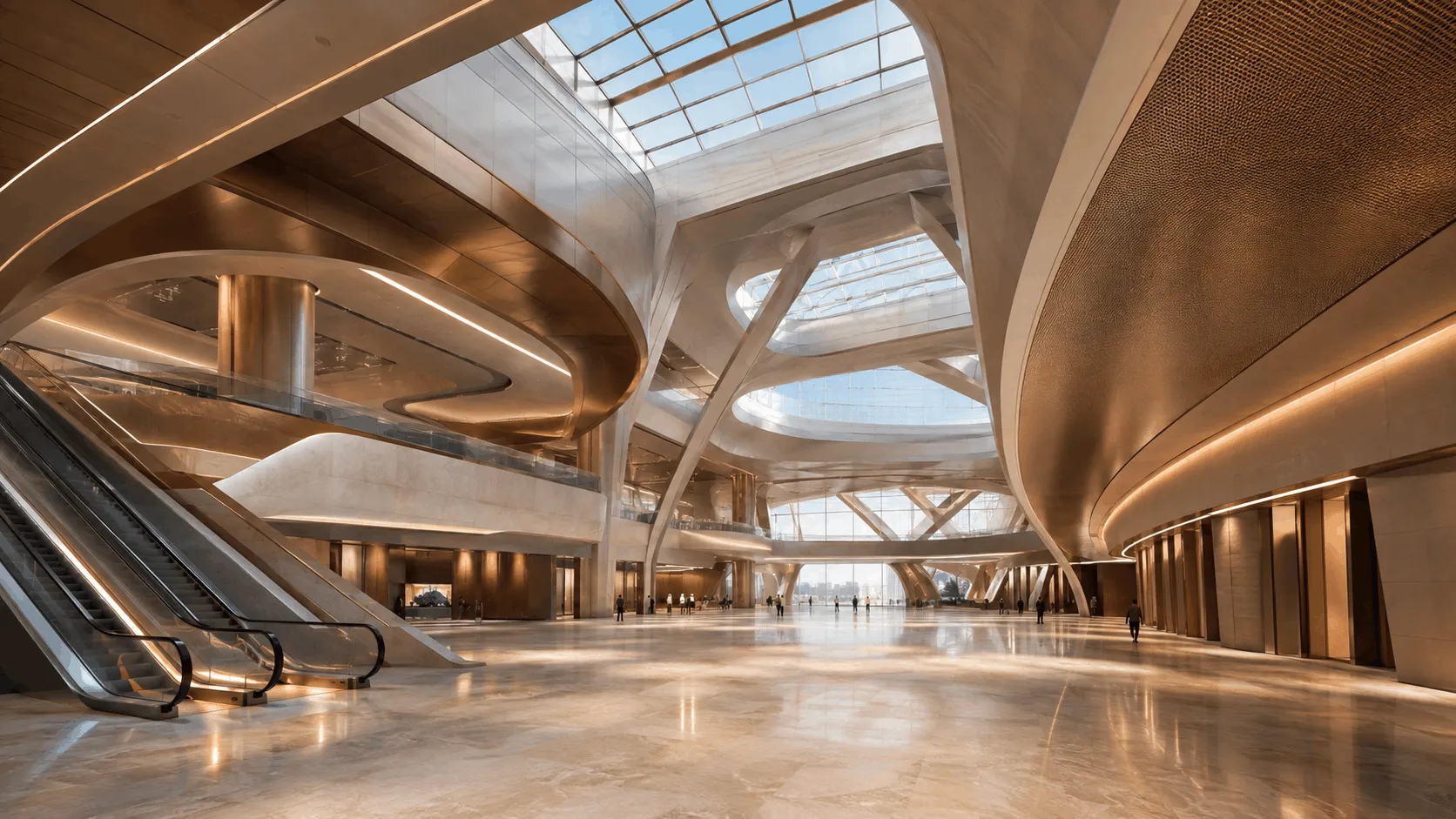
- Dubai Creek Harbour (Emaar Properties Station): world’s tallest metro station at 74 m
- Ras Al Khor (Ras Al Khor Industrial): serves the wildlife sanctuary side
- Centrepoint Interchange (Al Rashidiya): connects to the Red Line
- Mirdif (near City Centre Mirdif): elevated
- Al Warqa: elevated
- International City 1: underground interchange joining both branches
- International City 2: spine section
- International City 3: spine section
- Dubai Silicon Oasis (DSO): opposite Fakeeh University Hospital
- Academic City (Dubai International Academic City): terminus; serves the university cluster
Note for accuracy: the RTA station list is the authority here. Some early coverage circulated station names that never appeared in official material, including an airport stop. The Blue Line does not serve the airport directly; airport journeys connect through the Red and Green line interchanges.
When will the Blue Line open?
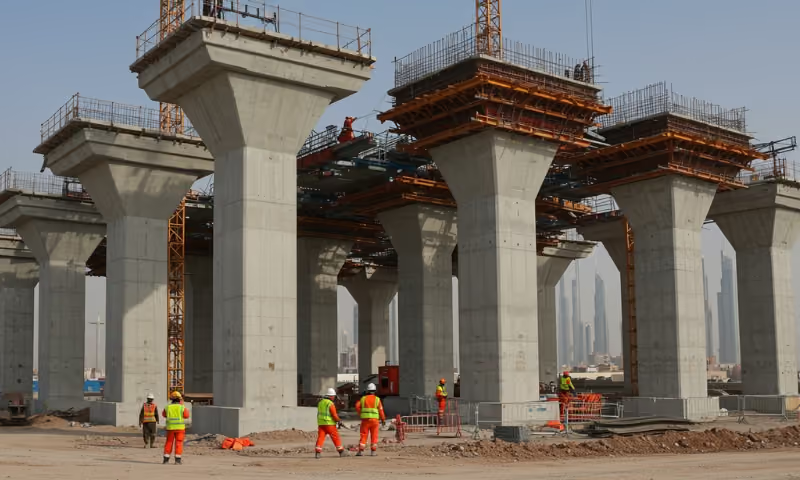
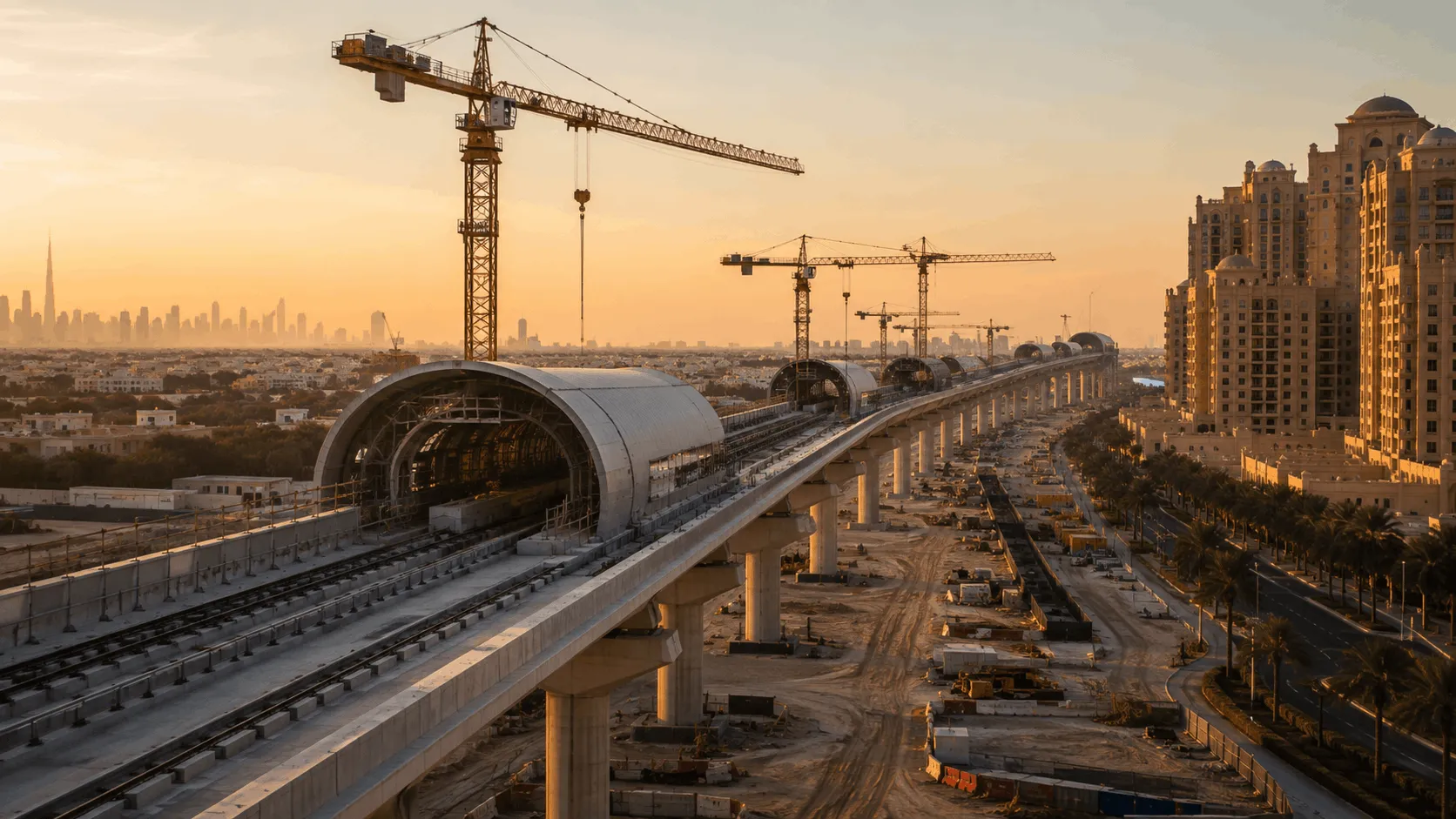
September 9, 2029. The RTA has held this date consistently since the project was announced, choosing it deliberately: the Dubai Metro carried its first passengers on 09/09/2009. Construction is moving at pace. Tunnelling works were inaugurated in May 2026, around 10,000 workers are on the project, and the RTA reported 10 percent completion within five months of commencement, targeting 30 percent by the end of 2026. Long infrastructure timelines in Dubai have a habit of holding when an anniversary is attached to them.
Which areas benefit most from the Blue Line?
The honest answer has two layers: the communities getting stations, and the communities next to them.
- Dubai Creek Harbour gets the flagship. A 74-metre station designed by the Burj Khalifa’s architects, built for 160,000 daily passengers, with Emaar holding naming rights. The station is the centrepiece of the district’s next phase.
- International City converts from a rental pocket priced on distance into a three-station corridor. Few districts in Dubai history have gained this much transit in one stroke.
- Mirdif and Al Warqa, long-established family districts that never had Metro access, join the network for the first time.
- Dubai Silicon Oasis gets a station opposite Fakeeh University Hospital, stitching the tech district and its workforce into the network.
- Academic City becomes the terminus, putting tens of thousands of university students and staff one train from the city.
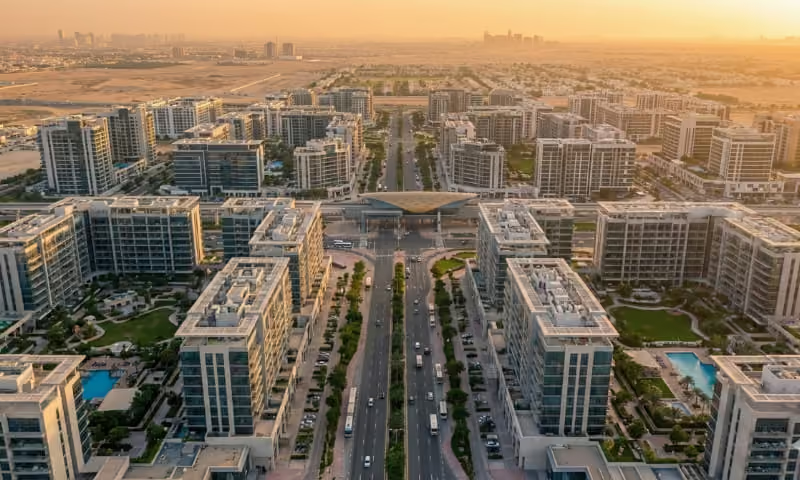
Then there is the adjacency layer, and this is where buyers should read carefully, because this is where marketing runs ahead of fact. No Blue Line station sits inside Dubailand. What is true: the terminus cluster at Academic City and Silicon Oasis sits directly beside Dubailand Residence Complex, roughly eight to ten minutes by car or feeder bus from communities in Wadi Al Safa 5. For DLRC residents, the Blue Line turns a car-only commute into a park-and-ride or feeder journey to Business Bay and DIFC connections. That is a genuine connectivity upgrade, and it is the accurate version of the claim.
Historically, Dubai communities have re-rated as Metro access arrived, with station-adjacent buildings commanding visible premiums over their car-dependent neighbours within a few years of opening. The pattern played out along the Red Line and there is little reason to expect the eastern corridor to behave differently, though anyone quoting you a precise appreciation percentage for 2029 is guessing.
How will the Blue Line connect to Arjan?
It will not directly, and buyers deserve the straight answer. Arjan sits on the western side of Dubailand; its nearest Metro remains the Red Line at Mall of the Emirates, with the F33 bus link. What the Blue Line changes for Arjan is indirect: it pulls the whole eastern Dubailand corridor into the transit network, which tends to lift the profile, infrastructure spend and feeder-bus coverage of Dubailand as a whole. For the full picture of Arjan connectivity today, see our Arjan drive times guide.
Construction milestones tracker
- November 2023: project approved at AED 18 billion, later revised to AED 20.5 billion
- June 2025: foundation stone laid for the Emaar Properties Station at Creek Harbour
- May 2026: tunnelling works inaugurated
- July 2026: RTA reports 10 percent completion, targeting 30 percent by year end
- Next update: we refresh this page as each RTA milestone lands
What the Blue Line means if you are buying now
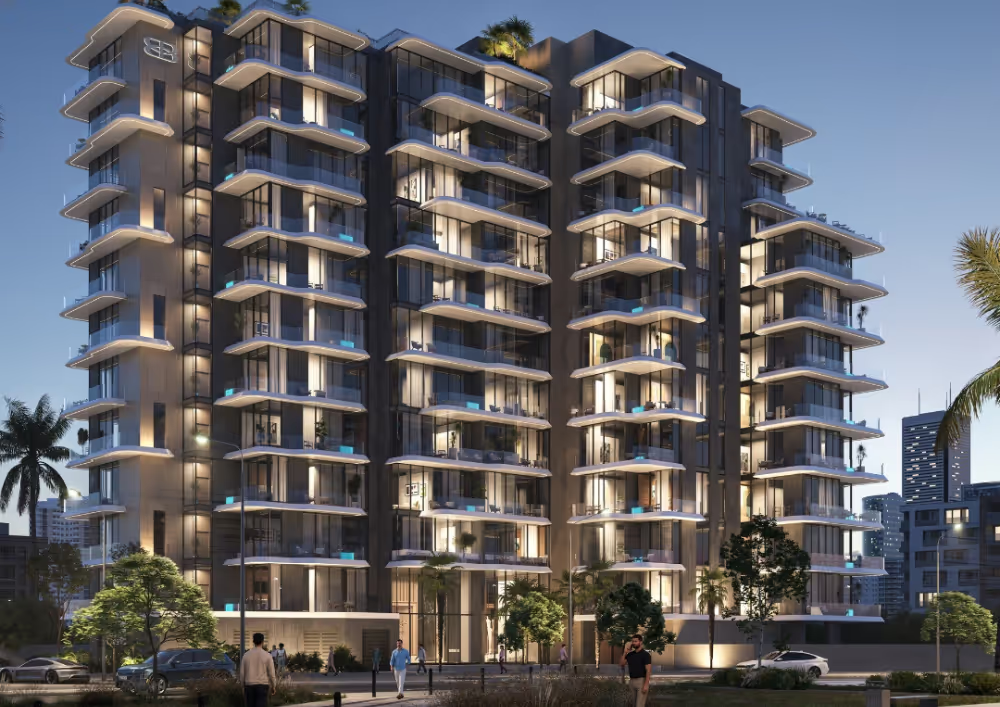
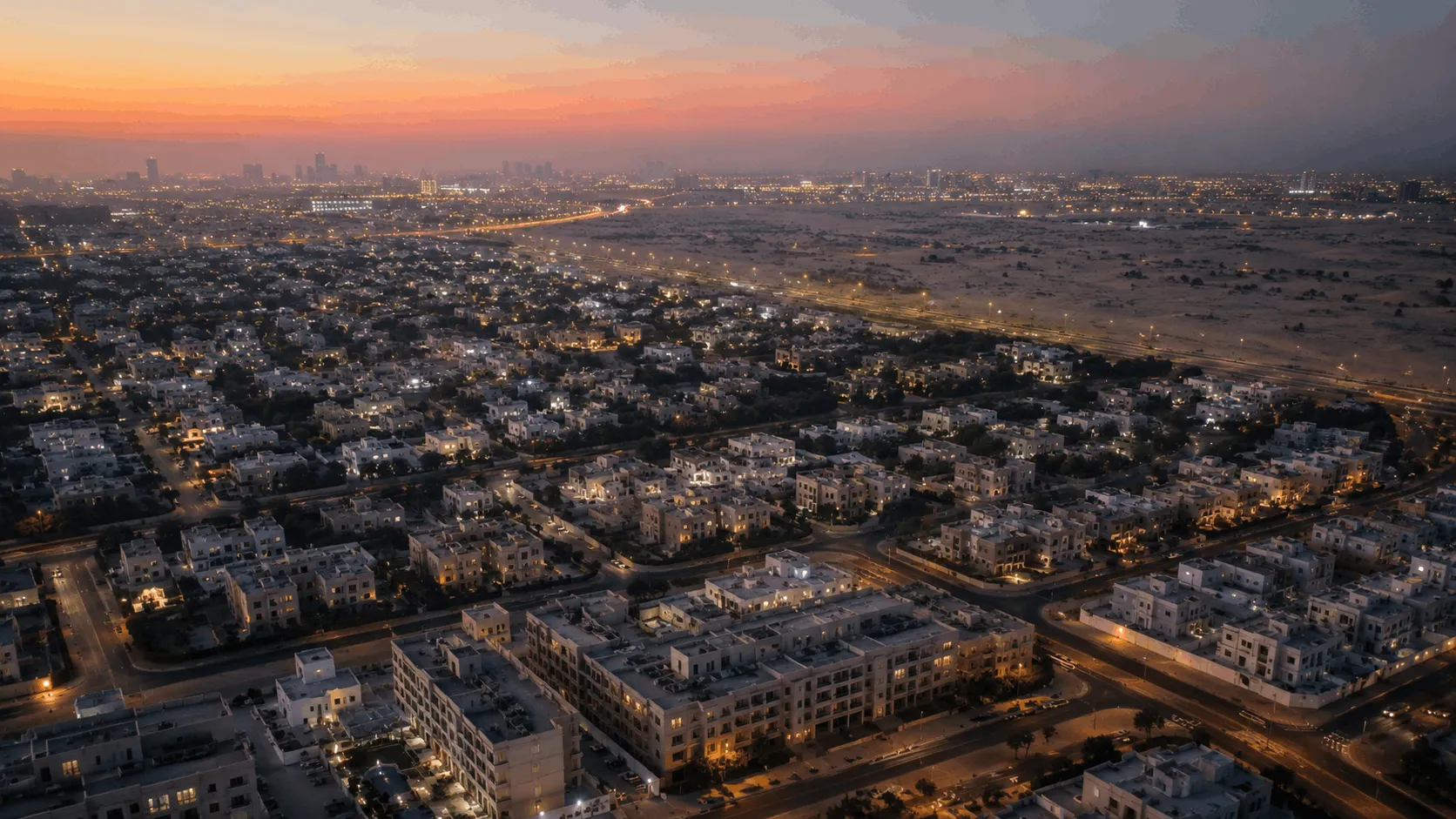
Three years is a useful runway. Buyers who purchased along the Route 2020 extension before it opened generally did better than those who waited for the ribbon cutting. The corridor to watch is the one the market has not fully priced: the eastern residential belt from Silicon Oasis through Academic City to the DLRC edge, where entry prices remain among the lowest in freehold Dubai and the terminus infrastructure is already funded and under construction. Bond Living in DLRC sits inside that adjacency zone, minutes from the future terminus cluster, at studio-to-3-bedroom pricing that predates the line.
How many stations will the Dubai Metro Blue Line have?
Fourteen stations across 30 km: nine elevated and five underground, including three interchange stations connecting to the Red and Green lines.
Where does the Blue Line start and end?
It runs from two starting points, Creek Interchange in Al Jaddaf and Centrepoint in Al Rashidiya, merging at International City and continuing through Dubai Silicon Oasis to its terminus at Academic City.
Will the Blue Line have a station in Dubailand?
No station sits inside Dubailand itself. The nearest stations are Academic City and Dubai Silicon Oasis, roughly eight to ten minutes from Dubai Land Residence Complex, which makes DLRC one of the closest affordable communities to the new terminus.
Is the Blue Line underground or elevated?
Both. 15.5 km runs underground through five stations at depths reaching about 70 metres, and 14.5 km runs elevated across nine stations.
Which is the biggest Blue Line station?
The Emaar Properties Station at Dubai Creek Harbour, the world’s tallest metro station at 74 metres, designed by SOM and built for around 160,000 daily passengers.
Is it a good time to buy property near the Blue Line?
The pattern from previous lines suggests the strongest gains went to buyers who entered before opening day. Areas near the eastern terminus, including DLRC and Silicon Oasis, still price well below station-served communities in central Dubai.