DLRC vs JVC 2026: Investment, Prices & Living Comparison

By Pearlshire Development Team | Last Updated :
June 9, 2026
June 8, 2026
15 mins read
.
Market Trends & Investment
DLRC vs JVC 2026: Investment, Prices & Living Comparison

Thisis the most common question we hear from investors looking at the southernDubailand corridor: DLRC or JVC? Both communities sit in a similar pricebracket. Both target the same tenant profile. Both occupy the same general zoneof Dubai, south of Business Bay and west of Academic City. On paper, they lookinterchangeable.

Theyare not. The investment thesis for each is fundamentally different, and theright choice depends entirely on what you are optimizing for: maximum yield,capital growth potential, lifestyle convenience, or portfolio stability.

JVChas been delivering for over a decade. It has established infrastructure,retail, and proven rental demand. DLRC is earlier in its growth curve, withlower prices, higher yields, and a major infrastructure catalyst on thehorizon. One is the stable dividend stock; the other is the growth equity play.

Thisguide puts the two side by side across every metric that matters to aninvestor: price per square foot, rental yields, transport connectivity, tenantprofile, developer quality, and capital appreciation trajectory. By the end,you will know exactly which one fits your strategy.

Key Takeaways

  • DLRC prices are 20-30% belowJVC for equivalent unit sizes, offering a lower entry point for investors.
  • Gross rental yields in DLRCrun 8-8.5% compared to 6-7% in JVC, driven by the price gap combined withsimilar rent levels.
  • JVC has superior retail,dining, and community infrastructure built over 14+ years of development.
  • The Dubai Metro Blue Line(2027-2028) is DLRC’s single biggest growth catalyst and will close theconnectivity gap with JVC.
  • JVC is a mature market with15-20% appreciation already realized in 2022-2025; DLRC is earlier in itsappreciation cycle with 25%+ growth expected.
  • Both communities attractyoung professionals and couples, but JVC also draws families due to establishedschools and parks.
  • Developer quality in DLRC isimproving rapidly, with Pearlshire’s Bond Living bringing hospitality-gradespecifications to the area for the first time.


1. Quick Comparison Table: DLRC vs JVC at aGlance

Beforediving into the detail, here is the snapshot. This table summarizes the keydifferences you need to know:

FactorDLRCJVC
LocationDubailand, south of ArjanAl Barsha South, off Al Khail Road
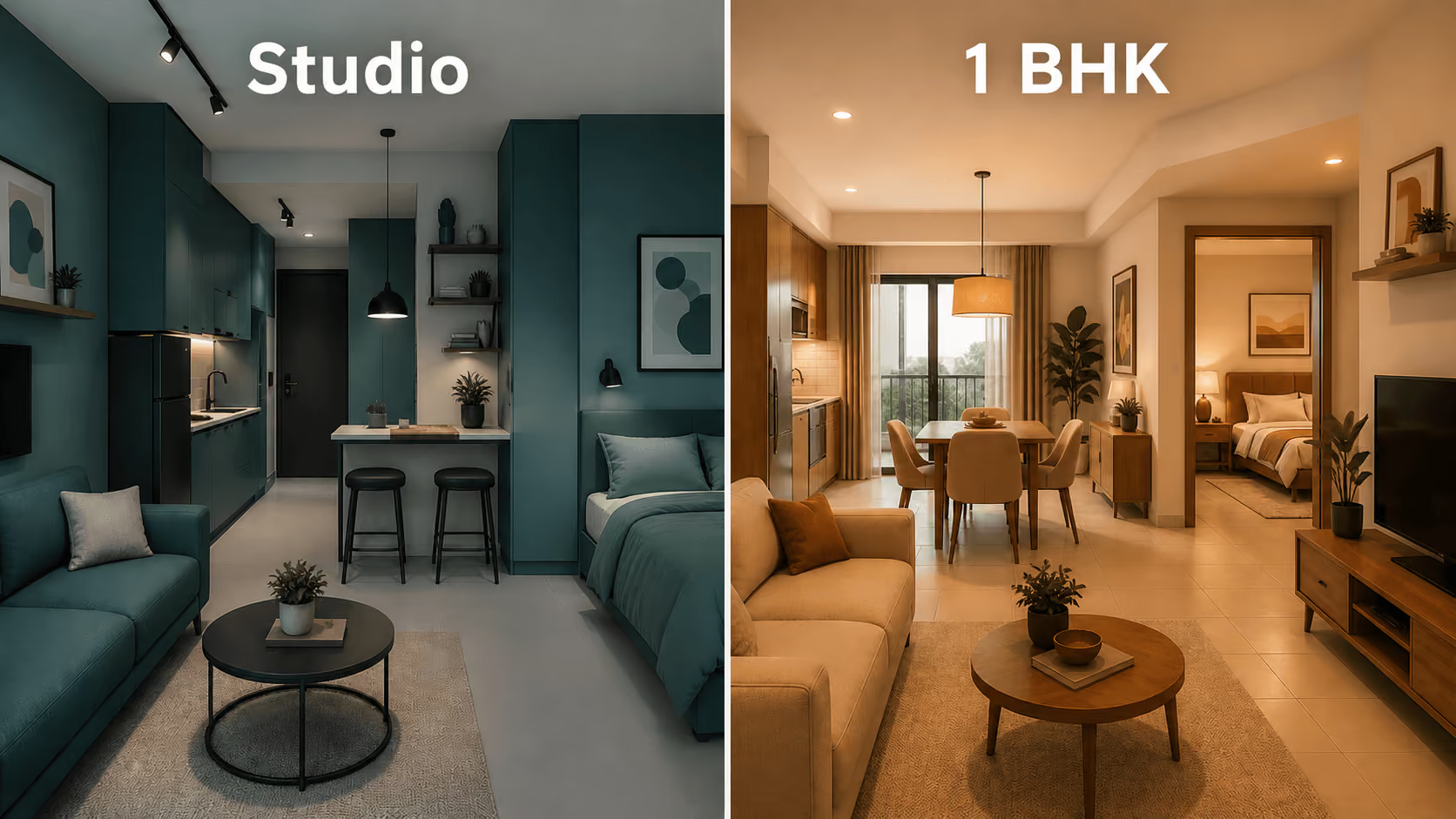
Avg. Studio PriceAED 420,000-520,000AED 550,000-700,000
Avg. 1BR PriceAED 600,000-750,000AED 800,000-1,000,000
Avg. 2BR PriceAED 900,000-1,200,000AED 1,200,000-1,600,000
Gross Rental Yield8-8.5%6-7%
Community AgeDeveloping (2018-present)Established (2010-present)
Developer QualityImproving (Pearlshire, Binghatti)Proven (Nakheel, Ellington, Sobha)
Metro AccessBlue Line 2027-2028Planned station + existing bus links
Retail & F&BLimited, improvingCircle Mall, Nakheel Mall, 100+ outlets
Family Score6/108/10
Growth CatalystMetro Blue Line + new developersOrganic demand + community maturity

Thenumbers tell a clear story: DLRC wins on price and yield, JVC wins oninfrastructure and lifestyle. The rest of this article unpacks why, and helpsyou decide which advantage matters more for your specific situation.

2. Location Comparison: Where Each CommunitySits

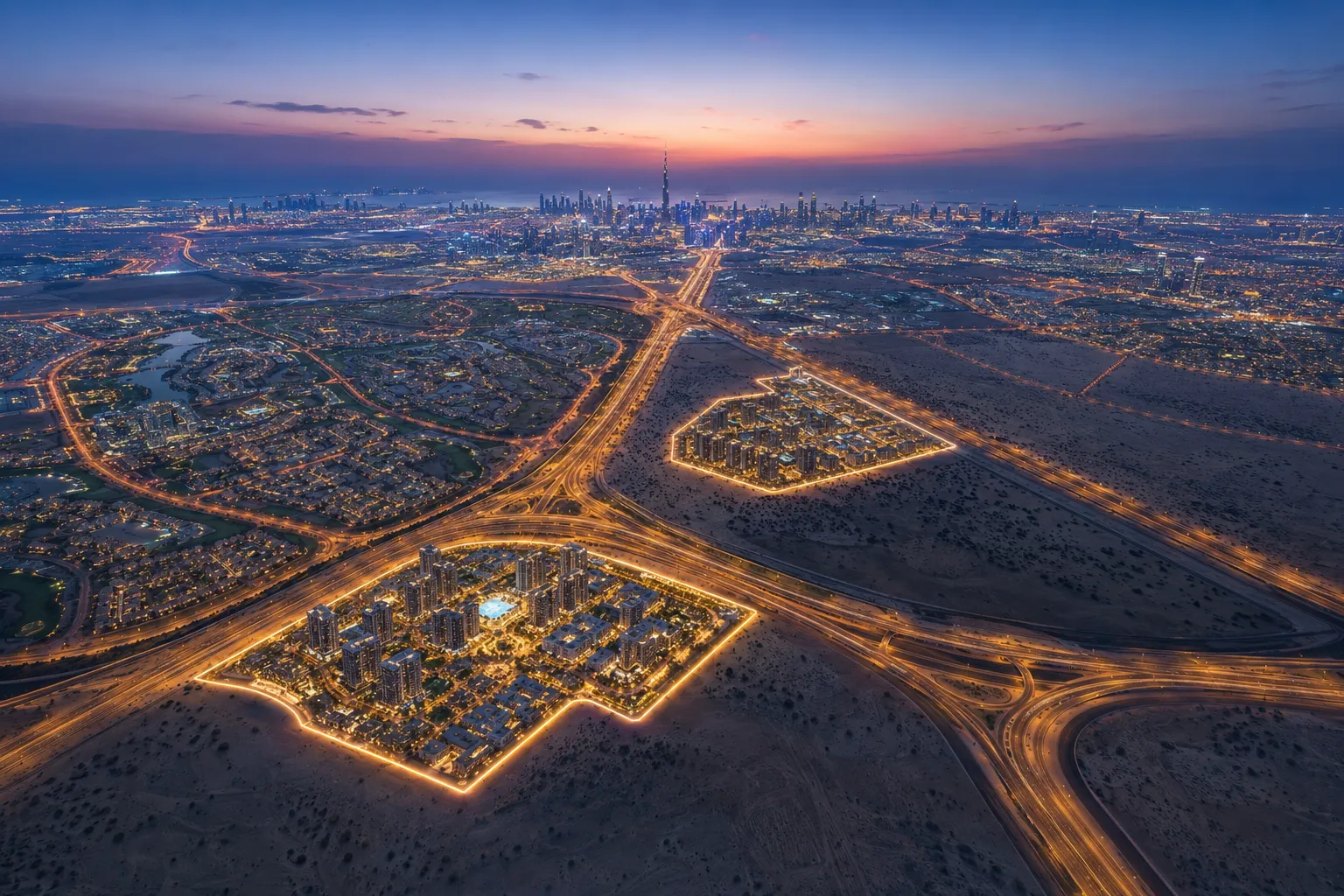
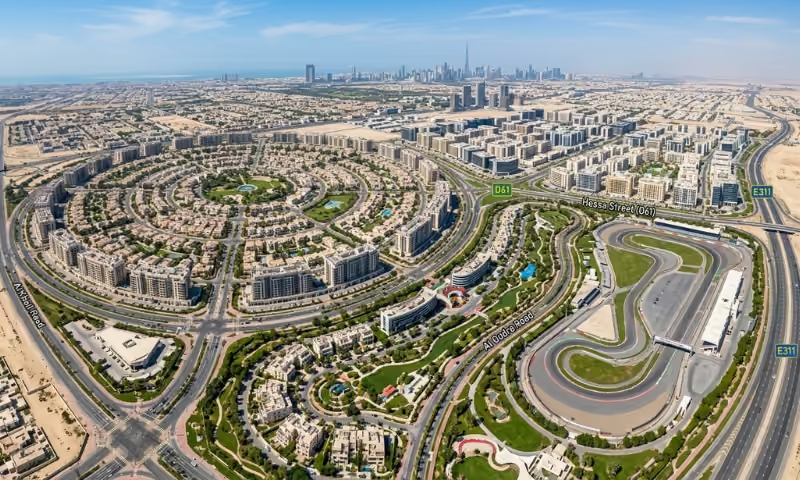
Aerial map view showing DLRC and JVC locations relative to Dubai major roads and landmarks

BothDLRC and JVC sit in the southern half of Dubai, south of Sheikh Zayed Road andthe Downtown-Business Bay corridor. On a map, they are separated by roughly8-10 kilometers, but the practical differences in connectivity are larger thanthat distance suggests.

JVC: TheCentral-South Position

JumeirahVillage Circle occupies a prime position at the intersection of Al Khail Roadand Hessa Street. This gives it direct highway access to Dubai Marina (12minutes), Downtown Dubai (18 minutes), and Business Bay (15 minutes) via AlKhail. It sits west of Motor City and north of Dubai Sports City, in what hasbecome one of the most densely developed mid-market residential zones in thecity.

JVCbenefits from being sandwiched between established employment hubs: Media Cityand Internet City to the northwest, DIFC and Business Bay to the northeast.This positioning is why it maintains consistently high occupancy rates: thecommute works for a wide range of tenants.

DLRC:The Southern Growth Corridor

DubailandResidence Complex sits further south, positioned between Academic City to theeast and Dubai Sports City to the west. It is accessed primarily via AcademicCity Road and Dubai-Al Ain Road, with the Arabian Ranches interchange providingconnectivity to the wider road network.

Thedrive to Downtown Dubai takes 20-22 minutes in normal traffic, and DubaiInternational Airport is approximately 25 minutes away. The area is lesscongested than JVC during peak hours, which partially offsets the slightlylonger distance.

Thecritical difference is not distance but perceived connectivity. JVC feelsconnected because of Al Khail Road’s direct link to everything. DLRC currentlyfeels more isolated because it lacks that single high-capacity arterial. Thisperception changes entirely when the Metro Blue Line opens in 2027-2028, givingDLRC direct rail connectivity that puts it on equal footing with communitiesmuch closer to the city center.

3. Price Comparison by Unit Type

Pricingis where the investment case for DLRC becomes impossible to ignore. Acrossevery unit type, DLRC offers equivalent specifications at 20-30% below what youwould pay in JVC. Here is the breakdown as of Q1 2026:

Unit TypeDLRC Avg PriceDLRC AED/sqftJVC Avg PriceJVC AED/sqft
StudioAED 470,000AED 1,050-1,200AED 620,000AED 1,350-1,550
1 BedroomAED 680,000AED 1,000-1,150AED 900,000AED 1,300-1,500
2 BedroomAED 1,050,000AED 950-1,100AED 1,400,000AED 1,250-1,450
3 BedroomAED 1,500,000AED 900-1,050AED 2,000,000AED 1,200-1,400

Theprice per square foot gap ranges from AED 250-350 depending on the unit type.On a 1-bedroom apartment, that translates to approximately AED 200,000-250,000in savings. For an investor deploying the same capital, DLRC allows you topurchase a larger unit or put less money at risk for the same rental income.

Whydoes this gap exist? Three reasons. First, JVC has 14 years of communitydevelopment priced into its land values. Second, JVC has superior retail andlifestyle infrastructure that tenants pay a premium for. Third, DLRC is stillperceived as an emerging area, which creates a discount that informed investorscan exploit before the Metro Blue Line reprices the entire corridor.

4. Rental Yield Face-Off

Rentalyield is where the math gets interesting. Despite the price gap, rental pricesin DLRC and JVC are closer than you might expect. Tenants in both areas comefrom similar income brackets and pay within 10-15% of each other for equivalentunits. But because the purchase price in DLRC is 20-30% lower, the yieldpercentage is significantly higher.

YieldComparison Table

WorkedExample: AED 600,000 Investment

Letus run a direct comparison with the same capital outlay.

ScenarioA — DLRC: You buy a 1-bedroom apartmentfor AED 600,000. After service charges (AED 12/sqft, approximately AED9,000/year), you rent it for AED 50,000/year. Net yield: 6.8%. Gross yield:8.3%.

ScenarioB — JVC: AED 600,000 in JVC buys you astudio apartment. After service charges (AED 14/sqft, approximately AED6,500/year), you rent it for AED 40,000/year. Net yield: 5.6%. Gross yield:6.7%.

Samecapital. Different unit size. Different yield. The DLRC investor gets a largerunit, attracts a broader tenant pool (couples and singles vs singles only), andearns a higher percentage return. This is the fundamental arithmetic drivinginformed investors toward DLRC.

5. Lifestyle & Community Infrastructure

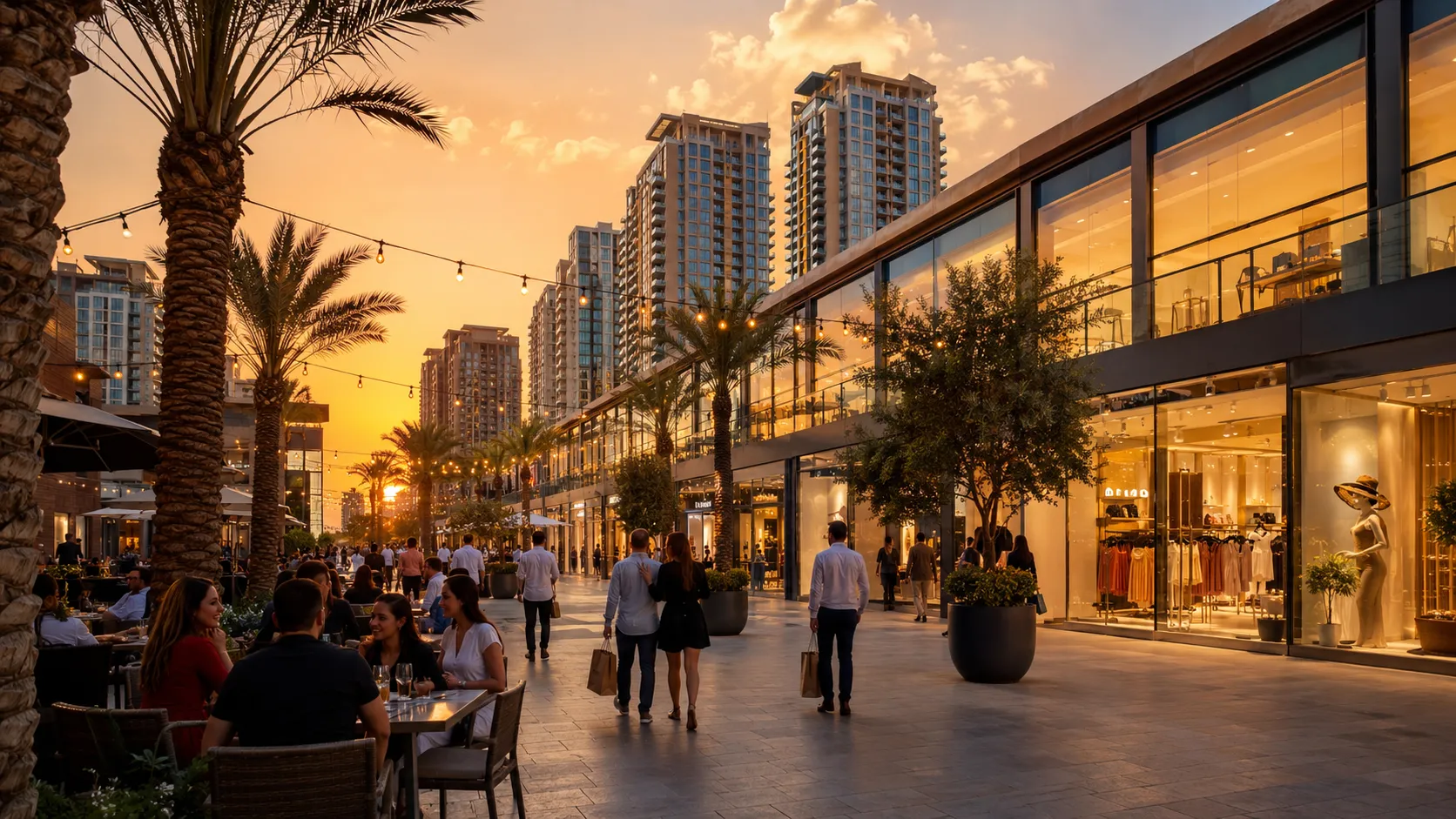
JVC Circle Mall retail area with outdoor dining and residential towers in background Dubai

JVC: TheEstablished Neighborhood

JVChas been developing since 2010 and has the infrastructure to show for it. Over100 completed residential buildings house an estimated 80,000+ residents. Thecommunity has Circle Mall (anchored by Carrefour and home to 80+ retailoutlets), Nakheel Mall nearby, multiple schools (JSS International, Sunmarke),medical clinics, pharmacies, and a network of landscaped parks and joggingtracks.

Thedining scene has matured considerably. You will find everything from Filipinorestaurants and Indian cafes to specialty coffee shops and healthy eatingoutlets. There are fitness studios, salons, pet shops, and nurseries. It feelslike a self-contained neighborhood rather than a residential development.

Forfamilies, JVC scores highly: multiple school options within the community, safepedestrian walkways, play areas, and a community center. The Circle Mallprovides weekend entertainment without needing to leave the area. Thisself-sufficiency is a significant factor in tenant retention and occupancyrates.

DLRC:The Quieter Alternative

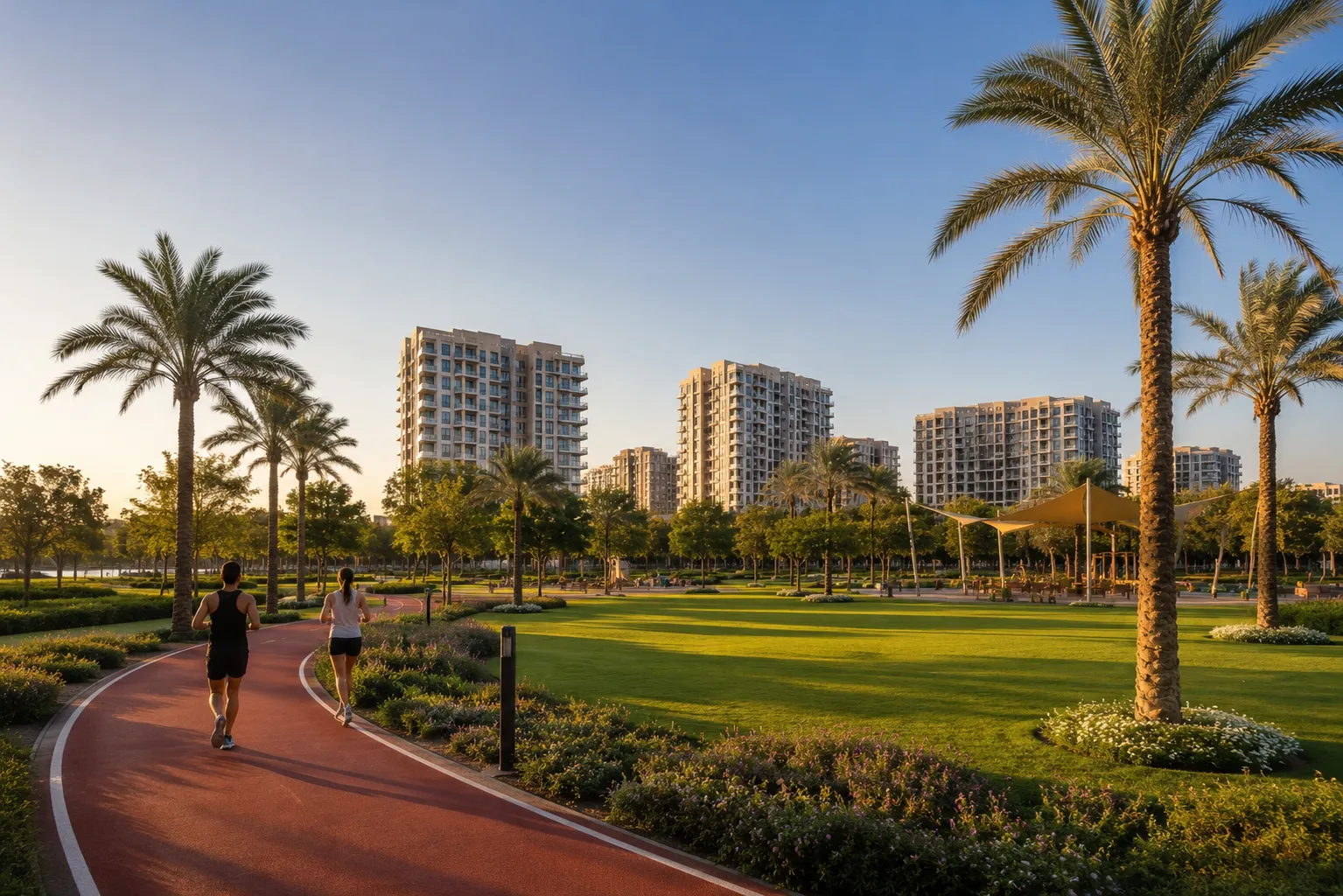
DLRC Dubai community park with jogging track and modern apartments morning light

DLRCis at an earlier stage. The community has functioning supermarkets, a handfulof restaurants, and basic retail, but it does not yet have the density ofoptions that JVC offers. There is no equivalent to Circle Mall, and residentstypically drive to Arjan or Motor City for varied dining and shopping.

WhatDLRC does offer is space. Apartments tend to be 10-15% larger for the sameprice point. The community is less dense, with more open areas, less trafficcongestion, and a quieter environment. For tenants who prioritize space andaffordability over walkable amenities, DLRC is the clear winner.

Theproximity to Academic City means residents have access to sports facilities atDubai Sports City (gyms, swimming pools, cricket stadiums) and the green spacesaround the universities. It is also closer to the natural desert landscape,which some residents prefer to the urbanized feel of JVC.

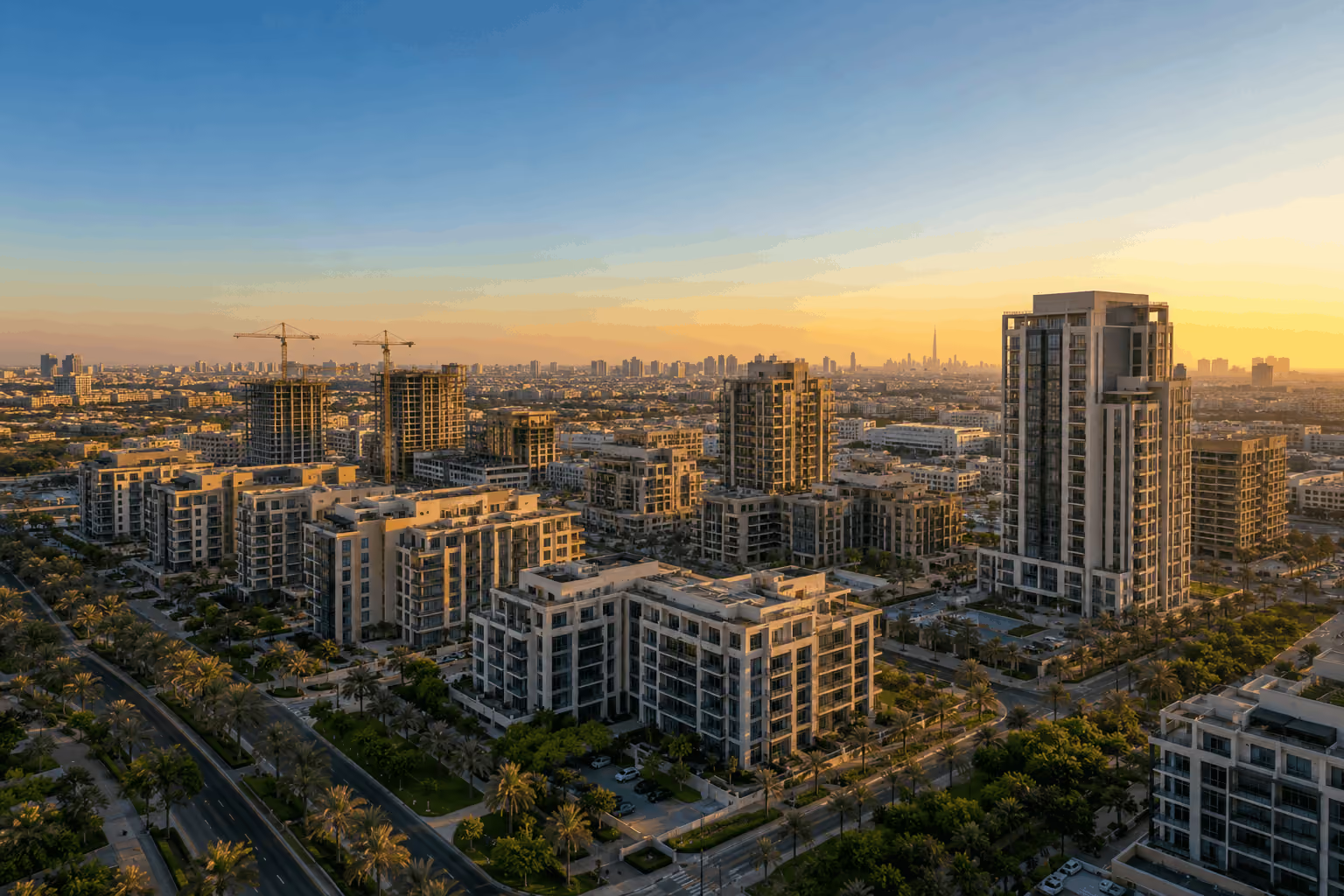
Theinfrastructure gap is closing. New retail units are coming online with eachresidential tower that completes, and the area is adding cafes, restaurants,and convenience stores at an accelerating pace. The DLRC of 2028 will look verydifferent from the DLRC of 2024.

6. Transport & Connectivity

JVC:Connected Today

JVChas direct access to Al Khail Road (E44), which is one of Dubai’s majornorth-south arterials connecting Dubai Marina, Business Bay, and the airportcorridor. Hessa Street provides east-west connectivity, and multiple bus routesserve the community.

ADubai Metro station is planned for JVC as part of future expansion, though thetimeline is less defined than DLRC’s Blue Line commitment. Currently, thenearest metro station is at Mall of the Emirates (Red Line), approximately 12minutes by car. This is not ideal for daily commuters, but JVC’s roadconnectivity partially compensates.

Fordaily commuting, JVC residents heading to DIFC or Downtown face a 15-20 minutedrive via Al Khail, which is reasonable by Dubai standards. The route to DubaiMarina and JBR takes 10-12 minutes.

DLRC:The Metro Blue Line Changes Everything

DLRC’scurrent connectivity relies on Academic City Road and the Dubai-Al Ain Road.These are functional but less direct than JVC’s Al Khail access. Bus servicesexist but are less frequent than in more established areas.

Thegame-changer is the Dubai Metro Blue Line, announced with a 2027-2028completion target. This line will have stations serving the DLRC corridor,providing direct rail connectivity to Business Bay, Downtown, and the widermetro network. For property values, metro access historically adds 10-20% toprices in Dubai communities that previously lacked it.

Thisis arguably the single most important factor in the DLRC investment thesis. Themetro converts DLRC from a car-dependent community with limited publictransport into a metro-connected neighborhood. The price impact of this shifthas been seen repeatedly in Dubai: communities that gain metro access seeimmediate and sustained price appreciation as the perceived isolationevaporates.

7. Tenant Profile: Who Rents in Each Area?

JVCTenant Demographics

  • Young professionals workingin Media City, Internet City, and Business Bay (25-40 years old)
  • Couples without childrenseeking affordable 1-2 bedroom apartments in a community setting
  • Families attracted byschools, parks, and the self-contained neighborhood feel
  • Remote workers who valuestrong internet infrastructure and home office space
  • Average household income: AED15,000-30,000/month

DLRCTenant Demographics

  • Young professionals andcouples seeking larger spaces at lower rents (25-35 years old)
  • University staff and studentsfrom Academic City campuses within 5-10 minutes
  • Airport and logistics workersdue to proximity to Dubai International via Al Ain Road
  • Budget-conscious singles andsharers prioritizing value per square foot over walkable amenities
  • Average household income: AED12,000-25,000/month

Theoverlap is significant. Both areas attract mid-market tenants who earn betweenAED 12,000 and AED 30,000 per month. The key difference is that JVCadditionally captures the family segment (couples with children who need schoolaccess) and the lifestyle segment (people who want cafes and retail on theirdoorstep). DLRC captures the value segment (people who want maximum space forminimum rent) and the academic/airport corridor workers.

Forinvestors, this means JVC has a slightly broader tenant pool, which reducesvacancy risk. But DLRC’s tenant pool is growing rapidly as the communitydevelops and more employers set up in the southern corridor.

8. Capital Appreciation Potential

JVC:Mature Market, Plateauing Growth

JVCexperienced significant capital appreciation between 2022 and 2025. Studioprices rose from approximately AED 380,000 to AED 620,000 (63% growth).One-bedroom apartments moved from AED 600,000 to AED 900,000 (50% growth). Thiswas driven by Dubai’s broader market recovery, population growth, and JVC’sestablished reputation.

However,JVC is now approaching what analysts consider fair value for its location andinfrastructure. The community is heavily supplied, with over 15,000 unitscompleted and more in the pipeline. Further appreciation of 5-10% annually isrealistic, but the explosive growth phase has passed. JVC is now a yield play,not a capital appreciation play.

DLRC:Early Curve, Significant Upside

DLRCis where JVC was in 2018-2019: undervalued relative to its fundamentals, with amajor infrastructure catalyst pending. Current prices sit 20-30% below JVCdespite similar tenant demographics and comparable rent levels. This gaprepresents the market pricing in DLRC’s current infrastructure limitations.

Whenthe Metro Blue Line opens in 2027-2028, that discount is expected to compresssignificantly. Based on precedent from other Dubai communities that gainedmetro access (Discovery Gardens, Al Furjan, JLT), prices typically appreciate15-25% in the 12-18 months surrounding a metro station opening. Combined withorganic growth from new amenities and population increase, DLRC is positionedfor 25-35% appreciation over the 2026-2028 period.

Foran investor entering DLRC at AED 680,000 for a 1-bedroom today, a 25%appreciation means the unit is worth AED 850,000 by 2028. At 35%, it reachesAED 918,000. Meanwhile, the same investor would need AED 900,000 to enter JVCfor a comparable 1-bedroom, with expected appreciation of only AED90,000-135,000 (10-15%) over the same period.

9. Developer Quality in Each Area

JVC:Proven Track Record

JVCwas master-developed by Nakheel, one of Dubai’s largest and most establisheddevelopers. Individual buildings within JVC have been developed by a mix ofdevelopers ranging from Ellington Properties (premium boutique) to Binghatti(mid-market volume). Sobha Hartland sits adjacent and serves the premium end.

Theadvantage of JVC’s maturity is that buyers can see finished buildings, inspectbuild quality firsthand, and check long-term maintenance records. There is noguesswork about what the community will look like because it already exists.

DLRC:Historically Mass-Market, Now Upgrading

DLRChistorically attracted mass-market developers focused on maximizing unit countsat minimum cost. Build quality was functional but rarely exceptional. Thiscontributed to the area’s reputation as a budget option rather than a lifestyledestination.

Thatnarrative is changing. Pearlshire Development’s Bond Living project is bringinghospitality-grade specifications to DLRC for the first time: hotel-standardfinishes, intelligent smart-home systems, dedicated concierge services, andamenities designed by teams with international hotel experience. Thisrepresents a deliberate shift in the quality of stock entering the community.

Forinvestors, this developer quality shift is important. Premium stock in anundervalued area creates a pricing floor: when the market corrects, well-builtunits in good communities hold value better than poorly-built units. BondLiving’s specifications are closer to what Ellington delivers in JVC, but atDLRC price points.

10. Investment Thesis: When to Choose DLRC vsJVC

ChooseDLRC When:

  • You want maximum rental yield(8%+ gross) from day one
  • You are investing for capitalappreciation over a 2-3 year horizon
  • You believe in the Metro BlueLine catalyst and want to be positioned before it arrives
  • You have a budget of AED500,000-800,000 and want the largest possible unit for your money
  • You are comfortable with anemerging community that will develop further over the next 3-5 years
  • You want to build a portfolioof multiple units and need a lower per-unit entry cost

ChooseJVC When:

  • You prioritize stability andproven rental demand over maximum yield
  • You want establishedcommunity infrastructure (schools, retail, restaurants) available immediately
  • You are buying for personaluse and want a livable neighborhood from day one
  • You prefer a mature marketwith predictable 5-10% annual appreciation
  • You want easierself-management with a large pool of nearby property management companies
  • You are a first-time investorand want lower perceived risk from a known community

Thereis no wrong answer here. Both are solid investment areas with differentrisk-reward profiles. DLRC is higher risk, higher reward. JVC is lower risk,moderate reward. Your choice should align with your investment timeline, risktolerance, and whether you prioritize current income or future capital growth.

11. Expert Insights

Thecomparison between DLRC and JVC comes down to timing. JVC delivered its bestreturns between 2021 and 2024. Investors who bought studios at AED 380,000 inearly 2022 are sitting on 60%+ gains. That window is closing because the areais now priced for what it offers.

DLRCis where JVC was three years ago: undervalued, underdeveloped, and waiting fora catalyst. The Metro Blue Line is that catalyst, and it is not speculative.The project is funded, announced, and under construction. The question is notwhether it will impact prices, but how much.

Smartmoney is not choosing between DLRC and JVC. Smart money bought JVC in 2022 andis buying DLRC in 2026. The same thesis that worked in JVC — buy beforeinfrastructure catches up to demand — is now playing out in DLRC at lower entryprices.

Oneunderrated factor in DLRC’s favor is the improvement in developer quality. Whenonly mass-market developers were building in the area, it was difficult toattract premium tenants. Projects like Bond Living are changing the tenantprofile by offering specifications that tenants currently pay JVC-level rentsfor. Higher-quality stock at DLRC prices creates a yield premium that did notexist two years ago.

12. The Verdict

Thereis no single winner because the question is personal. Both DLRC and JVC arelegitimate investment areas with real demand and growing populations. Theverdict depends on what you are solving for:

Ifyou want the highest possible yield today: DLRCwins by 1.5-2 percentage points on gross rental yield. The math is simple:similar rents, lower prices, higher yield.

Ifyou want the best capital appreciation over 2-3 years: DLRC wins again. The Metro Blue Line catalyst, combinedwith the current pricing discount, creates a 25-35% appreciation window thatJVC cannot match from its current base.

Ifyou want lifestyle and convenience today: JVCwins decisively. Circle Mall, established restaurants, schools, parks, andwalkable streets create a living experience that DLRC will take 3-5 years toreplicate.

Ifyou want proven stability and lower risk: JVCis the safer bet. Fourteen years of track record, consistent demand, and a deeppool of comparable transactions give you confidence in valuations.

Ifyou are building a portfolio on a budget: DLRClets you buy two units for the price of one JVC unit in many cases. Portfoliodiversification at the unit level is easier when entry costs are lower.

Formost investors reading this in 2026, DLRC offers the stronger risk-adjustedreturn. The yield is higher, the growth potential is greater, and the MetroBlue Line provides a clear, funded catalyst with a defined timeline. JVCremains the right choice for self-occupiers, families, and conservativeinvestors who prefer established infrastructure over growth potential.

Whicharea has better rental yield, DLRC or JVC?

DLRCdelivers higher gross rental yields of 8-8.5% compared to JVC’s 6-7%. The gapexists because rental prices in both areas are within 10-15% of each other, butpurchase prices in DLRC are 20-30% lower. For yield-focused investors, DLRCprovides substantially better returns on invested capital.

Is DLRCa safe area to invest in?

Yes.DLRC is a RERA-regulated community with established infrastructure, functioningsupermarkets, schools within reach, and a growing population. It is not aspeculative desert plot; it is an active residential community with over 30completed buildings and thousands of existing residents. The area’s safetyprofile is comparable to any mid-market Dubai community, with 24-hour securityin most buildings.

Whenwill the DLRC metro station open?

TheDubai Metro Blue Line is scheduled for completion between 2027 and 2028. Theproject was announced by the Roads and Transport Authority (RTA) and is underactive construction. Stations will serve the DLRC corridor, providing directconnectivity to Business Bay, Downtown Dubai, and interchange with the existingRed and Green Lines.

Can youwalk around in JVC?

Partially.JVC has designated pedestrian walkways, jogging tracks, and landscaped pathsconnecting residential clusters to Circle Mall and community parks. However,like most Dubai communities, it is designed primarily for car access. You canwalk to your nearest cafe, supermarket, or park comfortably. Walking betweendifferent circles of the community or to areas outside JVC requires a car ortaxi.

Whicharea is better for families, DLRC or JVC?

JVCis significantly better for families today. It has established schools (JSSInternational, Sunmarke), pediatric clinics, nurseries, playgrounds, and acommunity feel built over 14 years. DLRC has fewer family-specific amenitieswithin the community, though schools in nearby Academic City and Sports Cityare accessible within a short drive.

What isthe price difference between DLRC and JVC?

DLRCis approximately 20-30% cheaper than JVC across all unit types. A 1-bedroomapartment averages AED 680,000 in DLRC compared to AED 900,000 in JVC. Studiosshow a similar gap: AED 470,000 in DLRC versus AED 620,000 in JVC. Thedifference reflects JVC’s superior infrastructure and community maturity, butthis gap is expected to narrow as DLRC develops.

Up Next .

Contact Information.

We’d love to hear from you — whether you’re looking to invest, collaborate, or learn more.

Call
WhatsApp
Enquire