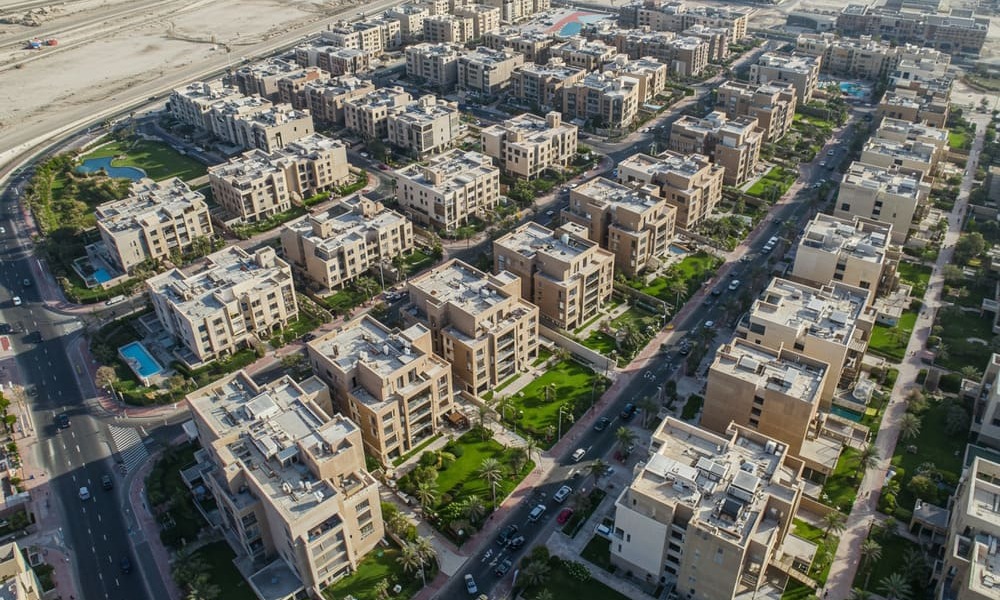
Arjan vs Motor City vs JVC Dubai: 2026 Comparison
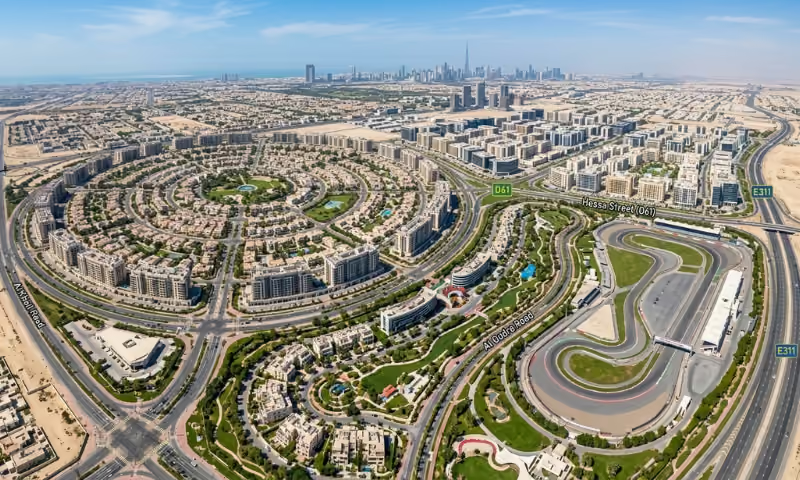
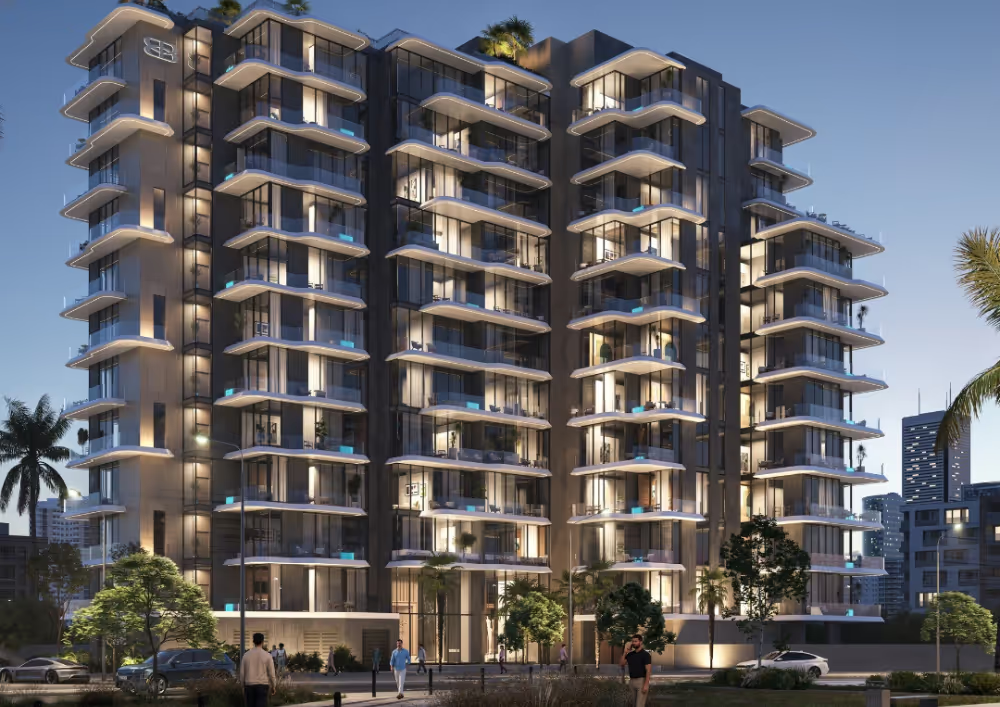
Arjan vs Motor City vs JVC Dubai: 2026 Comparison. A side-by-side of Bayut's average asking prices, roads and Metro access for three neighbouring communities, with Bond Enclave as an example of a new boutique building in Arjan.
The Dubai mid-market debate has moved inland. Arjan, Motor City and Jumeirah Village Circle (JVC) are neighbouring communities that buyers often compare, and they differ in price and in the kind of building you can buy. Here is a data comparison of the three for 2026. For other communities, the Dubai areas guide compares them by location, lifestyle and budget.
On Bayut's averages a one-bedroom apartment asks AED 1,191,000 in Arjan, AED 1,129,000 in Motor City and AED 1,082,000 in JVC (Jumeirah Village Circle). Arjan also has newer boutique developments like Bond Enclave. In January 2026 Hessa Street Phase 1 opened and doubled capacity to 16,000 vehicles/hour (per the Dubai Media Office).
Arjan vs Motor City vs JVC: 2026 Price Comparison
The Hard Data
| Metric | Arjan | JVC | Motor City |
|---|---|---|---|
| Average asking sale price, studio (Bayut) | AED 702,000 | AED 730,000 | AED 719,000 |
| Average asking sale price, 1-bedroom apartment (Bayut) | AED 1,191,000 | AED 1,082,000 | AED 1,129,000 |
Prices are Bayut's average asking sale prices by unit type from its JVC, Arjan and Motor City area guides, based on its listings over the last 12 months (as of October 2026). They are averages across buildings and sizes, so compare specific units.
Key Insight: Compare buildings rather than communities. An average mixes building ages, sizes and floor levels, so two units in the same community can ask very different prices.
Is Arjan Cheaper Than JVC?
How the Prices Compare
Not on the one-bedroom average. Bayut's area guides put the average asking sale price of a one-bedroom apartment at AED 1,191,000 in Arjan and AED 1,082,000 in JVC, while the studio average is lower in Arjan (AED 702,000 against AED 730,000 in JVC), as of October 2026. These are averages across buildings and sizes, so check the building and the unit before you assume either community is cheaper.
Arjan and Short-Term Rental:
Some landlords consider holiday-home letting. It needs a DTCM permit, and income depends on occupancy, fees and operating costs, so work it out for the specific unit.
Bond Enclave Example (30/70 Payment Plan):
Bond Enclave in Arjan has a 30/70 plan: 5% on booking, a 15% down payment at +1 month, a 5% first instalment at +6 months, a 5% second instalment at +6 months, and 70% on handover on 30 November 2027.
Learn more about off-plan vs ready investment comparison to understand strategic timing advantages.
Renting Out a Unit: JVC or Arjan

What Decides Your Rental Income
Whatever the community, rental income depends on the building: how it is managed, how the unit is furnished, the asking rent against similar listings, and the service charge. Holiday-home letting is possible with a permit, but needs active management. Ask for the current service charge and for recent asking rents in the same building before you decide.
Summary: The studio and one-bedroom averages above are close across the three communities, so the building, the unit and the service charge matter more than the community name.
How Does Motor City Compare With Arjan and JVC?

What the Data Shows
Bayut's Motor City area guide puts the average asking sale price at AED 1,129,000 for a one-bedroom apartment and AED 1,863,000 for a two-bedroom (listings over the last 12 months, as of October 2026), close to the Arjan and JVC one-bedroom figures above, so compare specific units rather than the community average.
If you are comparing off-plan options, read buying from developers pros and cons first.
Does the Metro Blue Line Connect to JVC, Arjan, or Motor City?

Infrastructure Reality Check
No. The Metro Blue Line (24% complete in September 2026, according to the RTA's Rail Agency chief executive, as reported by The National on 14 September 2026; opening 9 September 2029) serves areas including Dubai Silicon Oasis and Academic City (Dubai Media Office, 3 May 2026; Gulf News). JVC, Arjan and Motor City are not among the areas those sources list for the line. Check the exact distance from any community to a station on the RTA route map when station locations are published.
What Actually Improved Connectivity:
Hessa Street Phase 1 (Opened January 2026):
- Investment: About AED 690 million for the full Hessa Street project
- Capacity: Doubled from 8,000 to 16,000 vehicles/hour (Dubai Media Office, 11 January 2026)
- Impact: More capacity on the link between Al Khail Road and Sheikh Zayed Road
Geographic Positioning:
The Blue Line route serves other areas, including Dubai Silicon Oasis and Academic City.
Arjan roads and transport:
- Umm Suqeim Road (D63), Sheikh Mohammed Bin Zayed Road (E311), Hessa Street (D61) and Al Khail Road (E44)
- RTA feeder bus F36 to Mall of the Emirates Metro station
Developer Pipeline and What to Check
Bond Enclave in Arjan
Bond Enclave (Pearlshire, 30th November 2027 handover):
- Lazy pool on the ground floor, rooftop infinity pool with a floating pool deck, outdoor cinema, mini golf course
- 30/70 payment plan
- Tailored European joinery, spa-grade wet rooms
For how boutique projects differ from large towers, see our guide on amenity differentiation.
In any of the three communities:
- Prioritize proven developer track records
- Verify quality finishes before purchase
- Assess post-handover maintenance commitments
Which Community Suits Which Buyer
Your 2026 choice depends on how you plan to use the property. Majan is another Dubailand community that buyers compare; see the Majan Dubai area guide.
Choose JVC if:
- You want a lower one-bedroom asking price on Bayut's averages (AED 1,082,000)
- You prefer to choose among existing buildings rather than wait for a new development
Choose Arjan if:
- You're buying off-plan and can wait for handover
- You'll actively manage short-term rental strategies (Airbnb)
- Boutique, differentiated properties appeal over generic towers
Choose Motor City if:
- You're buying to live in (end-user)
- You want to compare lifestyle and layout rather than price alone
The Takeaway: Logic Over Location
On Bayut's area guides, the average asking price of a one-bedroom apartment is AED 1,191,000 in Arjan, AED 1,129,000 in Motor City and AED 1,082,000 in JVC (as of October 2026). Those are community averages, so the choice comes down to the specific building, its price and how you plan to use it.
For buyers who want a new boutique building, Bond Enclave in Arjan is worth a closer look: spa-grade wet rooms, tailored European joinery and a 30/70 payment plan.
Explore Bond Enclave: a boutique building in Arjan, due for completion on 30 November 2027.
How do Arjan and JVC compare on price?
Bayut's area guides put the average asking sale price of a one-bedroom apartment at AED 1,191,000 in Arjan and AED 1,082,000 in JVC, and of a studio at AED 702,000 in Arjan and AED 730,000 in JVC (listings over the last 12 months, as of October 2026). These are averages across buildings and sizes, so compare specific buildings and units. For how yields are worked out, see our guide to rental yields.
Is Arjan cheaper than JVC for buying property?
Not on the one-bedroom average: Bayut shows AED 1,191,000 in Arjan against AED 1,082,000 in JVC, while the studio average is lower in Arjan (AED 702,000 against AED 730,000), as of October 2026. These are averages across buildings and sizes, so compare specific buildings and units.
How does Motor City compare with Arjan and JVC?
Bayut's Motor City area guide shows an average asking sale price of AED 1,129,000 for a one-bedroom and AED 1,863,000 for a two-bedroom (as of October 2026), close to the Arjan and JVC one-bedroom averages. Compare specific buildings and units.
Does the Metro Blue Line connect to JVC, Arjan or Motor City?
No. The Metro Blue Line (24% complete in September 2026, according to the RTA's Rail Agency chief executive, as reported by The National on 14 September 2026; opening 9 September 2029) serves areas including Dubai Silicon Oasis and Academic City (Dubai Media Office, 3 May 2026). JVC, Arjan and Motor City are not among the areas listed for the line. The January 2026 Hessa Street Phase 1 opening (about AED 690M for the full project) doubled capacity from 8,000 to 16,000 vehicles/hour (Dubai Media Office); that is road capacity, not Metro access. Check the exact distance from any community to a station on the RTA route map when station locations are published.
Is Arjan good for short-term rental in Dubai?
Some landlords look at holiday-home letting in Arjan. It needs a DTCM permit, and income depends on occupancy, fees and operating costs, so work it out for the specific unit. Short-term letting also needs active management, such as cleaning, guest communication and pricing.