DLRC Property Prices 2026: Apartment Rates, Yields & Value Analysis
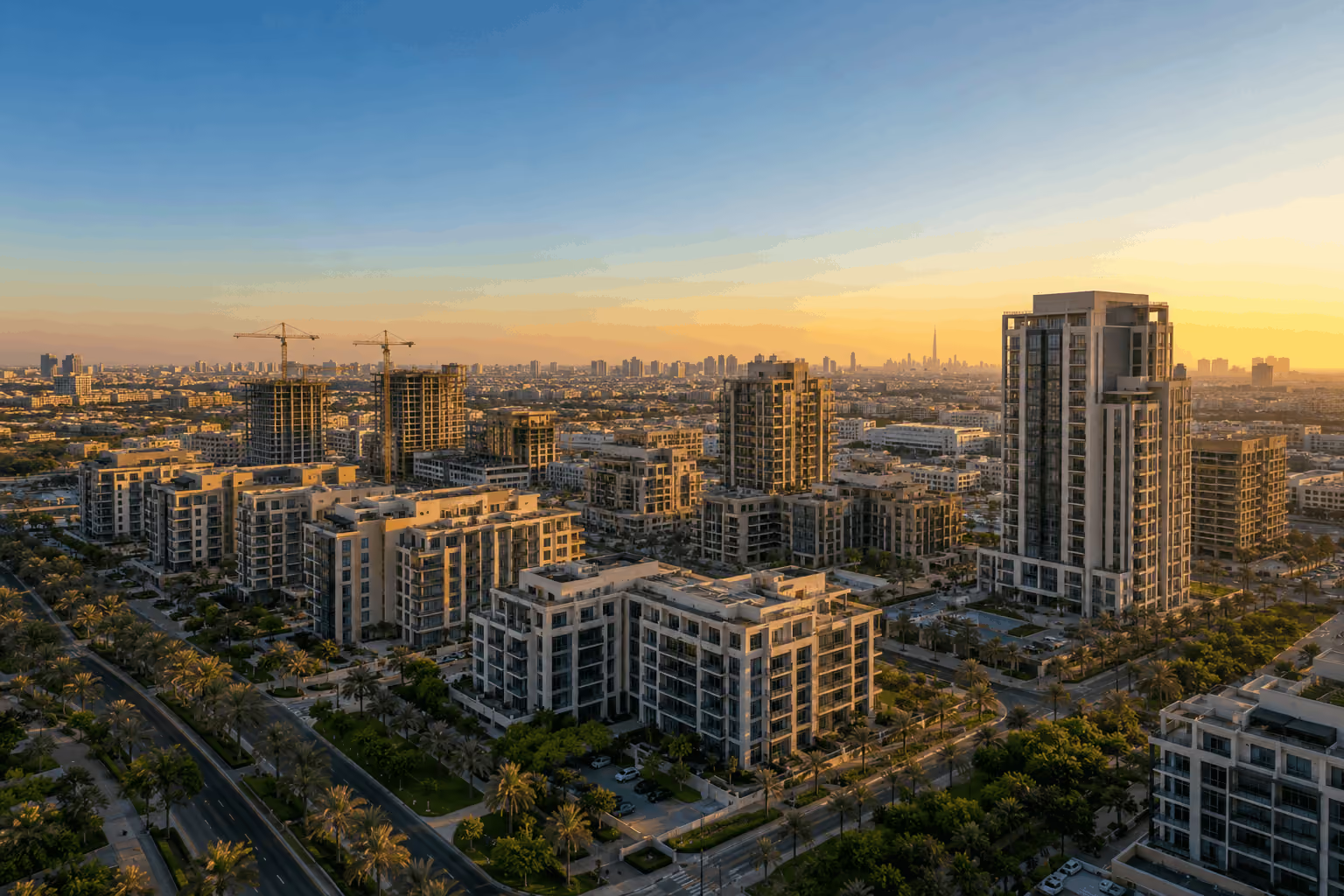
Dubailand Residence Complex is a community that many investors overlook. DLD registered transactions show a median of about AED 1,427 per sq ft in DLRC to 2 October 2026, up from about AED 664 in 2021. Three things are changing here: the Dubai Metro Blue Line (Gulf News) is under construction on a route that serves areas including Dubai Silicon Oasis and Academic City (Dubai Media Office, 3 May 2026), the Dubai 2040 Urban Master Plan has designated the DLRC corridor as a future urban center, and new developments are being built in the area.
The result is a community that is still priced below many better-known areas. Bayut's 1-bedroom sale price index for August 2026 puts DLRC at about AED 1,241 per sq ft, against about AED 1,450 in JVC and about AED 1,517 in Arjan (the full table is in our 1 BHK buying guide). Whether that gap narrows as the infrastructure arrives is a judgement call, not a given, and the same index shows DLRC 1.3% lower than a year earlier.
This article covers the price per square foot picture from DLD transactions and Bayut's index, how to work out yield for a specific unit, service charges, total cost of ownership, and what the Metro Blue Line and Dubai 2040 designation could mean for DLRC property values over the coming years.
Key Takeaways
- DLD registered transactions show a median of about AED 1,427 per sq ft in DLRC to 2 October 2026, up from about AED 664 in 2021.
- Bayut's 1-bedroom sale price index for August 2026 puts DLRC at about AED 1,241 per sq ft, the lowest of the six communities in our 1 BHK guide.
- Bayut data gives an indicative gross yield of about 6.5% for a DLRC one-bedroom, calculated on a 700 sq ft reference unit. It is a comparison tool, not an official figure, so work out the yield for the specific unit.
- Prices have not moved in a straight line: the DLD median has risen sharply since 2021, while Bayut's one-bedroom index shows DLRC 1.3% lower year on year in August 2026.
- The Dubai Metro Blue Line is due to open on 9 September 2029 on a route that serves areas including Dubai Silicon Oasis and Academic City (Dubai Media Office, 3 May 2026), which may help values as metro access has done elsewhere in Dubai. Check the exact distance from any building to a station on the RTA route map when station locations are published.
- Service charges are set project by project and approved by RERA; check the building's rate in the DLD Service Charge Index.
1. DLRC Price Overview 2026
DLD registered transactions show a median of about AED 1,427 per sq ft in DLRC to 2 October 2026, up from about AED 664 in 2021. The price of an individual unit varies with building age, developer, floor level, and unit condition.
DLRC has historically been priced below more established communities for three identifiable reasons. First, DLRC was historically perceived as a peripheral community because it lacked public transport connections. Second, early development in the area was dominated by smaller developers with inconsistent build quality, creating a reputation problem. Third, the community is younger than JVC and Sports City, meaning fewer transaction data points and lower search visibility among overseas investors.
All three of these factors are changing simultaneously. The Metro Blue Line addresses connectivity. Premium developers entering the market address the quality gap. And the volume of transactions in 2024-2025 is rapidly building the data trail that drives investor confidence.
2. Price per Square Foot and Unit Budgets
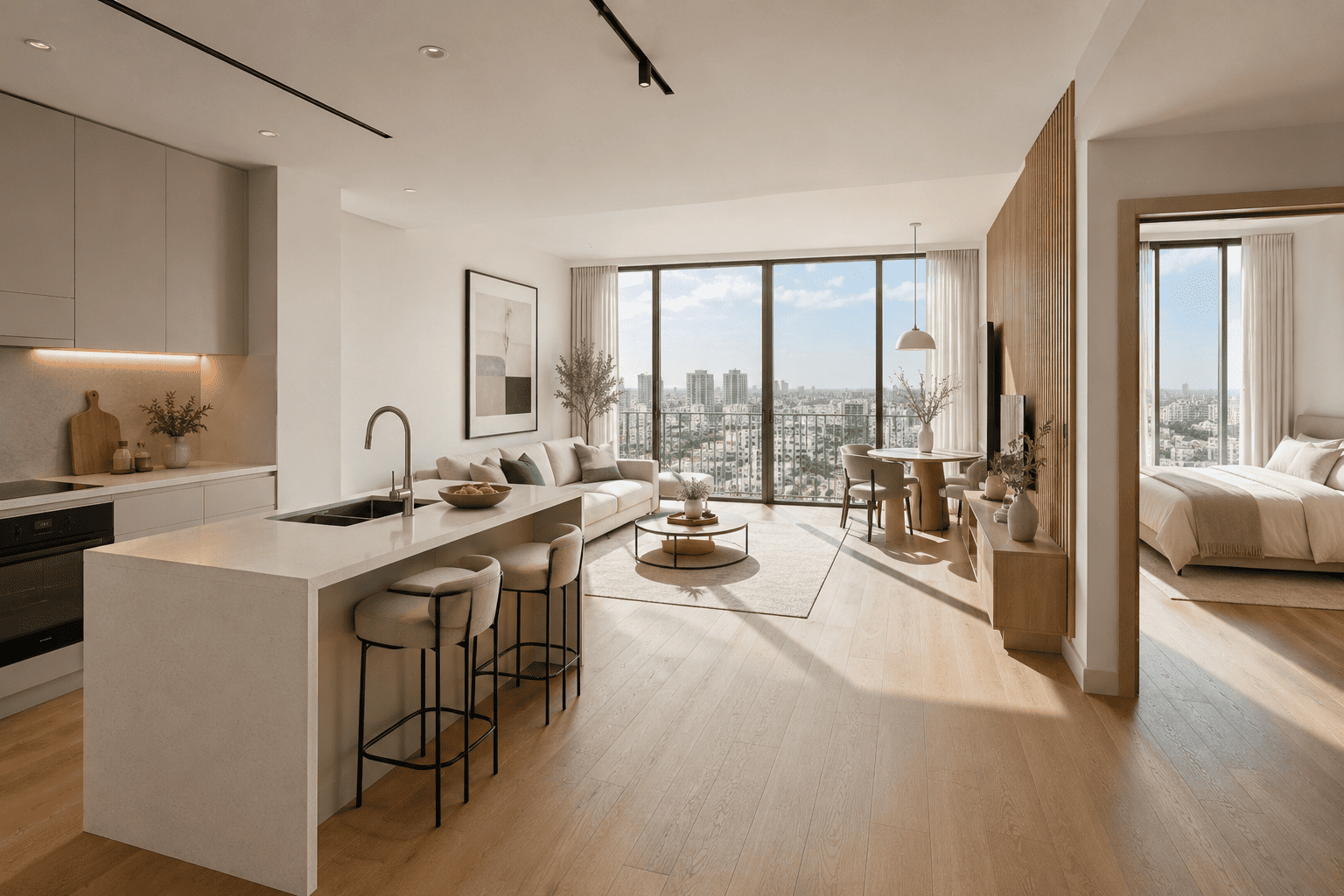
DLRC prices vary by building age, developer, floor level and unit condition, and no single published range covers every unit type, so price per square foot is the most reliable starting point. At Bayut's August 2026 average of about AED 1,241 per sq ft, a 700 sq ft one-bedroom works out to about AED 869,000, the same reference-unit budget used in our 1 BHK buying guide. For studios, two-bedroom and three-bedroom units, check recent transactions and current listings in the specific building.
Larger units need more capital, and rents do not usually scale in proportion to size, so gross yield can fall as the unit gets bigger. Check the numbers for the unit you are considering.
3. Price Comparison vs Neighbouring Areas
DLRC's value proposition becomes clearer when you compare it against communities that compete for the same tenant pool. Prices below are Bayut's 1-bedroom sale price index for August 2026 (price per sq ft). The indicative gross yield is calculated on a 700 sq ft reference unit against typical achieved rent, as explained in our 1 BHK buying guide:
- DLRC: AED 1,241 per sq ft | indicative gross yield about 6.5% | Metro Blue Line due 9 September 2029
- JVC: AED 1,450 per sq ft | about 7.0%
- Arjan: AED 1,517 per sq ft | about 7.2%
- Business Bay: AED 2,297 per sq ft | about 6.1%
Bayut's Arjan area guide shows gross ROI of 6.44% to 7.16% depending on unit type (studios 7.16%, one-bedrooms 6.48%, two-bedrooms 6.61%, three-bedrooms 6.44%), based on searches by Bayut users over the last 12 months, before service charges and vacancy. That is a different method from the indicative yields above, which compare price per sq ft with achieved rent. Area-level yield figures differ by source and method, so treat the yields above as indicative.
The critical comparison here is DLRC versus JVC. Both communities serve a similar demographic: mid-income professionals, young families, and investors seeking yield-focused assets. JVC has established itself as a benchmark community for this segment. On Bayut's August 2026 index, DLRC is about 14% cheaper per sq ft than JVC (AED 1,241 against AED 1,450), but the indicative gross yields are close (about 6.5% against about 7.0%), so the lower price does not by itself mean a higher yield. What DLRC adds is the Blue Line, due to open on 9 September 2029 on a route that serves areas including Dubai Silicon Oasis and Academic City.
The comparison with Business Bay is useful for a different reason. Business Bay shows what a central location with established metro access commands: Bayut's index puts it at about AED 2,297 per sq ft, roughly 85% above DLRC. DLRC may narrow part of that gap over time, but nothing guarantees it.
4. Price Trend since 2021
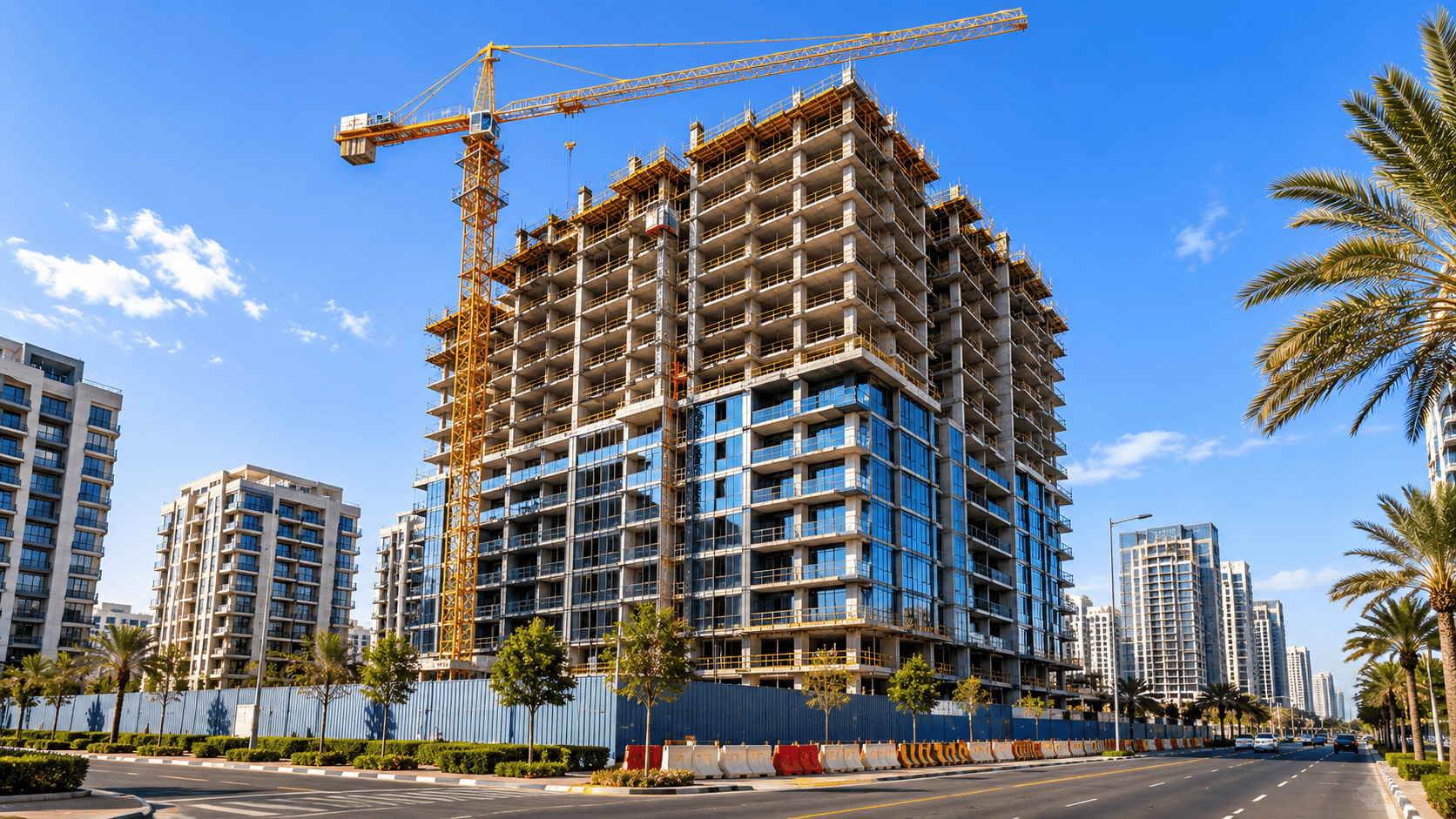
Two published measures point in different directions. DLD registered transactions show a median of about AED 664 per sq ft in 2021 and about AED 1,427 to 2 October 2026, a rise of roughly 115%. Bayut's 1-bedroom sale price index puts DLRC at AED 1,241 per sq ft in August 2026, down 1.3% on a year earlier. They cover different periods and different sets of transactions, so read them together: DLRC prices have come a long way from a low base, and the most recent year has not been a straight line up.
Three things are usually cited for the longer rise: the Metro Blue Line announcement, the Dubai 2040 Urban Master Plan's treatment of the Dubailand corridor as a future population center, and the simple effect of starting from a low base. Nobody can say how much of each is already in today's prices.
5. Rental Rates and Yields
DLRC's rental market is driven by proximity to Academic City, Silicon Oasis, and the broader Dubailand employment cluster. The tenant base skews toward young professionals, university faculty, and small families seeking affordable modern housing close to major employment nodes.
There is no single agreed yield figure for DLRC by unit type, so work it out for the specific unit. Gross yield is annual rent divided by the price you pay; net yield also subtracts service charges, DEWA, maintenance and a vacancy allowance. As a reference point, Bayut's August 2026 data gives an indicative gross yield of about 6.5% for a DLRC one-bedroom (our 1 BHK guide explains the method). Service charges differ by building, so check the rate in the DLD Service Charge Index before you compare two units.
Two forces pull against each other. Rising property prices compress yields if rents stay flat. The Metro Blue Line may widen the tenant pool once it opens in 2029, which could support rents, but that is not guaranteed.
6. New-Build Supply in DLRC

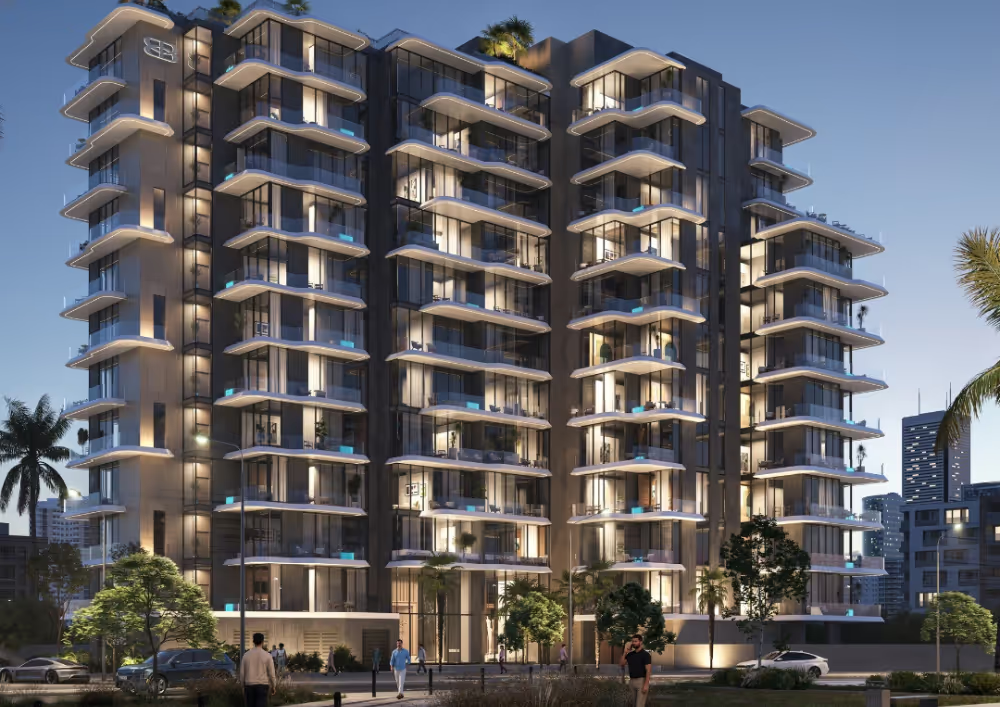
New-build projects are now arriving in DLRC alongside the older stock. Bond Living, developed by Pearlshire Development, is one of the new-build projects in the community.
7. Why DLRC Is Priced Below JVC
The pricing gap between DLRC and JVC is real, measurable, and has specific structural causes. Understanding these causes is essential because they tell you whether the gap will persist, narrow, or potentially reverse.
Community Maturity
JVC has been a functioning community for 15+ years. It has established schools, supermarkets, medical clinics, mosques, parks, and a predictable service infrastructure. DLRC is younger and less mature. Some amenities that JVC residents take for granted are still arriving in DLRC. This maturity gap explains a genuine difference in livability today, but it narrows every year as new retail and F&B developments open.
Perception Lag
Property markets price perception as much as reality. JVC spent a decade building brand recognition among Dubai's investor community. DLRC is still relatively unknown internationally. Many overseas investors have never heard of it, while JVC appears in every property portal's top 10 lists. This awareness gap suppresses demand and keeps prices below fundamental value.
Transport Connectivity (Currently)
Until the Metro Blue Line opens on 9 September 2029, DLRC residents rely on private vehicles, taxis, or bus services. JVC sits closer to the Sheikh Zayed Road interchange network and has more established bus routes. This connectivity disadvantage may narrow once the Blue Line opens.
Developer Mix (Historically)
JVC attracted established developers like Nakheel, Ellington, and Binghatti earlier in its lifecycle. DLRC's initial development wave included more tier-2 and tier-3 developers, creating inconsistent build quality across the community. This is changing rapidly with premium developers now entering DLRC, but the legacy perception lingers.
8. Price Forecast Drivers
Four specific, identifiable factors will influence DLRC property prices over the next three years:
Metro Blue Line (Opening 9 September 2029)
The Blue Line route serves areas including Dubai Silicon Oasis and Academic City (Dubai Media Office, 3 May 2026), and the exact distance from DLRC to a station should be checked on the RTA route map when station locations are published. Other Dubai communities have seen values move after gaining metro access, although every case depended on the supply and demand of its day. DLRC currently has no rail connectivity.
Dubai 2040 Urban Center Designation
The Dubai 2040 Urban Master Plan identifies the Dubailand corridor as a future population center. This designation triggers government infrastructure investment: roads, schools, healthcare facilities, parks, and commercial zoning. It also signals to private developers that the area has long-term government commitment, reducing development risk and attracting institutional capital.
Academic City Population Growth
Dubai Academic City, directly adjacent to DLRC, is home to several universities, including Heriot-Watt University, University of Birmingham Dubai, and Middlesex University Dubai. Student housing demand creates a steady source of tenants, while faculty and administrative staff represent a tenant pool for one and two-bedroom apartments. If these institutions grow, rental demand in DLRC could grow with them.
New Retail and F&B Developments
DLRC is receiving significant retail investment through 2026-2027, including neighborhood malls, food halls, and community services that reduce residents' need to travel to established commercial districts. Each new amenity that opens reduces the livability gap with mature communities and supports both rental rates and property values.
9. Service Charges in DLRC
Service charges are the recurring cost that most investors underestimate when calculating net yields. Service charges are set project by project and approved by RERA; check the building's rate in the DLD Service Charge Index. The rate depends on the building, its age and its amenities, so a community-wide figure would mislead you. Ask the developer or owners' association for the current budget and last year's charge before you buy.
Service charges in DLRC cover building maintenance, common area upkeep, security, swimming pool and gym maintenance (where applicable), landscaping, and building insurance. They do not typically include DEWA connections, internet, individual unit maintenance, or parking beyond the allocated single space.
10. Total Cost of Ownership
Calculating the true cost of property ownership in DLRC requires looking beyond the headline purchase price. Here is a worked example for a one-bedroom apartment bought at an illustrative AED 700,000. The running costs are assumptions, not market data, so replace them with the figures for your building (cost item, amount, frequency):
- Purchase price: AED 700,000 (one-time)
- DLD registration fee (4%): AED 28,000 (one-time)
- Agency fee (2%): AED 14,000 (one-time)
- Oqood knowledge and innovation fees (off-plan): AED 20 (one-time)
- Service charges (illustrative allowance for a 700 sq ft unit): AED 9,800 (annual; use your building's actual rate)
- DEWA connection + annual usage: AED 6,000-8,000 (annual)
- Maintenance reserve: AED 3,000-5,000 (annual)
- Insurance (building + contents): AED 1,200-2,000 (annual)
Total upfront investment: approximately AED 742,000 (purchase + DLD + agency + knowledge and innovation fees). Annual carrying costs: approximately AED 20,000-25,000. Assuming annual rental income of AED 50,000-55,000, the net annual return is approximately AED 25,000-35,000, a net yield of about 3.4% to 4.7% on the total upfront investment, before any vacancy allowance.
That first-year figure is deliberately cautious because it counts the one-time acquisition costs against year one. Spread over five years, the DLD and agency fees (AED 42,000 here) cost about AED 8,400 a year, so the net return improves in later years. Change the price, rent and costs to match the unit you are considering, and add a vacancy allowance.
11. Investment Snapshot
- Median price per sq ft (DLD, to 2 October 2026): about AED 1,427 (about AED 664 in 2021)
- Bayut 1-bedroom index (August 2026): about AED 1,241 per sq ft, down 1.3% year on year
- Indicative gross yield, one-bedroom (Bayut data, 700 sq ft reference unit): about 6.5%
- Service charges: set per project; check the DLD Service Charge Index
- Metro Blue Line: under construction (opening 9 September 2029)
- Dubai 2040 designation: future urban center
12. Expert Insights
The most common mistake investors make with DLRC is comparing it to what it was rather than what it is becoming. Today the area has the Metro Blue Line under construction on a route that serves areas including Dubai Silicon Oasis and Academic City, a government designation as a future urban center, and new developments under way.
Another underappreciated factor is the Academic City adjacency. Universities provide a structural demand floor for rentals that is independent of economic cycles. Students need housing whether the economy is growing or contracting. This counter-cyclical demand component makes DLRC rental income more resilient than communities dependent entirely on corporate-tenant demand.
What is the cheapest apartment you can buy in DLRC?
The cheapest units are usually studios in older buildings without amenities such as pools or gyms, but prices vary by building, size and floor, so compare recent transactions and current listings for the specific building. For a market-wide reference, Bayut's 1-bedroom sale price index for August 2026 puts the DLRC average at about AED 1,241 per sq ft.
What is the average price per square foot in DLRC?
DLD registered transactions show a median of about AED 1,427 per sq ft in DLRC to 2 October 2026, up from about AED 664 in 2021. The price of an individual unit varies with building age, developer, floor level, and unit condition.
What rental yield can I expect from a DLRC apartment?
There is no single agreed yield for DLRC by unit type. Gross yield is annual rent divided by the purchase price; net yield also subtracts service charges, maintenance and vacancy. As a reference point, Bayut data for August 2026 gives an indicative gross yield of about 6.5% for a DLRC one-bedroom, calculated on a 700 sq ft reference unit. Work out the yield for the specific unit using its price, the rent you can achieve and the building's service charge.
How do DLRC prices compare to JVC?
On Bayut's 1-bedroom sale price index for August 2026, DLRC averages about AED 1,241 per sq ft against about AED 1,450 in JVC, roughly 14% lower. The indicative gross yields are close, about 6.5% in DLRC and about 7.0% in JVC, so the lower price does not automatically mean a higher yield. Compare specific buildings rather than area averages.
Will DLRC property prices continue to increase?
Supporting factors include the Metro Blue Line (under construction, opening 9 September 2029), the Dubai 2040 plan's designation of the area for population growth, the universities in Academic City and new developers entering the market. But prices have not risen in a straight line: Bayut's 1-bedroom index shows DLRC 1.3% lower year on year in August 2026. Nobody can say how much of the Blue Line’s 2029 opening is already priced in, and past metro openings elsewhere in Dubai were shaped by the supply and demand of their day.
What are the service charges in DLRC?
Service charges are set project by project and approved by RERA, so there is no single DLRC rate. Check the building's rate in the DLD Service Charge Index (dubailand.gov.ae). These charges cover building maintenance, security, common area upkeep, and shared amenities, and they vary with building age and amenity level.