Dubai Heat Survival Guide: 7 Ways to Lower DEWA Bills Before Summer 2026
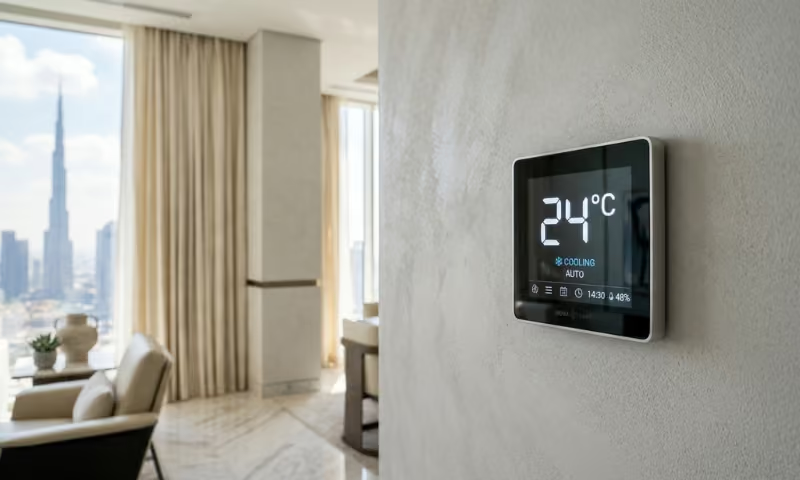
Dubai summer demands strategic energy management. Reduce DEWA bills 30-40% through: (1) AC optimization at 24°C DEWA-recommended setting, (2) thermal blackout curtains blocking 99% heat, (3) UV window films preventing solar gain, (4) smart home automation with occupancy sensors, (5) door/window sealing preventing cool air escape, (6) heat-resistant balcony plants creating micro-climate cooling, (7) 27°C "away mode" maintaining baseline temperature.
Effective Dubai summer preparation requires smart technology and physical insulation strategies implemented in February-March before May-September heat arrives. Key tactics: (1) Set smart AC thermostat to 24°C (DEWA-recommended, saves 5% per degree lower), (2) Install thermal blackout curtains blocking 99% light/UV, (3) Apply UV-blocking window films preventing solar heat gain, (4) Seal doors/windows preventing cool air escape, (5) Use 27°C "away mode" versus turning AC completely off (prevents structural heat absorption requiring hours of maximum compressor work). May 2026 recorded the hottest month in 20+ years (40.4°C average maximum), making February property viewings ideal for "summer audit" inspecting AC performance, window glazing, sun orientation before purchase.
When mercury climbs past 40°C, your Dubai home transforms from living space into a fortress. May 2026 became the hottest month in two decades—40.4°C average maximum, a full degree above historical norms.
Smart residents don't wait until July to act. They prepare in February. Here's your complete survival guide showing exactly how to audit your property, optimize cooling costs, and cut DEWA bills before summer arrives.
Why Is February the Best Time to Buy Property in Dubai?

The Summer Audit Strategy
February offers strategic advantage for property viewings—mild weather exposes inherent cooling system flaws that July's maximum AC capacity would mask.
Critical Inspection Checklist:
1. Window Seal Integrity:
- Run hand along closed window edges feeling for drafts
- Poorly sealed windows/sliding doors = massive air leakage
- Peak summer impact: DEWA bills increase 15-25% from escaping cool air
2. AC Vent & Ceiling Analysis:
- Look for water stains/patches near AC vents
- Telltale signs: Condensation issues or overworked chiller units
- These systems fail when real heat hits (June-August)
3. Sun Orientation Assessment:
- South/west-facing: Capture afternoon sun brunt
- Great winter natural light, requires robust summer thermal intervention
- Check: Energy-efficient glass, deep balcony overhangs providing natural shade
Property Feature Priorities (2026 Market):
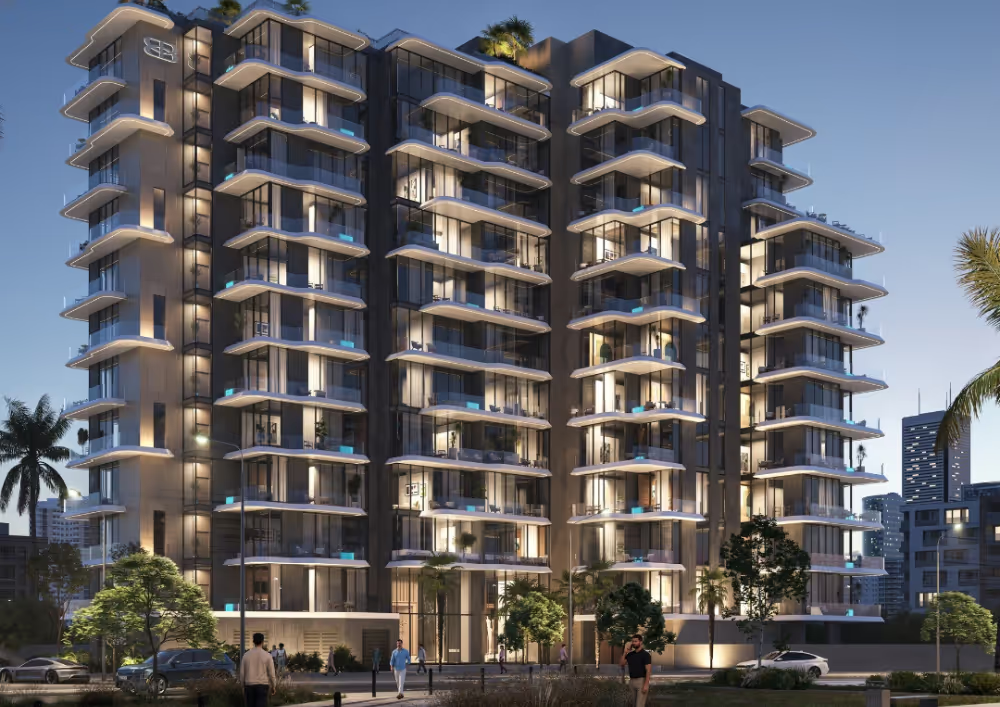
Modern developments like Bond Enclave and Bond Living integrate:
- Smart home climate automation
- Double-glazed energy-efficient windows
- Spa-grade ventilation systems
- Cross-ventilation layouts optimizing natural airflow
Investment Angle:
Properties with superior thermal performance command 8-12% rental premiums—tenants prioritize DEWA bill predictability over pure square footage in Dubai's climate reality.
What Is the Best AC Temperature for Dubai Summer?
The 24°C Rule & DEWA Economics
DEWA Official Recommendation: 24°C
The Math:
- Every degree below 24°C = 5% additional cooling energy consumption
- Example: 20°C setting uses 20% more electricity than 24°C
- Annual savings: AED 1,200-1,800 for average 2BR apartment
DEWA Slab Tariff System:
Tiered pricing—higher consumption = higher per-unit rates. Keeping consumption within lower tiers is critical:
- Fuel surcharge fluctuates monthly
- Exceeding threshold slabs dramatically increases bills
- 24°C setting helps maintain lower consumption brackets
The "Never Turn It Off" Strategy:
Common mistake: Turning AC completely off when leaving for work
Reality: Structural walls/furniture heat rapidly in Dubai summer
Result when returning:
- Compressor works maximum capacity for hours
- Extracting deep-seated heat from materials
- Higher total energy consumption than maintaining baseline
Optimal approach: Set thermostat to 27°C when absent
- Maintains baseline temperature
- Prevents structural heat absorption
- AC only needs minor adjustment upon return
- Total energy savings: 12-18% versus on/off cycling
Do Thermal Curtains Actually Reduce Dubai Heat?
The Science of Shading

Thermal Blackout Curtains Performance:
- Block up to 99% light and UV rays
- Feature acrylic foam or thermal lining reducing heat transfer
- Prevent solar gain from entering rooms
Fabric Selection Strategy:
Material effectiveness ranking:
- Heavy-weight linen: Natural insulation, breathable
- Velvet: Dense weave blocks maximum light
- Densely woven polyester blends: Synthetic durability
Color science: Light-colored fabrics facing window (reflect heat), room-facing color = personal preference
Measured Impact:
Rooms with thermal curtains versus standard:
- 6-8°C temperature difference during peak afternoon sun
- AC compressor run-time reduced 30-40%
- Monthly DEWA savings: AED 150-300 per room
UV Window Film Alternative:
For maintaining views (Dubai Marina skyline, Motor City greenery):
- Applied directly to glass exterior
- Blocks harmful UV before reaching interior
- Prevents furniture fading
- Reduces solar heat gain 50-70%
- Cost: AED 50-100 per sqm installed
How Much Does Smart Home Technology Save on Cooling?
Automation ROI Analysis
Smart Thermostat Benefits:
Learning algorithms:
- Adapt to occupancy patterns
- Adjust cooling based on presence
- Remote smartphone control
Sleep mode optimization:
- Gradually adjusts temperature/fan speed overnight
- Maintains comfort while drawing significantly less power
- Savings: 20-30% nighttime cooling costs
Occupancy sensors:
- Detect empty rooms
- Reduce or pause cooling in unoccupied zones
- Whole-apartment savings: 15-25% monthly
Bond Living/Bond Enclave Integration:
Pearlshire developments feature pre-integrated smart home systems:
- App-controlled climate zones
- Automated scheduling based on routines
- Energy consumption tracking/analytics
- Predictive maintenance alerts
Annual ROI:
Smart thermostat investment: AED 800-1,500
Annual DEWA savings: AED 1,800-3,000
Payback period: 6-10 months
5-year net savings: AED 7,500-13,500
Average DEWA Bills by Apartment Type 2026
| Apartment Type | Summer Monthly | Winter Monthly | Annual Total | Savings Potential |
|---|---|---|---|---|
| Studio | AED 450-600 | AED 150-200 | AED 3,300-4,800 | AED 800-1,200 |
| 1BR | AED 700-900 | AED 250-350 | AED 5,400-7,200 | AED 1,300-2,000 |
| 2BR | AED 1,000-1,400 | AED 400-550 | AED 8,400-11,400 | AED 2,100-3,400 |
| 3BR | AED 1,500-2,100 | AED 600-800 | AED 12,600-17,400 | AED 3,200-5,000 |
| Villa (3BR) | AED 2,500-3,500 | AED 1,000-1,400 | AED 21,000-29,400 | AED 5,400-8,800 |
What Are Best Balcony Plants for Dubai Heat?

Creating Micro-Climate Cooling
Strategic planting cools air before entering the apartment—nature's air conditioning.
Heat-Resistant Champions:
1. Bougainvillea:
- Function: Climbing plant covering railings/pergolas
- Benefit: Natural sunshade, vibrant aesthetics
- Watering: Drought-tolerant once established
- Temperature reduction: 2-4°C in shaded zones
2. Plumbago (Blue Jasmine):
- Function: Wall planters, vertical coverage
- Benefit: Blooms all summer, cooling blue/white flowers
- Maintenance: Minimal pruning required
3. Succulents & Dwarf Pittosporum:
- Function: Green dividers, heat absorbers
- Benefit: Minimal irrigation demand
- Placement: Along glass railings creating thermal buffer
The Physics:
Plants absorb solar radiation through photosynthesis versus concrete/metal reflecting heat into living spaces. Strategic greenery can reduce balcony surface temperatures 8-12°C, indirectly cooling adjacent interior rooms.
Which Dubai Communities Handle Heat Best?
Master Planning for Climate

Green Space Density Impact:
Dense concrete creates "Urban Heat Island effect"—temperatures 3-5°C higher than communities with extensive greenery.
Climate-Optimized Communities:
Dubai Hills Estate:
- 18-hole championship golf course
- Massive park network
- Natural ambient cooling enables evening walks year-round
DLRC (Bond Living Location):
- Evolving eco-corridors under Dubai 2040 Plan
- Academic City green campus adjacency
- Lower density G+11 structures versus high-rise heat traps
Motor City:
- Mature tree canopy (developed 2008)
- Wide boulevards reducing heat concentration
- Motorsport theme = extensive open spaces
Arjan (Bond Enclave):
- Miracle Garden/Butterfly Garden green buffer
- Mid-rise boutique scale
- Post-Hessa Street connectivity without density penalty
Building Quality Indicators:
Look for developers utilizing:
- Modern thermal chains (insulation continuity)
- High-grade wall/ceiling insulation
- Weather stripping around doors
- Reflective paint on exposed rooftops
Measurable difference: Well-sealed homes retain cool air 40-60% longer, drastically reducing AC workload and DEWA costs.
For comprehensive cost of living comparisons across Dubai communities, explore how neighborhoods like Arjan, JVC, and Motor City differ in operating expenses beyond DEWA bills. First-time buyers should also review our 1BHK purchasing guide to understand base property costs before optimizing for summer efficiency.
The Takeaway: Preparation Is Luxury
Dubai summer survival doesn't require freezing apartments to 18°C accepting astronomical DEWA bills. It requires a calculated seasonal living approach implemented before heat arrives.
February-March Action Items:
✅ Conduct summer audit (property viewings or current home)
✅ Install thermal curtains/UV window films
✅ Upgrade to smart thermostat with sleep mode
✅ Seal window/door gaps preventing air leakage
✅ Curate balcony with heat-resistant plants
✅ Set AC baseline: 24°C occupied, 27°C away
Property Investment Integration:
When evaluating Arjan, JVC, DLRC, or Motor City properties, prioritize energy efficiency as a core criterion. Properties featuring smart home automation and energy-efficient design deliver long-term cost advantages. Developments like Bond Enclave and Bond Living engineer hospitality-led design with smart home integration—ensuring your sanctuary remains comfortable regardless of temperature outside.
Don't wait for May's heatwave. Start your summer preparation today.
Discover climate-optimized living: Explore Bond Enclave (Arjan) and Bond Living (DLRC)—where smart home automation meets thermal efficiency for year-round Dubai comfort.
FAQ's
Q1: What is the best AC temperature for Dubai summer to save money?
DEWA officially recommends 24°C as the optimal thermostat setting for Dubai summer. Each degree below 24°C increases cooling energy consumption approximately 5%—setting AC to 20°C uses 20% more electricity than 24°C, costing AED 1,200-1,800 extra annually for an average 2BR apartment. DEWA operates a tiered slab tariff system where higher consumption triggers higher per-unit rates, making 24°C setting critical for maintaining lower cost brackets. Use 27°C "away mode" when absent versus turning AC completely off—structural walls/furniture heat rapidly requiring hours of maximum compressor work upon return, consuming more total energy than maintaining baseline temperature.
Q2: Do thermal curtains actually lower room temperature in Dubai?
Yes, high-quality thermal blackout curtains reduce Dubai room temperatures 6-8°C during peak afternoon sun by blocking up to 99% light and UV rays through acrylic foam or thermal lining preventing solar heat gain. Effective materials include heavy-weight linen, velvet, and densely woven polyester blends with light-colored fabric facing windows to reflect heat. Rooms with thermal curtains show 30-40% reduction in AC compressor runtime, delivering AED 150-300 monthly DEWA savings per room. UV window films offer alternatives for maintaining views (Marina skyline, Motor City greenery) while blocking 50-70% solar heat gain applied directly to glass exterior.
Q3: When is the best time to buy property in Dubai to check cooling systems?
February is optimal for Dubai property purchases enabling "summer audit" before May-September extreme heat. Mild February weather exposes inherent cooling system flaws that July's maximum AC capacity would mask. Critical inspections: (1) Run hand along closed window edges detecting drafts (poorly sealed windows increase DEWA bills 15-25%), (2) Check AC vents/ceilings for water stains indicating condensation issues or overworked chillers failing during peak heat, (3) Assess sun orientation—south/west-facing units capture afternoon sun requiring robust thermal intervention (verify energy-efficient glass, deep balcony shade overhangs). Properties with superior thermal performance command 8-12% rental premiums.
Q4: What balcony plants survive Dubai summer heat?
Heat-resistant Dubai balcony plants creating natural cooling micro-climate include: (1) Bougainvillea—climbing plant covering railings/pergolas providing vibrant sunshade, drought-tolerant, reduces shaded zone temperatures 2-4°C; (2) Plumbago (Blue Jasmine)—ideal wall planters blooming all summer with cooling blue/white flowers, minimal pruning; (3) Succulents & Dwarf Pittosporum—green dividers absorbing heat versus concrete/metal reflecting into living spaces, minimal irrigation demand. Strategic greenery reduces balcony surface temperatures 8-12°C through photosynthesis absorption rather than heat reflection, indirectly cooling adjacent interior rooms and reducing AC workload.
Q5: How much money does smart home technology save on Dubai cooling costs?
Smart thermostats deliver AED 1,800-3,000 annual DEWA savings through: (1) Learning algorithms adapting to occupancy patterns, (2) Sleep mode gradually adjusting temperature/fan overnight (20-30% nighttime cost reduction), (3) Occupancy sensors reducing/pausing cooling in empty zones (15-25% whole-apartment savings). Initial investment AED 800-1,500 provides 6-10 month payback, 5-year net savings AED 7,500-13,500. Bond Living and Bond Enclave feature pre-integrated smart home systems with app-controlled climate zones, automated scheduling, energy tracking analytics, and predictive maintenance alerts—eliminating retrofit costs while commanding 8-12% rental premiums from tenants prioritizing DEWA bill predictability.
How can I reduce DEWA bills before Dubai summer 2026?
Install smart thermostats to optimize cooling schedules and reduce energy waste. Use energy-efficient air conditioning units and maintain regular servicing. Apply window tinting and thermal insulation to minimize heat penetration. LED lighting throughout your property reduces electricity consumption. These upgrades typically lower DEWA bills by 30-40% during summer months.
What HVAC improvements are most effective for summer savings?
Upgrade to high-efficiency AC units rated for Dubai's extreme heat. Clean filters monthly and schedule professional maintenance before summer. Install programmable thermostats maintaining 24-25°C during occupied hours and 28°C when away. Properly insulated ductwork prevents energy loss. Modern systems consume 25-35% less electricity while providing superior cooling performance.
Are window treatments effective for reducing heat and DEWA costs?
Yes, thermal window films and thermal blinds significantly reduce indoor heat gain. These cost-effective solutions block 60-80% of solar radiation without affecting natural light. Combined with quality curtains, they create substantial insulation. Cost ranges from AED 50-200 per window, with payback periods of 6-12 months through reduced cooling needs.
What behavioral changes help lower DEWA consumption?
Use appliances during off-peak hours when possible, and reduce water heater temperatures to 50°C. Limit shower durations to 5 minutes and run dishwashers at night. Ensure all doors and windows seal properly to prevent cool air escape. Turn off unnecessary lighting and electronics. Behavioral changes combined with upgrades maximize savings without significant capital investment.
Should I invest in renewable energy solutions?
Solar panel installation is increasingly popular, though upfront costs of AED 30,000-60,000 are significant. However, Dubai's 300+ sunny days make excellent returns—systems typically pay for themselves in 7-10 years. DEWA net metering programs allow excess energy sales. For budget-conscious residents, prioritize efficiency upgrades first, then consider solar installations.