Can Indians Buy Property in Dubai? Full Guide for Investors

Yes, Indian nationals can buy 100% freehold property in Dubai's designated zones without residency requirements. Under FEMA's Liberalised Remittance Scheme, Indians can remit up to $250,000/year for overseas property. Investments above AED 750,000 qualify for a 2-year renewable visa, while AED 2M+ unlocks the 10-year Golden Visa.
Dubai has become one of the top global destinations for Indian property investors, with thousands of Indian nationals now owning homes in luxury developments and emerging communities. But the question remains: Can Indians actually buy property in Dubai? The short answer is yes—but there are specific conditions, regulations, and financial requirements that every Indian buyer must understand before investing.
Can Indians Buy Property in Dubai? Legal Framework & Key Requirements
Indian nationals have the legal right to purchase 100% freehold property in Dubai's designated freehold zones. The Emirate of Dubai has made significant moves to attract foreign investment, allowing residents and non-residents alike to own property. However, this right comes with important conditions:
1. Freehold vs Leasehold: What Can Indians Buy?
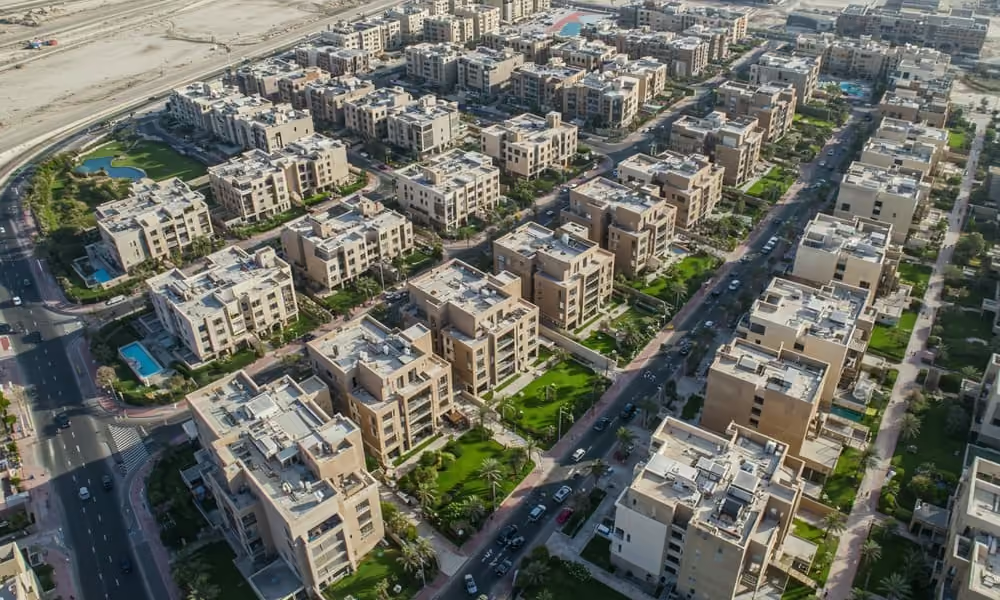
Freehold Properties: Indians can buy 100% freehold property in designated zones across Dubai. Popular freehold areas include Downtown Dubai, Dubai Hills Estate, Jumeirah Village Circle (JVC), Arabian Ranches, Business Bay, and emerging communities like Arjan and Dubai Motor City.
Leasehold Properties: Outside freehold zones, property is available on 99-year lease agreements, which are legally binding and treated similarly to freehold ownership for practical purposes.
2. Residency Requirements for Indian Buyers
One of the biggest advantages for Indian investors: You do not need UAE residency to buy property in Dubai. Non-resident foreign nationals, including Indians, can purchase property outright. However, the property purchase itself does not automatically grant you a residence visa—you'll need to apply separately.
The Legal Process: Step-by-Step for Indian Buyers
Step 1: Verify Your Property in a Freehold Zone
Before making any offer, confirm the property is in a Dubai freehold zone. The Dubai Land Department (DLD) maintains an updated list of freehold areas. Your real estate agent or lawyer can verify this instantly.
Step 2: Make an Offer & Sign Booking Form
Once you've chosen a property, you'll sign a booking form and pay a token amount (typically 5-10% of the purchase price). This secures the property and initiates legal registration.
Step 3: Sales & Purchase Agreement (SPA)
The developer or seller will provide a legally binding SPA outlining payment schedules, property specifications, and terms. Have a local lawyer review this document—it's non-negotiable but should be understood fully.
Step 4: Property Registration with Dubai Land Department
For off-plan properties, the developer registers the sale with the DLD under the Oqood system. For ready properties, the seller's agent will facilitate the registration. Learn more about Oqood registration requirements to ensure your purchase is properly documented.
Step 5: Payment Milestones (For Off-Plan)
Off-plan purchases follow a linked payment schedule tied to construction phases: 10% at booking, 20-30% as construction progresses, 10% at pre-handover, and the remainder upon handover.
Step 6: Final Handover & Key Collection
Once construction is complete and you've cleared all payments, you receive the title deed from the DLD and the property keys from the developer. This is the final ownership document. For detailed timelines and expectations, refer to our booking to handover guide.
Off-Plan vs Ready Properties: Which Should Indians Choose?
AspectOff-PlanReady PropertyPriceLower (15-25% discount possible)Market rate or premiumCustomizationLimited internal optionsNone—fixed layoutPayment PlanExtended (5-7 years)Immediate/quick (1-2 months)Handover Timeline3-5 years from bookingImmediateAppreciation PotentialHigher (pre-launch values)Stable (current market)
Financing Options for Indian Buyers in Dubai
1. Mortgage Options
Most UAE banks offer mortgages to non-residents, including Indian nationals. Typical loan-to-value (LTV) ratios: 75% for nationals, 60-70% for non-residents. Key requirements:
Popular banks for Indian expats: FAB, ADIB, ADB, Emirates NBD, First Abu Dhabi Bank. For comprehensive mortgage insights and comparison tools, check our UAE mortgage guide.
2. Developer Financing
Many developers offer 0% interest payment plans spread across the construction period, effectively reducing your immediate financial burden. This is especially attractive for off-plan purchases.
3. Full Cash Purchase
If you have the funds, a cash purchase simplifies everything. No mortgage approvals, faster closing, and potential negotiating power for discounts.
FEMA & RBI Compliance for Indian Buyers
Indian nationals purchasing property abroad must comply with Foreign Exchange Management Act (FEMA) regulations and Reserve Bank of India (RBI) guidelines. Understanding these requirements is essential for a seamless and legally compliant investment.
Key FEMA Provisions for Property Investment
Under the Liberalised Remittance Scheme (LRS), Indian residents can remit up to USD 250,000 per financial year for permitted current or capital account transactions, including overseas property purchases. This is a key allowance for most individual Indian investors.
Tax Compliance & Disclosure Requirements
When remitting money to purchase property in Dubai, ensure you file the required ITR (Income Tax Return) disclosures. Additionally, if any remittance exceeds INR 10 lakh (approximately USD 12,000) per financial year, Tax Collected at Source (TCS) at 20% will be deducted unless you file Form 15CA and 15CB with your tax advisor.
| Compliance Requirement | Details | Action Required |
|---|---|---|
| LRS Limit | USD 250,000 per financial year | Plan remittances within this limit; stack across years if needed |
| TCS on Remittance | 20% deducted on amounts over INR 10 lakh (~USD 12,000) per financial year | File Form 15CA/15CB to minimize or claim exemptions |
| ITR Disclosure | Declare overseas property, rental income, and gains | Report in Schedule FA of ITR; maintain proof of funds |
| RBI Approval | No formal approval needed; self-declaration via bank | Inform your bank; provide property purchase documents |
| Proof of Funds | Bank statements, income tax returns, salary slips | Compile and keep on file for RBI scrutiny |
Tax Implications: India vs UAE
Understanding the tax landscape for Indian property owners in Dubai is crucial for effective wealth planning. India and UAE have specific tax treaties and individual tax regimes that impact your overall returns.
| Tax Type | India | UAE |
|---|---|---|
| Income Tax on Salary | 5-30% (progressive slabs) | 0% (no income tax) |
| Capital Gains Tax | 15-20% (short & long-term) | 0% (no capital gains tax) |
| Property Tax | State-dependent (0-4%) | 0% (no property tax) |
| Rental Income Tax | Taxable as income; depreciation allowed | 0% (no tax on rental income) |
| Inheritance/Gift Tax | No tax on gifts/inheritance (per se) | 0% (no inheritance tax) |
| Service Charges | Not applicable | AED 5-15 per sqft annually |
Residency Visas for Indian Property Owners in Dubai
1. Who Qualifies for a Residence Visa?
Property ownership alone doesn't grant residency, but it can help you qualify for one under these conditions:
2. Processing the Golden Visa for Property Investors
The process typically takes 60-90 days. You'll need to submit property documents, financial proof, passport copies, and medical reports. A UAE lawyer can handle most of the paperwork.
Best Dubai Areas for Indian Property Buyers
1. Budget-Friendly Communities (AED 500K-800K)
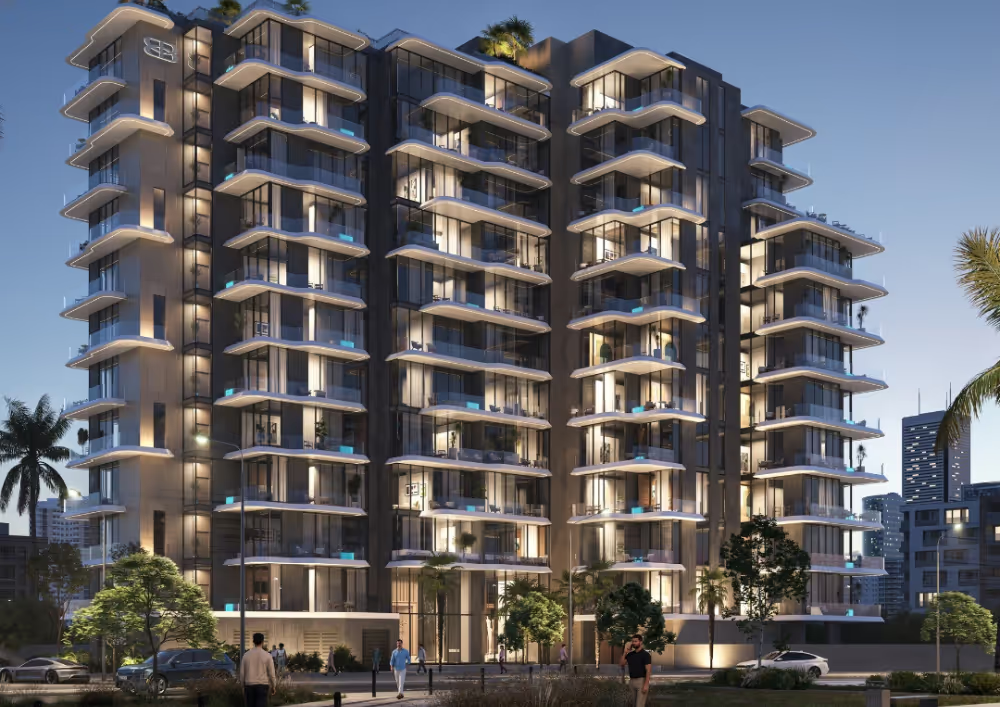
Arjan, Dubailand: Up-and-coming residential area with family-friendly amenities. 1 BHK from AED 750,000. High rental yield (6-8%), near Miracle Garden. Off-plan options like Bond Enclave by Pearlshire in Arjan are popular among Indian investors seeking early-stage pricing.
Dubai Motor City: Vibrant expat community with good connectivity. 1 BHK from AED 700,000. Home to Dubai Autodrome and casual dining.
Jumeirah Village Circle (JVC): Established community with retail, dining, and green spaces. Studio from AED 550,000; 1 BHK from AED 800,000.
2. Mid-Range Communities (AED 800K-1.5M)
Dubai Hills Estate: Upscale, family-oriented with golf courses and parks. 1 BHK from AED 1 million; 2 BHK from AED 1.3 million. Good capital appreciation.
Downtown Dubai: Premium location near Burj Khalifa, Dubai Mall. 1 BHK from AED 1.1 million. High rental income potential.
3. Ultra-Premium (AED 1.5M+)
Emirates Hills, Dubai Marina, Palm Jumeirah: Luxury lifestyle communities. 2-3 BHK from AED 2 million+. Best for long-term wealth building.
Cultural Tips for Indian Buyers in Dubai
1. Learn the Market: Dubai's property market is transparent but fast-moving. Work with experienced agents who understand Indian buyer preferences.
2. Understand Lease Terms: Always clarify lease renewal terms, especially in 99-year leasehold properties. Ensure you have legal clarity.
3. Budget for Hidden Costs: Beyond the purchase price, account for DLD registration fees (4% for purchase), mortgage fees (1-2%), inspection fees, and annual maintenance/service charges.
4. Hire a Local Lawyer: Investment laws differ from Indian real estate. A UAE lawyer ensures your contract is sound and protects your interests.
5. Be Aware of Resale Trends: Newer communities appreciate faster. Established areas offer stability and rental demand but slower growth.
Common Pitfalls Indian Buyers Should Avoid
1. Buying Outside Freehold Zones
Not all of Dubai is available to foreign investors. Verify the property is in a designated freehold area. Leasehold is fine, but understand the terms.
2. Ignoring the Fine Print in Contracts
Dubai contracts are legally binding and heavily favor developers in off-plan cases. Have a lawyer review every document. Don't skip this step.
3. Underestimating Hidden Costs
DLD fees, mortgage fees, property registration, and annual service charges add up quickly. Budget an additional 7-10% on top of the purchase price.
4. Neglecting Rental Yields
If you're an investor, calculate expected rental yields before purchasing. Arjan, JVC, and Budget communities offer 6-8% annual yields, while premium areas may yield only 3-4%.
5. Not Checking Developer Reputation
For off-plan properties, the developer's track record is critical. Buy from established, registered developers to avoid delays or project abandonment.
FAQs: Can Indians Buy Property in Dubai?
1. Do I need a UAE residency visa to buy property in Dubai as an Indian?
No. You can purchase property as a non-resident. However, if you want to live in the property, you'll need to apply for a residence visa separately—usually a Golden Visa linked to your property investment.
2. What's the minimum investment for an Indian to qualify for a UAE Golden Visa?
AED 750,000 for a 2-year renewable visa or AED 2 million for a 10-year visa. Your property purchase counts toward this amount.
3. Can Indian buyers get mortgages for Dubai properties?
Yes. Most UAE banks offer mortgages to non-residents at 60-70% LTV. You'll need salary certificates, bank statements, and passport copies. EMI calculations are straightforward, and rates are competitive (3.5-5% typically).
4. How long does the property purchase process take for Indians?
For ready properties: 30-45 days. For off-plan: Depends on construction phases but typically 5-7 years to handover. Once handover occurs, the registration and key collection happen within days.
5. Are there any restrictions on selling to Indians or capital gains for Indian investors?
No restrictions on buying or selling. However, India's tax authorities may ask for proof of funds source (under FEMA regulations) and may impose TCS (Tax Collected at Source) if remitting money to India. Consult a tax advisor.
6. What are the ongoing costs of owning property in Dubai for Indian investors?
Annual service charges (AED 5-15 per sqft annually), property taxes (very low, ~1-2% for luxury properties), and optional homeowner association fees. Rent can offset these for investor-landlords.
7. Can I rent out my Dubai property if I buy it as an Indian?
Absolutely. Property rentals are fully legal and taxed. Dubai's rental market is strong, offering 5-8% gross rental yields in many communities, especially Arjan, JVC, and Dubai Motor City.
Conclusion: Should Indians Invest in Dubai Real Estate?
The answer is a resounding yes—if you have the financial capacity and understand the regulations. Dubai offers Indian investors:
Whether you're an end-user seeking a lifestyle upgrade or an investor building wealth, Dubai's property market welcomes Indian buyers. Start by identifying your budget, working with a reputable agent, hiring a lawyer, and understanding the full cost structure. The opportunity is real—make sure your investment decision is informed.
Can Indians buy property in Dubai?
Yes, Indians can freely purchase in Freehold zones. No special government approvals needed.
What documentation is needed?
Passports, PAN cards, bank statements, and employment letters.
How do Indians get mortgages?
UAE banks offer 60-70% financing with rates from 3.5-5.5%.
What are tax implications?
Zero income tax on rental revenue and no capital gains tax.
What returns to expect?
Established areas generate 4-6% yields; emerging zones offer 6-8%.
Can Indians buy land in Dubai?
Yes. Indian nationals can buy both built property and vacant land plots in Dubai's designated freehold zones, including areas like Arjan and Dubai South, under the same 100% foreign ownership rules. Land purchases still require DLD registration and are typically intended for future construction, so buyers should confirm zoning and building permissions before purchase.