Future of Arjan Dubai: Upcoming Developments, Connectivity Upgrades & Real Estate Forecasts
Arjan, Dubai's emerging Dubailand community, is fast becoming a top‑value real estate hotspot thanks to planned infrastructure upgrades (like the Hessa Street expansion), strong rental yields (studios and 1‑beds yielding 8–9%), and a growing pipeline of quality developments. With careful investment timing and project choice - such as Bond Enclave - Arjan offers one of the best mid‑market opportunities in Dubai today.
As Dubai's property market evolves, demand is shifting: buyers and investors are increasingly drawn to mid‑market communities offering affordability, potential rental yields, and long‑term appreciation. Among these, Arjan - located within Dubailand - is emerging as a strong contender. With a blend of planned infrastructure upgrades, rising demand, and quality developments, Arjan is shaping up as one of Dubai's most promising real‑estate zones for 2026–2030.
Below, we unpack why Arjan deserves your attention: what's driving its growth, the risks to watch, and how savvy investors can make the most of the opportunity.
Arjan Dubai is forecast to see 15-20% property appreciation by 2027, driven by the Hessa Street widening project, new retail infrastructure, and 8-9% rental yields. Located at the intersection of E311 and D63 highways, Arjan combines AED 750K entry prices with proximity to Miracle Garden and upcoming metro connectivity.
What's Driving Arjan's Rise in 2026
Demographics & Market Demand: Rising Need for Mid‑Market Housing
- Dubai's population continues to expand, increasing demand not just for luxury homes but affordable, mid‑market housing.
- As prime areas like Dubai Marina, Business Bay, and Downtown become expensive, many working professionals - especially in media, education, healthcare, and small businesses - are looking for value options. Arjan offers a clear alternative.
- For example: Entry‑level price‑per‑square‑foot (psf) in many Arjan projects remains significantly below older suburbs, yet with comparatively strong rental potential.
Rental Yields & Investor Appeal
- Current data shows Arjan's rental yields among the highest in Dubai's mid‑market bracket: studios and 1‑beds yielding between 8% and 9% gross. That's significantly higher than many mature districts.
- For investors prioritizing cash flow (rent-over-price), this makes Arjan an attractive yield‑driven option — especially as rents in premium areas continue to rise, pushing renters outward.
New Developments & Modern Inventory
- The influx of new, well‑designed residential buildings brings modern amenities, better finishes, smart layouts and often competitive payment structures.
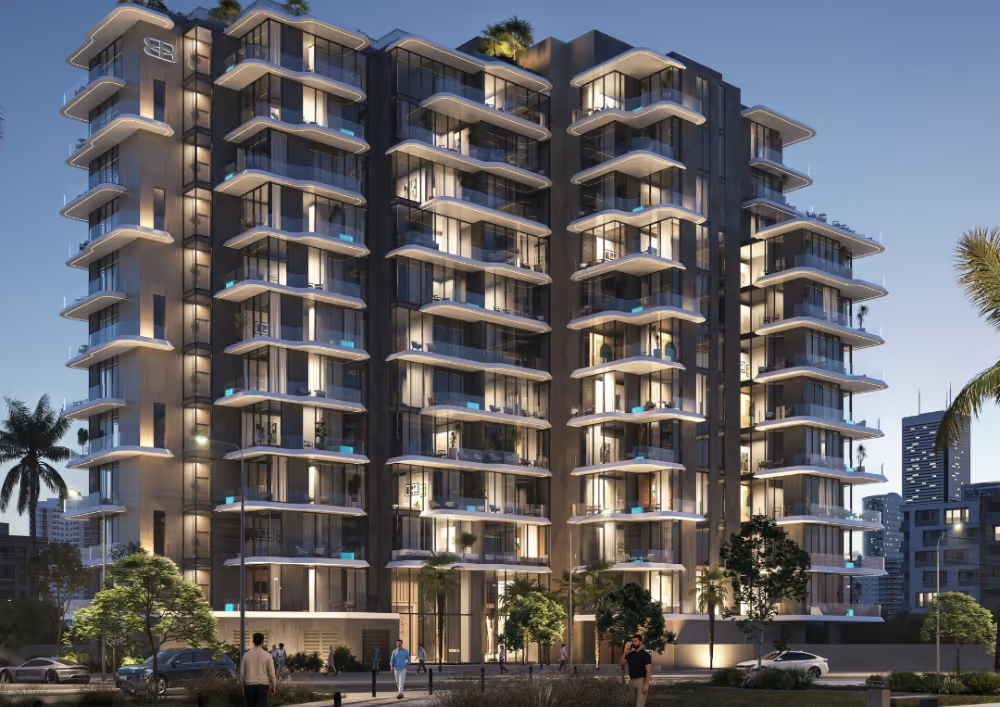
- These new developments - including projects from various developers - offer a more contemporary living standard than many older rental towers. One example is Bond Enclave, which shows what a modern, thoughtfully planned development in Arjan can look like.
Infrastructure Upgrades & Connectivity: The Real Catalyst

Hessa Street Expansion — Arjan's Game‑Changer
- One of the major road bottlenecks affecting Arjan has been congestion along Hessa Street. The ongoing upgrade aims to widen lanes, improve intersections, and significantly reduce travel time to major arteries.
- Once completed (projected 2026), this will dramatically improve connectivity to key hubs, increasing demand from commuters who previously avoided Arjan due to travel delays.
- Improved connectivity often leads to higher property values — as the "time‑cost" discount investors currently enjoy disappears.
Metro & Public Transport — What's Realistic and What's Hype
- Some promotional materials hint at future metro connectivity for Dubailand/Arjan, but official transport maps and master plans show no confirmed station in Arjan until at least 2030.
- For now, residents rely on feeder buses and personal vehicles.
- Conclusion: Metro should be viewed as a long‑term potential upside, not a near-term value driver. Investors should favour road upgrades and actual infrastructure over speculative promises.
Arjan's Real‑Estate Economics: Price Levels, Yields & Forecast
Current Pricing vs Market Averages — A "Value Gap"
| Metric / Area | Arjan (mid-market) | Dubai Average / Prime Areas |
|---|---|---|
| Sale Price / sq ft | ~ AED 1,200–1,350 | ~ AED 1,900+ |
| Typical 1-Bed Rent Yield (gross) | 7.0% – 8.5% | 4% – 6% |
| Typical Studio Rent Yield | 8% – 9% | 5% – 7% |
- This "discount to prime market + high yield" formula represents a strong value proposition.
- If Arjan's infrastructure and growth materialize, the price gap vs. mature areas can compress — creating potential capital appreciation.
Investment Scenarios — Yield vs Growth Strategies

| Strategy Type | Target Buyer / Investor | When It Makes Sense | Key Risk |
|---|---|---|---|
| Yield-First (Cash Flow) | Investors seeking rental income | For ready or near-completion units | Oversupply / rising service charges |
| Growth-Focused (Capital Gains) | Long-term holders / off-plan buyers | For 2027–2030 handover projects | Supply glut / market correction |
| Balanced / Risk-Off | Conservative buyers valuing liquidity | Entry via nearby but slightly older communities | Lower yield, less upside |
- Example: A studio bought at AED 550,000, rented at AED 48,000/year — gross yield ~8.7%. After service charges, a clear cash flow buffer remains.
- For 2027–2030, properties in projects with better amenities and structured development (e.g. podium malls, good build quality) are likely to outperform generic stock.
What to Watch Out For — Risks & Oversupply Threats
Massive Approvals & Delivery Forecast (2026–2028)
- Dubai's pipeline shows tens of thousands of new units expected to complete city‑wide — many of which belong to mid-market communities like Arjan.
- If 2027 sees a flood of completions, the supply could exceed demand temporarily, leading to slower price growth or rental corrections.
- This increases the importance of distinguishing quality developments from generic high-density towers.
Infrastructure Delays or Bottlenecks
- While Hessa Street expansion is underway, any delays or cost overruns could postpone the connectivity boost — which is critical to Arjan's appeal.
- Over-reliance on road transport means traffic and commute times remain a deciding factor for many tenants and buyers.
Buyer Sentiment & Buyer Profile
- Much of Arjan's demand comes from mid-income expats, working professionals, and middle‑class families. Their sensitivity to economic cycles, job stability, and interest rates may cause volatility in demand.
Why Quality Developments Make a Difference — Not All Projects Are Equal

Emerging communities like Arjan often attract high-density, mass-construction projects to satisfy demand — but quality, amenities, and design vary widely.
What distinguishes a "smart" development:
- Thoughtful architecture and finishes (good floor plans, ventilation, sound insulation)
- Amenities: green spaces, gyms, recreational zones, proper parking
- Professional property management & maintenance
- Transparent payment plans and compliance with regulations
As an example, Bond Enclave demonstrates how mid‑market affordability and thoughtful design can coexist — offering buyers and tenants a modern living standard even in a value‑driven community.
Who Should Consider Investing in Arjan (2026–2030)?
- Yield‑focused investors seeking high rental returns and willing to manage occasional turnover
- Young professionals, teachers, hospital/clinic staff working in adjacent areas — looking for affordable but modern housing
- First‑time buyers seeking entry-level investment or homeownership in Dubai without overpaying for hype areas
- Long‑term investors betting on infrastructure upgrades and community maturation over the next 5‑8 years
Tips for Smart Investing in Arjan
- Prioritize developments with strong build quality and amenities — avoid ultra‑budget, overly dense towers.
- Check road‑connectivity & traffic patterns now, not "after 2026." A good commute is critical for occupancy.
- Be cautious of "metro access" promises unless confirmed — value primarily comes from actual infrastructure, not speculation.
- Focus on 1‑bed / studio units for better yield, easier tenant turnover, and higher demand.
- Buy near delivery or ready‑to-move units if you want immediate rental income and lower risk.
Arjan Price History: 3-Year Trend (2023-2026)
Understanding where Arjan prices have been helps forecast where they're headed. Here's the price per square foot trend based on DLD transaction data:
| Year | Avg Price/sqft (AED) | YoY Change | Avg 1BR Price |
|---|---|---|---|
| 2023 | 680-720 | +18% | AED 580,000 |
| 2024 | 750-800 | +10% | AED 680,000 |
| 2026 | 820-870 | +9% | AED 750,000 |
| 2026 (Forecast) | 900-950 | +8-10% | AED 800,000-850,000 |
Key takeaway: While the rate of appreciation is moderating from 2023's post-pandemic surge, Arjan continues to deliver consistent single-digit growth backed by infrastructure catalysts. The Hessa Street widening (completed January 2026) and upcoming retail openings provide concrete support for the forecast. Compared to JVC (AED 1,000-1,200/sqft) and Motor City (AED 950-1,050/sqft), Arjan still offers 15-25% discount at entry.
FAQs
Q1: What makes Arjan Dubai an attractive area for property investors today?
Arjan offers mid‑market pricing (AED 1,200–1,350 per sq ft), strong rental yields (8–9% for studios/1‑beds), and upcoming infrastructure upgrades like the Hessa Street expansion — making it a value‑oriented investment zone.
Q2: Will traffic improvements boost property prices in Arjan?
Yes — the Hessa Street widening project (completion 2026) is expected to reduce commute times significantly. Improved accessibility typically raises demand and pushes up prices by 10–15%.
Q3: Is metro connectivity planned for Arjan?
Not in the near term. Current plans (e.g. the Blue Line) do not include a station within Arjan. Public transport access remains limited to feeder buses and road links until at least 2030.
Q4: What are typical rental yields in Arjan compared to Dubai Marina or JVC?
Arjan studios and 1‑beds often achieve gross yields of 8–9%. In contrast, Dubai Marina or high‑end areas usually yield around 5‑6%, making Arjan notably yield‑heavy.
Q5: What property types in Arjan offer the highest investment returns?
Studio and 1-bedroom units typically offer the highest yield per square foot, appeal to a broader tenant base (young professionals, singles), and are easier to rent quickly — ideal for yield‑focused investors.
Q6: What are the risks when investing in Arjan real estate?
Main risks are oversupply (large number of units due for handover 2026–2028), traffic congestion if infrastructure delays occur, and potential quality/maintenance issues in low‑cost high-density buildings.
Q7: How can buyers identify quality developments in Arjan?
Look for projects with good amenities, professional maintenance plans, transparent payment schedules, developer reputation, and sound architecture/design. Avoid overly dense or ultra-budget towers with poor finishes.
Q8: Can mid‑market housing like Arjan outperform luxury areas over time?
Yes — especially when affordability, rental yield, and demand from working professionals converge. As infrastructure improves, mid-market zones often appreciate faster than saturated luxury segments.
Is Arjan Dubai's Next Real Estate Hotspot?
Based on current trends — population growth, mid‑market demand, high rental yields, and major road‑infrastructure upgrades - Arjan stands out as one of Dubai's most compelling value‑driven real estate zones for 2026–2030.
For investors looking for balance between cash flow and long‑term appreciation, and for residents seeking modern living at accessible prices, communities like Arjan offer a rare sweet spot.
If you want to explore what quality mid‑market living in Arjan can look like — consider properties like Bond Enclave. It's a model of how thoughtful design, affordability and market timing can converge to deliver strong real‑estate value.
What major developments are planned for Arjan in the next 5 years?
Arjan is experiencing significant infrastructure upgrades including enhanced road connectivity, improved metro accessibility, and new commercial spaces. These developments aim to transform the area into a more integrated urban district with better transportation links to central Dubai, making it increasingly attractive for both residential and investment purposes.
How will the new connectivity upgrades benefit current Arjan residents?
Improved connectivity will reduce commute times to major employment hubs, enhance property accessibility, and boost commercial activity. Better road networks and potential public transport expansion will increase property value, attract more businesses, and create a more vibrant community atmosphere with improved accessibility to shopping, dining, and entertainment destinations.
Is Arjan a good investment considering these upcoming developments?
Yes, Arjan presents strong investment potential. Upcoming infrastructure projects typically drive property appreciation and rental demand. The planned developments indicate government commitment to the area, attracting more residents and businesses. Early investors can benefit significantly as the area matures, with historical trends showing property values increase when connectivity and amenities improve.
Which areas near Arjan will see the most growth?
Areas closest to major road improvements and metro extensions will likely experience accelerated growth. Properties near commercial zones and newly developed retail spaces will see increased demand. Focus on locations with planned public amenities, schools, and healthcare facilities for maximum appreciation potential.
How should I factor in future developments when calculating ROI?
Conservative estimates suggest 5-7% annual appreciation from infrastructure improvements. Factor in rental yield improvements as amenities enhance, and consider location proximity to development zones. Historical data from similar Dubai areas shows infrastructure upgrades typically increase property values by 15-25% over five years, making future-proof locations excellent long-term investments.